
The Nation We See, and the One We Don’t
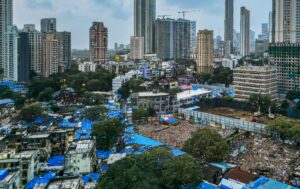
India is one of the largest democracies in the world; a nation that takes pride in its identity and achievements. On social platforms and global stages, it is often celebrated for its model of pluralism, economic surge, space missions, digital’s horizon expansion, and growing international influence. From overcrowded cities to emerging tech corridors, it appears as though the nation is moving expeditiously toward prosperity and collective well-being.
On the other hand, the ground reality tells another story. Beyond these dazzling images lies an India where the voices of ordinary citizens are muted, unheard, and often unseen; where justice is delayed or denied; and where the freedom to question or speak is quietly impeded.
India is speaking louder than ever. But listening less than before. India has more noise, but less dialogue, more expression, but less compassion.
The Promise of 1947: A Republic of Equals
India, after a prolonged struggle and countless sacrifices, emerged as a sovereign republic on August 15, 1947. Independence was not merely a political triumph over British rule, it was a bold and steadfast pledge to build a nation where justice, equality, and liberty would reign as supreme, wiping away centuries of colonial exploitation, caste-based hierarchies, and social divides.
Our freedom fighters and martyrs shared a common vision to see an India where justice prevails, liberty breathes freely, and fraternity nurtures every soul, where every citizen can speak, think, and live without fear, regardless of caste, creed, religion, or faith.
This promise of 1947 deeply resonated in Jawaharlal Nehru’s historic “Tryst with Destiny” speech, and later found its moral foundation in the Constitution, drafted under the visionary guidance of Dr. B. R. Ambedkar: a document not just of governance, but of social and ethical transformation. As Ambedkar cautioned, “Political democracy without social and economic democracy is a farce.”
But today, we must ask ourselves a simple question.
Have we truly kept that sacred promise?
Do we still live by the spirit of freedom and equality our martyrs dreamed of, or has it faded overtime?
Democracy Without Dialogue
Democracy thrives not when everyone agrees, but when everyone is heard. These days in India, politics leave little room for real listening. From Delhi’s bustling streets to Ladakh’s frozen peaks, a dangerous pattern has emerged like dissent is dismissed, dialogue replaced by decree, and patriotism often measured by silence.
The essence of democracy lies not merely in elections, but in the constant conversation between the government and the citizens. When that bridge breaks, the people’s voice turns into noise; easily ignored and even treated like a crime. Keep a glance of some of such cases across in our India.
In Delhi, student activists who once sparked meaningful public debates now face crackdowns, arrests, and prolonged trials for simply raising their voices. Activists such as Natasha Narwal, Devangana Kalita, Asif Iqbal Tanha, and Sharjeel Imam have experienced long detentions under stringent laws like the UAPA for their participation in protest movements. While some have been granted bail, many legal battles still now continue, reflecting a sad truth that asking questions can come at a high personal cost.
An environmentalist Sonam Wangchuk’s peaceful campaign for constitutional safeguards and statehood in Ladakh was met with detention rather than dialogue. By standing up for Ladakh’s environment and local rights, he shows a worrying truth: those who speak up for changes are too often ignored or punished.
From Assam to Manipur, many voices go unheard, and peaceful protests often meet punishment. In Uttar Pradesh, even bulldozers meant for development have become symbols of intimidation. Without dialogue, citizens may speak, but the state refuses to listen.
As Mahatma Gandhi once said, “Honest disagreement is often a good sign of progress.”
In a democracy, isn’t honest disagreement supposed to be a right, not a crime?
Justice Denied, Discrimination Enforced
India’s judiciary is an independent body, meant to deliver justice fairly, without favoring wealth, power, status, or faith. Yet the question arises: has it truly upheld that independence, or surrendered it to influence? Has the guardian of fairness turned selective in its conscience? Let’s look at a few cases to see whether our judiciary still stands by its constitutional spirit or is failing in its duty to ensure unbiased justice.
Case Study 1: Unequal Bail: Umar Khalid vs. Kapil Mishra (Delhi Riots 2020)
Umar Khalid, a student activist, remains jailed under UAPA without proven evidence, while Kapil Mishra, accused of hate speech, walks free. Justice seems to depend on who you are, not what you did. In riot and protest cases, 80% of undertrials from Muslim communities face prolonged detention without bail (Frontline,2024).
Case Study 2: Economic Privilege: Vijay Mallya vs. Mohammad Asif
Mallya, a billionaire defaulter, continues to evade extradition, while Asif, a poor vendor, spent 18 months in jail for a minor financial case. Money buys freedom; poverty buys delay.
Case Study 3: Class Divide in Sexual Offenses: Tarun Tejpal vs. Ramu
Tejpal, an influential editor, secured bail within months; while Ramu, a Dalit laborer, has waited years for trial. Power shapes punishment.
Case Study 4: Bulldozer Justice: Javed Mohammad and Selective Demolitions
In Uttar Pradesh and Madhya Pradesh, homes of people like Javed Mohammad were demolished after protests, often without proper notice or hearing. Many affected were poor or from minority communities, while illegal structures of the powerful remained untouched. The bulldozer, once a tool for development, now stands as a weapon of punishment before the court even speaks.
The Constitutional Promise vs. Ground Reality
The Indian Constitution guarantees protection of the law, freedom of speech and residence, and personal liberty through Articles 14, 19, and 21. Yet the cases highlighted above reveal repeated breaches of these fundamental rights. According to NCRB 2022 data, nearly 70% of undertrials belong to poor or marginalized communities, underscoring how the promise of Article 14 remains largely unfulfilled. Such selective enforcement and harsh punishments erode the very foundation of equality and justice, making the promises of the Constitution feel far away for those who need them most.
Moral Insight For democracy: People are the rulers, and the rules exist for the people. The judiciary must safeguard its independence and reputation, not bow to the executive or temporary pressures. Today we are here, tomorrow someone else will be nothing is permanent, but just and fair acts will endure forever.
Achhe Din Aane Wale Hain (Good Days Are Coming)
India today stands at a crossroads, a nation of great progress and deep challenges. On the global stage, we shine with achievements in space, digital innovation, and a fast-growing economy. Yet behind this bright image lies another truth where millions still struggle with poverty, inequality, pollution, and injustice. It makes us wonder: are these really the “Achhe Din” we were promised?
The Promise: A Nation on the Rise
India’s extraordinary milestones and accomplishments can’t be ignored:
- Poverty Decline: Extreme poverty has fallen sharply to 2.3%, lifting nearly 171 million people out of destitution since 2021. Schemes like PM Awas Yojana have provided millions with homes. (Source: World Bank India Overview 2025; UNDP HDR 2025)
- Digital Revolution: India leads the world in digital payments. In April 2025, UPI handled ₹24 lakh crore, accounting for 49% of global real-time transactions. (Source: Times of India, June 2025; Digital India Update)
- Green Energy Leadership: With ambitious targets of 500 GW non-fossil capacity by 2030, India’s solar and wind expansion has made it a global leader in renewable technology. (Source: PIB Factsheet on Renewable Energy, 2025)
- Infrastructure Push: Ten mega projects, including the Delhi–Mumbai Expressway and the Western Dedicated Freight Corridor (96.4% complete), are transforming logistics and connectivity. (Source: Invest India, 2025; Economic Survey 2025)
- Space Glory: The Chandrayaan-3 mission marked a historic soft landing near the lunar south pole; proving India’s scientific strength and global standing. (Source: ISRO, 2024)
These achievements prove that India’s potential is immense, but potential alone does not guarantee progress and well-being for all.
The Reality: All That Glitters Is Not Gold
The other side of the story is sobering. For millions, “good days” remain a slogan rather than a lived experience.
- Pollution: India breathes poison. The country’s PM2.5 average is 58 µg/m³, 11 times higher than the WHO’s safe limit of 5 µg/m³. 21 of the 30 most polluted cities are in India, contributing to 1.67 million premature deaths every year. (Source: IQAir 2024 World Air Quality Report). This is what the Swachh Bharat (clean India)?
- Happiness: Despite economic rise, India ranks 126th out of 143 countries in the World Happiness Report 2025, scoring only 4.05/10, showing that growth hasn’t translated into genuine well-being for all.
- Human Development: The HDI 2025 places India at 130th globally (0.685), behind smaller nations with far fewer resources.
- Communal Violence: In 2024, India witnessed 59 communal riots, an 84% rise from 2023. Around 150 deaths and 530 injuries were reported, with 75% of victims from Muslim communities. (Source: Centre for Study of Society and Secularism, 2025)
- Unemployment: The national youth unemployment rate stands at 12.5%, with urban figures touching 18%, reflecting a deep disconnect between education, skills, and job creation. (Source: MoSPI PLFS, August 2025)
- Inequality and Corruption: Despite progress, the gap between rich and poor continues to widen. The top 1% holds a disproportionate share of national wealth. (For detailed analysis, see: “Bridging the Gap: Poverty, Inequality, and Inclusive Growth.”)
Between Promise and Reality
India is the 4th largest economy in the world. Nevertheless, millions still struggle for clean air, affordable health care, or stable employment. We are advancing fast in numbers but slowing in compassion.
So, the question remains: are these really our “Achhe Din”?
Way Forward: Towards Real ‘Achhe Din’ and Viksit Bharat
India’s story is one of courage, growth, and contradictions. We have achieved remarkable progress, but still a truly Viksit Bharat (Developed India) demands not only economic milestones, but also moral, social, and human advancement. “Achhe Din” cannot just be seen in facts or data charts; they must be experienced in the daily lives of every Indian.
1. Strong Governance and Institutions
- Government must make healthcare, education, and justice available to all.
- Corruption should be curbed with strict transparency and accountability.
- Strengthening democratic institutions such as the Lokpal, CAG, and RTI is crucial to ensure that power truly serves the people.
2. Inclusive Economic Growth
- Promote skill development, MSME’s rural industries, and small businesses to create jobs for everyone.
- Focus on fair distribution so that growth reaches poor and marginalized communities.
3. Justice and Equality
- Laws must be applied fairly to all, rich or poor, Muslim or Hindu, Dalit or upper caste.
- Fast-track trials and respect constitutional rights (Articles 14, 19, 21).
4. Environment and Civic Responsibility
- Citizens must take responsibility: don’t throw garbage on streets, reduce waste, save water and electricity.
- For example: Many people throw household waste on roads, drains, and open spaces without any concern. This pollutes the soil, contaminates water, and harms communities. Real change starts from small daily habits. It’s everyone’s fundamental duty to keep environment safe and clean.
5. Everyday Honesty and Integrity
- People must follow rules and act fairly in daily life.
- For example: In government or private hospitals, it is often seen that people give bribes to get faster treatment. Those who have been waiting for a long time remain in the queue. The government alone is not responsible for bribery or corruption, rather citizens themselves often create or accept such a culture.
6. Ethical and Value-Based Education
- Colleges, both government and private, should make a compulsory subject on ethics, morality, compassion, social responsibility, and brotherhood.
- If students are trained in these values, in the future, when they work in government or any sector, they won’t misuse power, ask for bribes, or discriminate while delivering justice.
- Intellectually and spiritually strong individuals are less likely to misuse power or discriminate.
- Social harmony and unity are essential for true development; without them, India can never become a fully developed nation.
Achhe Din” and “Viksit Bharat” will not come through promises or posters. They will rise from justice in our courts, equality in our society, honesty in our governance, and compassion in our hearts.