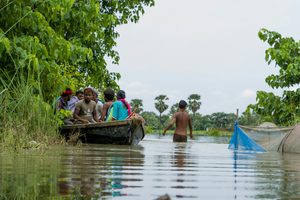


Every year, when the monsoon arrives, large parts of Assam begin to go underwater. Homes, fields, and entire communities are slowly taken over, not as a sudden shock, but as something people here have come to expect. As one resident said, “I have lost everything… I am completely devastated.” It is a feeling that returns in different voices, year after year.
It is easy to say this happens because of heavy rainfall or rivers overflowing. But that explanation is not enough. The land itself is fragile. The climate is changing. And the way we have built and managed around these rivers has made things harder over time.
So, the question is not only why the water rises, but why the same damage keeps returning. To understand that we need to look more closely at the landscape, at our choices, and at the systems that are meant to protect, yet often do not fully work.
The Natural Reality of Assam: A Floodplain That Was Never Still
Situated in the northeastern part of India, Assam lies within the vast and dynamic basin of the Brahmaputra River. It is a river that does not follow a fixed path, constantly reshaping the land it flows through. Unlike stable terrains, this region is defined by movement. River channels shift, banks erode, and new landforms emerge even as others disappear. In such a landscape, change is not occasional; it is continuous.
The geography of Assam is deeply tied to its floodplains, which are naturally designed to absorb and release excess water during the monsoon time. When rainfall intensifies, the river expands beyond its banks, spreading across low-lying areas and river islands, it is often referred to as chars. For many who live here, this is not an unexpected event anymore but a familiar cycle. This overflow is not an anomaly but part of a long-established hydrological rhythm that sustains soil fertility and supports agriculture across the region.
What adds to this complexity is the river’s journey from the Himalayas, carrying an immense load of sediments downstream. These deposits gradually raise the riverbed, reducing its capacity to contain large volumes of water. It is combined with intense and concentrated monsoon rainfall, the result is a system that naturally inclined to overflow, especially where the land offers little elevation or resistance.
Many parts of Assam, particularly those that are close to the river and its tributaries, exist in a delicate balance between land and water. Here, boundaries are never permanent, and stability is often temporary. To expect such a landscape, to remain untouched by seasonal flooding basically is to misunderstand its very nature.
Floods in Assam, therefore, are not an interruption of normal life but an extension of it. The real question is not why the water arrives each year, but why its impact continues to grow beyond what this natural system was meant to handle.
When Nature Alone Is Not the Problem: Human Decisions That Intensify the Floods
The Pressure We Have Added to a Natural System
Floods in Assam may begin as a natural process, but their scale today reflects a deeper imbalance. According to the Assam Water Resources Department, nearly 39.58% of the state’s geographical area is flood-prone, i.e. far higher than the national average. This vulnerability has existed even for decades, yet what has changed is how human activity has relentlessly reduced the land’s ability to absorb and regulate water.
The causes of Assam floods cannot be understood without looking beyond the plains. In the upstream regions of the eastern Himalayas, deforestation has weakened the natural system that once held soil together and slowed the movement of water. Rainfall that would gradually seep into the ground now flows rapidly as runoff, carrying heavy sediment into the Brahmaputra River. With time, this process raises parts of the riverbed, reducing its capacity to contain high volumes. What appears as sudden is often the result of slow and accumulated change.
However, the landscape within Assam itself has been reshaped. Wetlands, floodplains, and natural drainage channels, meant to hold excess water, have been encroached upon or converted into for settlements and infrastructure. Population pressure also has intensified this shift, pushing communities closer to riverbanks and low-lying areas. In such conditions, floods in Assam become harder to manage, not only due to rising water, but because the land that once was absorbed; it is no longer available.
Protection That Fails, and People Who Cannot Move Away
The efforts to control the river have not always produced the intended results. Since the 1950s, embankments have been constructed across large stretches of the state as a primary method of flood management in Assam. While they offer temporary relief, many are not maintained regularly. A data reported by The Times of India, based on official records, shows over 500 embankment breaches since 2011. When these structures fail, the impact is commonly sudden and more destructive than gradual flooding, turning protection into risk.
Human interference continues in other forms as well such as sand mining, hill cutting, and unplanned urban expansion have altered natural drainage patterns. Many of these changes build slowly through everyday actions, often unnoticed, as explored in 7 Sneaky Habits That Are Quietly Wrecking the Planet (And How to Fix Them). Water that once spread gradually across open floodplains is now forced into narrower, obstructed paths, increasing both speed and pressure. Even urban areas face similar challenges, where shrinking wetlands and blocked drainage systems convert seasonal rainfall into localized flooding.
The pattern is most evident in districts such as Dhemaji, Lakhimpur, Barpeta, Morigaon, and parts of the Barak Valley, where the Assam flood crisis repeats with intensity year after year. Nevertheless, settlements continue to exist and expand in these regions. This is not always a matter of choice; it is economic dependency on fertile land, limited opportunities elsewhere, and gaps in long-term planning, which leave many communities with little option, but to live within risk. For many families, moving away is not a decision. It is a possibility they simply do not have.
Floods in Assam are not becoming disasters because the river has changed its nature. They are becoming disasters because the relationship between land, water, and human decisions has been continuously disturbed. A system that once adjusted to seasonal excess is now under continuous pressure, and that impact is reflected in every recurring flood.
Climate Change Is No Longer a Background Factor Anymore: It Is Now a Force Multiplier
The flood patterns in Assam were formerly shaped by geography and seasonal rhythm. That balance is now shifting. Climate change is not introducing floods to the region, but it is intensifying how water behaves, making rainfall heavier, river systems more unstable, and flood events harder to anticipate.
Rainfall patterns across Northeast India are becoming less consistent. Studies on long-term climate trends, including analyses published on ResearchGate, indicate a rise in total rainfall over recent decades, along with visible changes in its distribution. Instead of being spread evenly across the monsoon, rainfall is increasingly concentrated into shorter periods. When large volumes of water fall within a limited time, the land and rivers are unable to respond gradually. This leads to sudden surges, frequently resulting in flash floods that leave little room for preparation.
Temperature rise is adding another layer to this shift. As highlighted in regional climate studies by Asian Confluence, warmer air has the capacity to hold more moisture, and when this moisture is released, it tends to come in intense bursts. In a state like Assam, where average annual rainfall already exceeds 2800 mm, even a small increase in intensity can overwhelm the system. What was earlier manageable under normal conditions begins to cross its limits when the same processes are pushed with greater force.
Changes in the Himalayan region are also influencing flood patterns downstream. Rising temperatures are accelerating glacier and snowmelt, increasing the volume of water entering the Brahmaputra River and its tributaries. In addition to this, landslides and slope instability are contributing additional sediment, altering the river’s flow and capacity. These upstream changes do not remain confined to the mountains. They shape the flood dynamics of Assam in ways that are becoming more complex and difficult to manage.
The most critical change is in predictability. Earlier, floods followed a more recognizable seasonal pattern, allowing communities to prepare with some level of certainty. That pattern is now gradually weakening. Rainfall has become more erratic, and extreme weather events are occurring with greater frequency. This uncertainty makes planning less reliable and recovery more fragile.
Climate change does not act in isolation. It amplifies every existing weakness—geographical vulnerability, human interference, and gaps in planning. Floods in Assam have moved far from seasonal patterns shaped by nature. They are evolving into more complex crises, where a changing climate is altering the very rhythm and behavior of water.
The Real Crisis Is Not Just the Water: It Is What Remains After It Recedes
When the water begins to withdraw, it gives the illusion that the worst has passed. Roads reappear, homes are pieced back together, and life seems to gather itself again. But what follows is not restoration. It is a quieter, slower struggle that unfolds long after the visible damage fades.
When Rebuilding Never Truly Ends
For many families, rebuilding is not a single effort but a recurring demand. Where walls are raised again with limited means, knowing how fragile they are. What stands today carries the memory of what was lost before, and the awareness of how easily it can be taken away again. Therefore, stability, in such circumstances, is never secure. It is adjusted, compromised, and carried forward with hesitation and insecurity.
Work That Keeps Breaking Again
The same land that supports life also faces repeated loss. Fields rich in alluvial soil promise harvest, but each season carries uncertainty. Crops can vanish within days, and with them, months of labor. For those who depend on daily earnings, even a short disruption can stretch them into prolonged hardship. The challenge is not only damage, but the absence of continuity.
The Burden That Stays Unseen
There is also an unseen weight that does not draw attention. As the monsoon approaches, a sense of unease grows. People learn to read the sky differently, not with hope, but with caution. This constant anticipation of loss does not always find expression, but it shapes how life is lived.
When Everyday Life Loses Its Rhythm
Floods do not only affect land and homes; they unsettle the rhythm of ordinary life. Schools turn into shelters, routines dissolve, and learning pauses without certainty of return. For children, these disruptions become part of growing up. What slips away here is not just time, but the flow that gives life its sense of direction.
A Cycle That Never Really Breaks
What deepens the crisis is its repetition. Each year follows a familiar path—damage, adjustment, partial recovery, and then another setback. There is movement, but little forward progress. Attempt to rebuild continues, but outcomes do not hold. Over the period, this pattern shapes a condition where living with uncertainty becomes normal.
What follows after the water recedes is not only physical damage, but a life that struggles to regain balance. Until this pattern is addressed, floods will continue to be seen as seasonal events, whereas in reality, they reflect a human crisis that continues long after the water is gone.
Why the Problem Persists: Not Because Solutions Don’t Exist, But Because Systems Don’t Last
Flood management in Assam is not a story of missing ideas. Plans exist, institutions exist, and frameworks have been built over time. But still the crisis continues because what is designed on paper does not always hold steady through time and execution. The issue is not absence of solutions, rather the inconsistency in how they sustain themselves.
When Solutions Exist, but Don’t Stay Connected
At the state level, departments such as the Water Resources Department manage embankments and river protection, while disaster management agencies handle preparedness and relief. At the national level, bodies like the Central Water Commission and the Brahmaputra Board contribute forecasting and basin-level planning. On paper, the structure appears extensive and well-distributed.
At its core, coordination between these layers significantly weakens during implementation. Information flows slowly, responsibilities overlap, and actions do not always align at the right moment. What is meant to function as a connected system frequently becomes scattered in execution.
When Planning Changes, but Ground Reality Remains Constant
Flood control measures are introduced, repaired, and revised; at the same time their direction does not always remain perpetual. Priorities tend to adjust with administrative cycles, and long-term projects often lose momentum midway. Embankments are restored after damage yet seldom upgraded in line with changing river behavior.
This creates a repeating pattern of response and repair instead of transformation. The system reacts to events more than it evolves with them, which limits its ability to keep pace with a dynamic river landscape.
When Structure Exists, but Continuity Weakens
Another challenge lies in the gap between planning and sustained execution. Policies are documented, budgets are allocated, and projects are launched, but their continuity depends on coordination, maintenance, and long-term focus. When these weaken, even well-designed interventions lose impact in the long run.
As a result, many efforts remain partial. They address immediate needs but struggle to maintain effectiveness across years, creating a cycle where progress is repeatedly restarted rather than carried forward.
When Communities Exist, but Remain Partially Integrated
Flood-prone regions are not passive spaces; they are lived in realities shaped by local experience. However, community participation in planning and decision-making often remains limited. Local knowledge exists, but it is not consistently integrated into formal flood strategies.
However, daily survival pressures like loss of livelihood, seasonal uncertainty, and repeated disruption—leave little space for long-term engagement. This creates a distance between institutional planning and lived experience on the ground.
A System That Responds More Than It Evolves
Across agencies and levels of governance, a common pattern emerges. Action is present, but largely reactive. Structures exist, but alignment weakens over time. Measures are introduced, though not always sustained long enough to transform outcomes.
And this is where the persistence of the problem becomes clearer. It is not driven by a lack of awareness, but by the absence of continuity. In a region shaped by shifting rivers and changing climate patterns, fragmented and short-lived responses are not enough to break a cycle that renews itself every year.
What Must Change: Moving from Reaction to Long-Term Thinking
Floods in Assam, like many natural disasters across vulnerable geographies, cannot be fully prevented. They emerge from river systems, monsoon cycles, and long-standing ecological patterns. What can be changed is not the presence of nature’s force, but the way human systems prepare for, respond to, and recover from it.
At the heart of the issue is an imbalance. People act quickly after disasters, but that focus fades soon after. This gap between short-term response and long-term planning keeps vulnerability in place.
From Emergency Response to Preventive Thinking
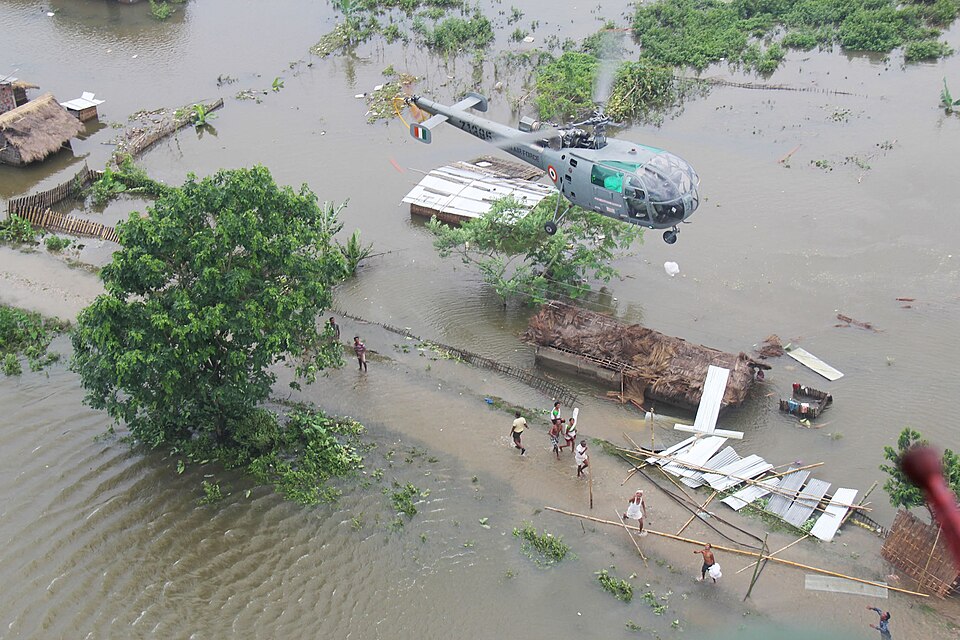
Disaster response in many cases starts only after water enters settlements. Relief operations, evacuation efforts, and temporary rehabilitation then become the central focus.
On the other side, a more resilient approach begins earlier, before impact occurs. Strengthening forecasting systems, identifying high-risk zones, and integrating flood behavior into planning can reduce exposure in advance. Being prepared means we don’t have to respond again and again.
From Repetitive Repair to Structural Adaptation
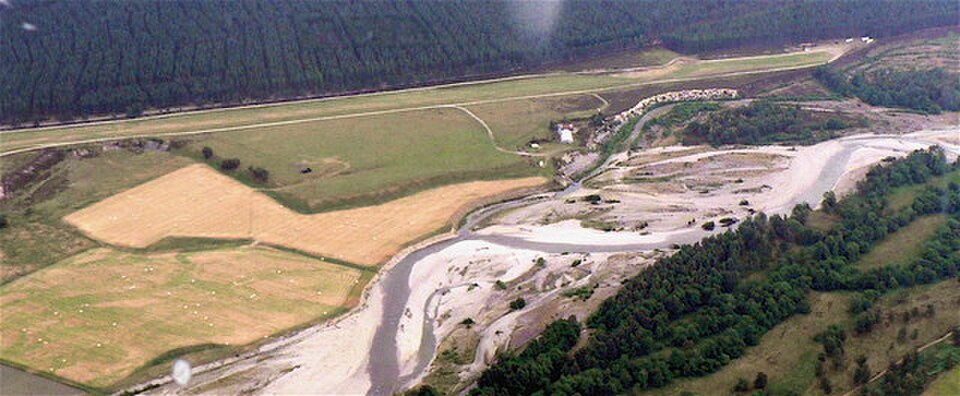
In many flood-affected regions, embankments and protective structures are rebuilt after damage, only to face similar stress again. This pattern reflects restoration without deeper transformation. As one resident noted, “If embankments were repaired in time, the impact would have been less,” pointing to the gap between response and regular maintenance.
Moreover, resilience requires more than repair. It requires redesign that considers changing river dynamics, shifting sediment flow, and evolving rainfall intensity. Without adaptation, reconstruction simply restores vulnerability in a repeated cycle.
From Controlling Rivers to Working with Them
Rivers are not fixed systems that can be permanently controlled. They expand, move, and reshape landscapes naturally as time passes. Efforts to fully restrict them often create long-term pressure on surrounding environments.
A more sustainable approach focuses on coexistence. Where restoring wetlands, protecting natural drainage channels, and allowing controlled floodplains to function can help absorb excess water more effectively. In this way, rivers are understood as dynamic systems rather than obstacles.
From Fragmented Action to Coordinated Governance
Flood management involves multiple institutions, including forecasting bodies, state departments, and disaster response agencies. Each plays a significant role, but effectiveness depends on how well these roles are connected.
When coordination weakens, even well-planned systems lose efficiency during execution. Stronger integration, faster information flow, and aligned decision-making are essential to ensure timely and effective response.
From Short-Term Response to Long-Term Thinking
One of the most persistent challenges lies in the difference between administrative timelines and environmental reality. Governance cycles are short, while ecological systems evolve over decades. This difference frequently leads to strategies that focus on immediate outcomes instead of long-term resilience.
A more stable approach requires continuity in planning, where flood management is treated as an ongoing process rather than a series of isolated interventions.
A Final Perspective
Risk in such landscapes is not temporary. It is a constant condition shaped by geography and climate. What determines outcomes is not the removal of uncertainty, but the ability of human systems to respond with consistency and foresight.
The real change is not about controlling nature. It is about building systems that can think beyond reaction and engage with long-term reality in a steady and responsible way.
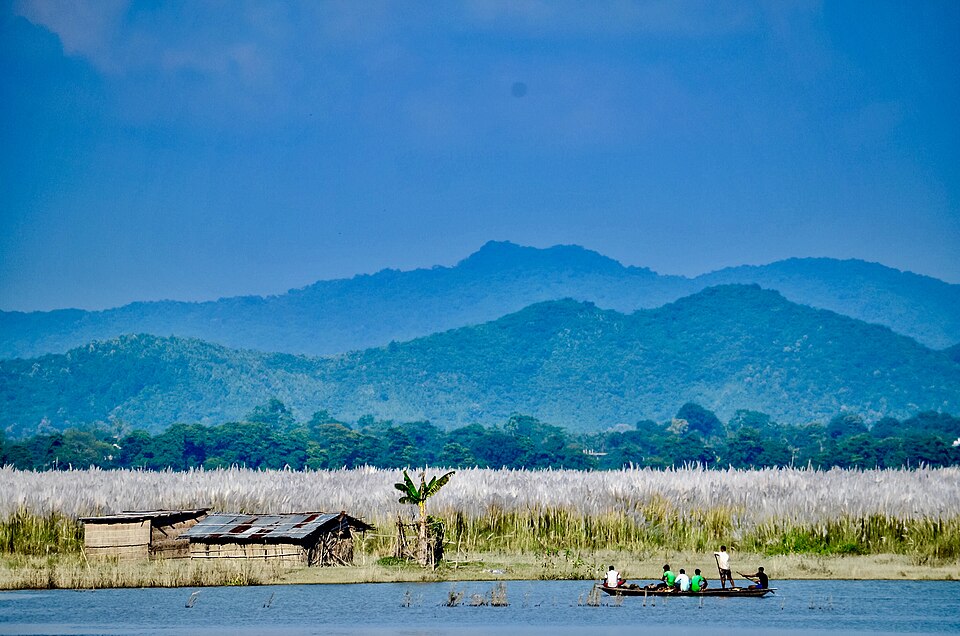
Before It Becomes Normal: A Reflection on Responsibility and Silence
In flood-prone regions, risk no longer feels sudden — it feels familiar. Over time, repeated disruption can turn into acceptance, and acceptance slowly reduces urgency.
The real issue is not a lack of awareness, but the distance between knowing and acting consistently. When response remains temporary, repetition becomes unavoidable.
Responsibility is not limited to institutions alone. It also lies in collective attention, in how seriously risk is understood before it turns into loss, and how steadily it remains in focus after the water recedes.
Silence is not just absence of words. It is the gradual fading of concern in the face of repeated reality.
What is ignored does not vanish. It becomes part of what continues.
Before it becomes normal, it is still a choice to notice, respond, and rethink what we continue to accept.