
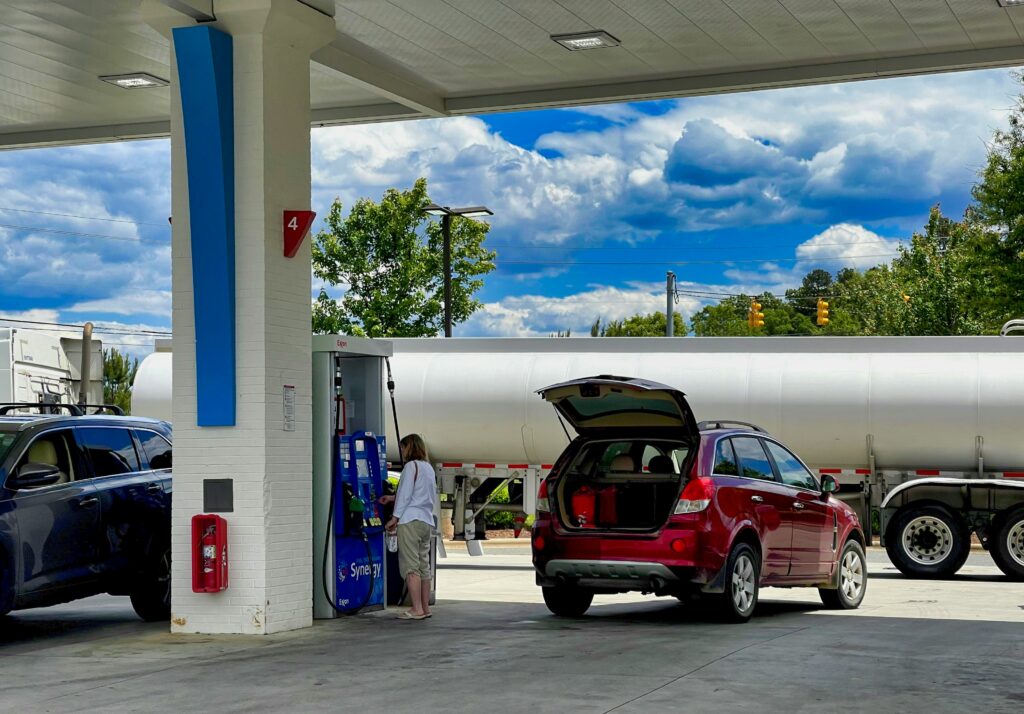
People often realize the importance of something only when it is disrupted. As long as water flows regularly from a tap, few stop to think about it. The moment the supply is interrupted, however, questions at once arise. The same can be said about oil. For many people, its significance becomes visible only when fuel prices rise sharply or shortages begin to appear.
What many people fail to notice is that the cost of oil does not remain confined to petrol stations. Its effects quietly reach much further. They appear in transportation charges, the price of goods, household expenses, and many everyday necessities. People usually notice the final price but rarely see the chain of events behind it.
Take a simple everyday situation. A passenger enters an autorickshaw and is surprised when the driver asks for a higher fare than usual. The immediate reaction is often frustration. What many overlook is that the increase may reflect a series of rising costs that began long before the journey itself. By the time the passenger notices the higher fare, many other costs have already increased behind the scenes.
What appears to be a simple change in fuel prices is connected to a much wider network of activities that most people never see. Looking beyond the petrol station helps to reveal how deeply oil is woven into modern life and why its impact reaches far beyond the road.
Why Rising Oil Prices Reach Far Beyond Transportation
When people think about oil, vehicles are usually the first thing that comes to their mind. Cars, buses, trucks, and airplanes all depend on fuel, making transportation the most visible connection. Yet oil shapes far more than the movement of people and goods.
Modern life depends on countless systems working together. Raw materials must reach factories, products must reach markets, and goods must travel through warehouses, ports, and distribution networks before arriving in the hands of consumers. Energy plays a role throughout this process. As costs increase at one stage, the effects rarely remain confined to that single point.
The impact is not always measured only in money. In many places, people experience it through inconvenience, uncertainty, and lost time. A family waiting for an LPG cylinder, a transport operator struggling with rising expenses, or a small business trying to manage increasing operating costs may all be affected in different ways. A challenge that begins with energy supplies can eventually affect daily routines, work schedules, and household decisions.
And this is where the oil cannot be viewed solely as a fuel for vehicles anymore. It supports activities that many people rarely associate with it, from agriculture and manufacturing to logistics and construction. Because of this, changes in oil prices are hardly felt in one place alone. Their impacts gradually spread into many parts of life, even when people do not immediately recognize the connection.
When Everyday Necessities Become More Expensive
Most people do not notice changes in oil prices while reading economic reports. They notice them in the market.
A visit to the grocery shop that once felt routine can suddenly become frustrating. The price of cooking oil has increased. Pulses cost more than before. Rice, vegetables, and other household essentials slowly become heavier on the pocket. Nothing changes overnight, yet many families begin to feel that the same amount of money no longer brings home the same amount of goods.
This is where the story becomes personal. Rising prices are not just numbers on a bill. They influence everyday choices. Some families postpone purchases. Others cut back on spending that once seemed normal. In many households, every additional expense means adjusting something else.
What makes these changes difficult is that incomes do not always move in the same direction. Prices may rise several times during a year, while salaries, wages, or earnings remain largely unchanged. As a result, the burden is often felt most by those who already have little room in their budgets.
Over time, many people stop asking why prices have increased. They simply adjust to a new reality. A person may leave home with the same budget they carried a year ago and return with fewer items in their shopping bag. At first, the change may seem small, but repeated often enough, it becomes impossible to ignore.
For this reason, the consequences of rising oil prices rarely remain confined to fuel alone. They gradually find their way into the ordinary goods and services that people rely on every day.
The Hidden Cost of Oil on Families and Small Businesses
For many families, the real burden begins long after fuel prices rise. By the time a monthly salary reaches their hands, a large part of it is already claimed by essential expenses. Food, transportation, electricity, education, healthcare, and countless daily needs compete for the same limited income. As prices continue to climb, many people feel as though they are running faster but moving nowhere.
The difficulty is not only about managing today’s expenses. It is also about protecting tomorrow. When most earnings are consumed by necessities, saving money becomes increasingly difficult. Yet savings are often what assist families during emergencies, support a child’s education, repair a home, start a small business, or prepare for important responsibilities such as marriage. Without that financial cushion, even a small setback can disturb the balance of an entire household.
Over time, priorities begin to change. Plans that once seemed achievable are pushed further into the future. Opportunities become harder to pursue. In some households, dreams are not abandoned in a single moment; they are slowly set aside as more urgent needs demand attention. The loss may not appear on a bill, but it is felt in the possibilities that never receive a chance to grow. In some families, financial pressure can quietly limit educational opportunities, making the purpose and accessibility of education more important than ever.
On the other hand, small businesses face a similar reality. Every business is connected to suppliers, workers, customers, and operating costs. It is much like a thread in which every part is linked to the next. When pressure develops at one point, the strain gradually travels through the whole line. Rising costs can reduce profits, delay expansion, limit hiring, and make survival itself more challenging for smaller enterprises. As businesses struggle, opportunities for employment and economic growth become narrower as well.
The consequences do not stop there. Financial pressure rarely stays on paper. It often follows people home after the day’s work is over such as thoughts about upcoming expenses, children’s education, medical needs, savings, or future responsibilities can quietly occupy the mind. The burden is carried not only in the wallets but also in thoughts. Over period, the challenge is no longer simply about earning enough money; it becomes about living with a sense of uncertainty that is difficult to ignore.
By and large, the true cost of oil is not always visible at a fuel station. Sometimes it appears in savings that never accumulate, opportunities that never arrive, businesses that never expand, or dreams that remain waiting for a better time.
Why Distant Events Suddenly Affect Local Lives
Many people assume that problems remain where they begin. If a conflict takes place thousands of kilometers away, it is easy to believe that it belongs only to that region. Yet the modern world rarely works in that way.
A shopkeeper in Basti, a farmer in a nearby village, or a family purchasing groceries in the local market may never visit the Middle East, the Gulf of Aden, or the Strait of Hormuz. Still, developments in these places can eventually influence the prices they pay and the choices they make. At first, the connection appears invisible. But invisible does not mean nonexistence.
The world depends on a network of trade routes, shipping lanes, and energy supplies that connect distant regions to one another. When tensions rise around important routes such as the Strait of Hormuz, through which a significant share of the world’s oil trade passes, uncertainty spreads in distant regions. Countries that depend heavily on imported oil, including India and Japan, often feel the effects more quickly because higher energy costs eventually flow through transportation, manufacturing, and everyday commerce.
In addition, recent events have provided clear examples. The Russia–Ukraine conflict disrupted energy markets well beyond Europe, while instability in parts of the Middle East repeatedly raised concerns about oil supplies and maritime security. The battlefield remained in one region, but its economic consequences were felt in many others. In many countries where people who had no direct connection to these conflicts still experienced rising costs and growing uncertainty.
This reality is also linked to the uneven distribution of natural resources. Oil reserves are not spread equally across the planet. They are concentrated in particular regions due to geological processes that unfolded millions of years ago. As explored in my article, Why Is Crude Oil Unevenly Distributed Across the World? How Geography Shapes Global Power, that geographical imbalance continues to shape economic relationships even today.
Perhaps the most overlooked lesson is that modern life often appears local while many of the systems supporting it are global. People buy vegetables from nearby markets, travel on familiar roads, and live within their own communities. Still, many of the goods and services they use every day are shaped by events taking place far from where they live.
A disruption in one corner of the world can eventually be felt in another. The distance may be great, but the connections are greater.
The Price Beyond the Price
Most people notice oil when fuel prices rise. But very few consider the longer chain of the consequences behind it that follows. What begins as an energy issue can gradually influence household budgets, business activity, daily necessities, and future opportunities.
The deeper reality is that the visible price is rarely the complete price. Many costs arrive quietly, long after the original cause has faded from the headlines.
At its core, this reflects something larger than energy alone. It is a reminder that the choices, resources, and events shaping our lives are often connected in ways we do not immediately see.
The price is visible. The cost is often hidden in the lives it touches.