
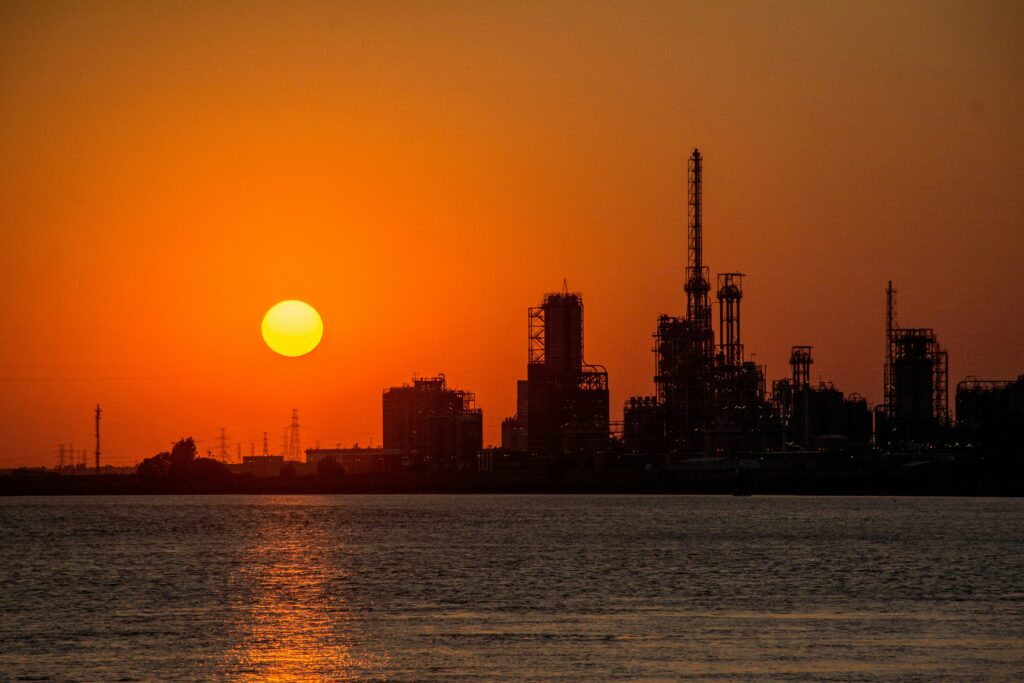
What would modern life look like without fuel? Could people travel across continents within hours, industries run at their present scale, or goods move so effortlessly from one corner of the world to another? It is difficult to imagine modern civilization without the resource that quietly supports so much of it.
Few things have influenced human progress as profoundly as oil. It helped to connect distant places, accelerated industries, transformed trade, and made possibilities achievable that earlier generations could hardly envision. In many ways, it became one of the foundations upon which the modern world was built.
Yet every achievement brings its own questions. The same resource that supported remarkable progress also created deep dependence. Its reserves are finite, its distribution is uneven, and the world built around it continues to grow more demanding with each passing decade.
Perhaps the question before humanity is no longer what oil has done for civilization, but whether civilization can continue to rely on it in the same way. The future of oil is not merely about energy. It is also about responsibility, adaptation, and the kind of world future generations may inherit.
The Resource That Changed Human History
Long before engines became part of everyday life, work demanded patience and physical endurance. Farmers ploughed their fields with bullocks, goods travelled slowly in carts, and many activities depended upon the strength of people and animals. Progress certainly existed, but it unfolded within the natural limits imposed by distance, time, and human effort.
The arrival of fuel-powered machines altered that reality in ways few earlier generations could have imagined. A tractor could accomplish what once required days of labor. Engines transformed transportation, industries expanded their capacity, and agriculture became more productive. Human effort did not disappear, but machines multiplied its reach and laid the foundation for a level of development that reshaped societies across the world.
One of the most remarkable changes occurred subtly. Civilization itself began to think differently. What previous generations regarded as extraordinary gradually became ordinary. Travelling across continents, transporting fresh produce over vast distances, or receiving goods within days became common expectations rather than rare achievements. People no longer asked whether something was possible; they began asking how quickly it could be done.
In a relatively short span of history, humanity changed landscapes, connected continents, and transformed everyday life more rapidly than countless generations before them.
However, another reality emerged. The resource that released humanity from many limitations slowly became woven into almost every aspect of modern life. Transportation, agriculture, trade, manufacturing, and countless daily conveniences grew around a resource that required millions of years to form. In that process, dependence quietly became part of progress itself.
And in fact, that is the deeper irony. The same force that accelerated civilization also made it increasingly difficult to speculate on life without it. What began as a remarkable advantage gradually became something the modern world learned to rely upon.
When Dependence Becomes a Vulnerability
Everything in the world depends upon something else. Human beings depend on society, nations depend on trade, and ecosystems survive through countless relationships. Dependency itself is neither unnatural nor undesirable. At its best, it reflects cooperation and mutual benefit. The real concern begins when dependence becomes so deep that alternatives gradually disappear.
Modern civilization did not deliberately choose to rely heavily on a single resource. The process unfolded naturally through convenience, efficiency, and abundance. Transportation, agriculture, aviation, hospitals, industries, and global supply chains became increasingly interconnected. A medical device used in India may contain components manufactured elsewhere, while some countries import food and export products that others depend upon.
Such interdependence is not a weakness; it is one of the foundations of modern civilization.
The challenge arises when choices become limited. A road with several routes offers flexibility, but a road with only one path becomes vulnerable to disruption. Resources follow a similar principle. When societies, industries, or systems rely excessively on one source, even a small disturbance can create consequences that spread much further than expected.
Vulnerability is rarely born from dependence itself; it emerges when choices become limited.
Modern life has also become faster and more efficient, but speed does not always guarantee resilience. In the pursuit of convenience, societies sometimes leave little room for adjustment and recovery.
Expectations change as well. Earlier generations often accepted that progress demanded patience and sustained effort, whereas uninterrupted access and immediate results have become normal expectations today. As a result, the challenge of change is no longer merely technological. It also involves habits, assumptions, and ways of thinking that have been shaped over generations.
After all, dependence becomes most visible only when imagining life without it begins to feel difficult.
The Future of Oil: Can the World Really Move Beyond It?
For more than a century, oil has helped shape the pace and structure of modern civilization. But history shows that no resource remains at the center forever. Growing concerns about sustainability, technological progress, and the desire for greater energy security have encouraged societies to explore new possibilities. The question, however, is not simply whether the world can move beyond oil, but how such a transition can take place in a civilization that has been built around it for generations.
The Promise of Renewable Energy
History rarely stands still for long. Whenever old systems begin to reveal their limitations; societies gradually search for new possibilities. The growing interest in renewable energy reflects that the same pattern. Rather than representing a rejection of progress, it represents an effort to sustain it under changing realities.
Across many parts of the world, investments in solar power, wind energy, hydrogen, battery storage, and electric mobility continue to expand. According to the International Energy Agency (IEA), renewable energy continues to grow rapidly and is expected to play an increasingly important role in meeting future energy demand.
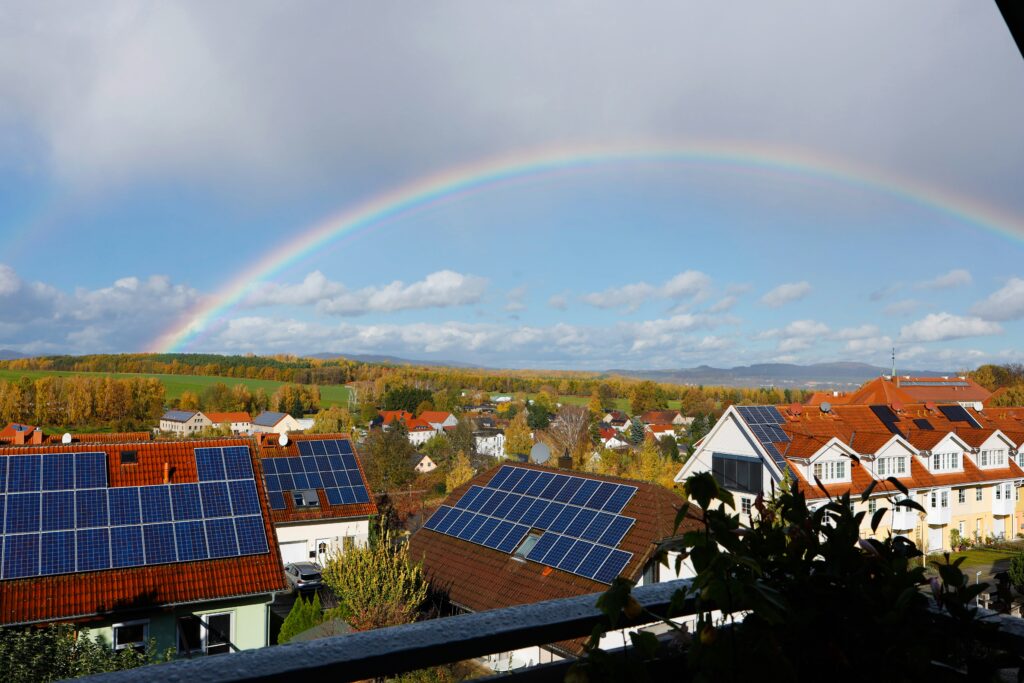
Their significance, however, lies not only in the technologies themselves but also in the possibilities they create. A more diverse energy system offers societies greater choices and reduces the risks that arise when too much reliance rests upon a single source.
One remarkable change of recent decades is that energy is slowly moving closer to the people who consume it. Rooftop solar systems, local power generation, and decentralized networks are gradually changing the relationship between communities and energy. Dependence itself does not disappear, but the ability to generate energy nearer to homes, villages, and businesses introduces a different kind of resilience.
The history of life itself offers a similar lesson. Species that survived changing climates and surroundings did not endure because conditions always remained favorable, but because they adjusted when circumstances demanded it. Adaptation has quietly remained one of the strengths behind resilience. Communities and civilizations are no different. Their ability to move forward has commonly depended less on permanence and more on their willingness to respond when familiar realities begin to change.
The value of alternatives lies not in perfection but in the choices they provide. Every source of energy carries its own limitations and trade-offs. What matters most is not the pursuit of a flawless answer, but the ability to avoid placing too much trust in any single one. In the long run, resilience often grows from diversity rather than dependence.
The deeper promise of renewable energy lies not only in technology, but in humanity’s enduring ability to adapt when circumstances demand change.
The Challenges That Remain
Hope, however, does not simplify reality. Modern civilization has been built over generations, and many of the systems that support everyday life remain closely connected to forms of energy that are not easily replaced. The challenge, therefore, is not simply about discovering new technologies. It is also about ensuring that change does not move faster than the stability upon which societies still depend.
History offers a quieter lesson: old and new systems often coexist far longer than people expect.
Different societies also carry different priorities. What appears practical in one region may not be equally achievable in another. Development needs, economic realities, and even the uneven distribution of oil resources ensure that some differences are unlikely to disappear completely. Rather than expecting perfect conditions, societies are often required to learn how to work within imperfect ones and move forward despite them.
Probably the more difficult task lies elsewhere. Civilizations spent more than a century building the systems that exist today. Reshaping them requires patience no less than innovation.
Progress is rarely measured by speed alone. Sometimes, the ability to change without losing stability matters just as much.
Beyond Oil: A Question of Balance
Modern civilization moves at a remarkable pace. Convenience, abundance, and speed have become inseparable parts of contemporary life. Progress has brought opportunities that previous generations could scarcely imagine. Yet every form of progress carries a twin responsibility. Alongside growth, there must also be restraint. In the pursuit of convenience, qualities such as patience, moderation, and responsibility are often pushed into the background, even though they remain essential to preserving the balance upon which life depends.
At times, the problem is not always the scarcity of resources but the endless expansion of human expectations. Mahatma Gandhi once observed that the Earth provides enough to satisfy everyone’s needs, but not everyone’s greed. The wisdom behind those words appears even more relevant today, when desires often grow faster than the ability of nature to replenish what is taken from it.
Technology has undoubtedly made life easier. It has improved access to resources, goods, and services in ways earlier generations could hardly imagine. But technology itself cannot replace wisdom. It can increase possibilities, but it cannot decide what should be used, how much should be used, or for what purpose. Those choices still rest upon human judgment. The consequences of those choices are rarely confined to a single area. In several cases, their effects travel quietly through transportation, trade, and household expenses, reminding us that the price of oil is not paid at petrol pumps alone, but is often shared across everyday life.
As I see balance also is a form of progress. A person walking across a stretched rope reaches the other side not by speed, but by maintaining balance with every step. In much the same way, societies must continue to move forward while learning how to adjust to changing demands. Challenges will always exist. Their forms may change, but their presence is inevitable. Resilience often lies not in resisting change, but in learning how to move with it without losing stability.
The same principle applies to the natural world around us. If one tree is cut down, another must eventually take its place. Progress and responsibility are not enemies. They are companions. Keeping pace with development while preserving balance may itself be a form of wisdom.
Resources are blessings entrusted to humanity, not possessions meant for limitless exploitation. Gratitude and restraint often determine whether the same blessing becomes a source of prosperity or the beginning of imbalance.
More Than an Energy Question
Oil changed the course of modern civilization. It connected distant places, accelerated industries, and helped shape the world as we know it. Still, resources themselves have never defined humanity. They have always been tools placed in the hands of those who use them.
Long before oil, civilizations rose and fell. Long after it, new systems will emerge. But every generation inherits not only resources, but also responsibilities. What future generations receive will depend as much on today’s choices as on the resources hidden beneath the Earth.
Perhaps civilization will not be remembered merely for what it consumed, but for what it preserved and passed forward. Progress has always been measured by more than growth alone. It is also measured by the ability to create without destroying, to use without exploiting, and to move forward without forgetting what makes that journey possible.
The fuel that built modern civilization may not ultimately determine its future. The wisdom of those who inherit it might matter even more.
Ultimately, the future of civilization will depend less on the resources beneath the Earth and more on the wisdom above it.