
Few natural resources have shaped the modern world as profoundly as crude oil. It empowers transportation networks, supports industries, drives economies, and influences the movement of goods across the continents. Despite its importance, however, crude oil is not distributed evenly across the Earth. Whereas some countries possess vast reserves beneath their land and seas, others depend heavily on imports to meet their growing energy demands.
This uneven distribution is far more than a geographical coincidence. Over the past century, it has influenced economic development, altered international relationships, strengthened the strategic importance of certain regions, and contributed to shifts in global power. The story of crude oil is therefore not only a story of energy, but also a story of geography, opportunity, dependency, and influence.
Why is crude oil concentrated in certain parts of the world while many other regions have little or none? Is it simply a matter of chance, or are there deeper geological and geographical reasons behind this pattern? Understanding why crude oil is unevenly distributed across the world helps us look beyond fuel and energy to see how the Earth’s natural history continues to shape the modern world’s economic and political landscape.
Why Is Crude Oil Unevenly Distributed Across the World?
The uneven distribution of crude oil is not an exception but a reflection of a broader geographical reality. Natural resources are rarely spread equally across the Earth’s surface. Just as some regions are blessed with fertile soils, dense forests, or abundant freshwater, others possess geological conditions that favor the formation and accumulation of fossil fuels.
Crude oil did not appear randomly beneath the ground. Its presence is closely linked to specific environmental and geological conditions that existed millions of years ago. Since these conditions were not present everywhere, oil reserves also developed unevenly. As a result, certain regions became rich in petroleum resources, while many others were left with little or none.
From a geographical perspective, this pattern highlights a significant principle: the Earth’s physical characteristics are far from uniform, and its resources reflect that diversity. The differences in geological history, ancient environments, rock formations, and tectonic processes have all contributed to the concentration of crude oil in particular parts of the world. What lies beneath the surface of a region today is often the consequence of natural processes that unfolded over the vast periods of time.
The story of crude oil started long before modern nations, economies, or political borders existed; it began with geographical conditions that shaped the Earth millions of years ago.
To understand why some regions became rich in oil while others did not, we must first examine how crude oil was formed beneath the Earth’s surface over millions of years.
How Crude Oil Was Formed Beneath the Earth Over Millions of Years
The story of crude oil did not begin with modern industries, vehicles, or energy markets. It began millions of years ago, in a world that looked very different from the one we know today. Long before the rise of civilizations, vast shallow seas covered parts of the Earth, supporting countless microscopic marine organisms such as algae and plankton. Although individually insignificant, their collective presence would eventually contribute to the formation of one of the world’s most valuable resources.
According to Encyclopedia Britannica, when these organisms died, their remains settled on the floors of ancient seas and oceans. Over time, layers of mud, sand, and other sediments gradually accumulated above them. As the layers grew thicker, the organic material became buried deeper beneath the Earth’s surface, isolated from the conditions that would normally allow complete decomposition.
Over millions of years, increasing heat and pressure transformed this buried organic matter into hydrocarbons. What had once been the remains of ancient marine life slowly evolved into crude oil and natural gas. This transformation was neither quick nor simple. It required a rare combination of time, suitable temperatures, geological stability, and organic-rich sediments working together over immense geological periods.
The Role of Ancient Seas and Sedimentary Basins
Not every part of the Earth provided the conditions necessary for oil formation. The most favorable environments were often ancient marine basins where organic matter piled up in large quantities and remained buried for long periods. These sedimentary basins acted as natural geological systems capable of preserving, transforming, and storing hydrocarbons.
Even after crude oil formed, it did not always remain in the same location. It often migrated through porous rock layers until it became trapped beneath impermeable rocks, creating the underground reservoirs that are explored and extracted today. Without such geological traps, much of the oil would never have accumulated in commercially significant quantities. The significance of this process extends beyond the formation of crude oil itself. It helps explain one of the central questions of this article: why oil is concentrated in certain regions rather than distributed evenly across the globe.
Because the environmental and geological conditions required for oil formation existed only in specific locations, crude oil reserves became concentrated in particular parts of the world. In many ways, the geography of modern energy was shaped long before human societies, national borders, or political systems ever existed.
How Geography Shaped the Global Distribution of Crude Oil
The global distribution of crude oil is far from random. Although crude oil originated through natural processes that unfolded over millions of years, its present-day distribution reflects the geographical history of the Earth itself. The regions that hold substantial petroleum reserves today are often those that experienced a unique combination of favorable geological conditions, ancient marine environments, and long-term structural stability.
Geography influenced not only where crude oil could form but also where it could accumulate and remain preserved beneath the Earth’s surface. Large sedimentary basins, many of which developed in areas once covered by shallow seas, provided suitable environments for the generation and storage of hydrocarbons. Equally important were the geological structures capable of trapping these resources and protecting them from escaping over time.
As continents shifted, seas advanced and retreated, and landscapes evolved, the conditions necessary for significant oil accumulation emerged in some regions while remaining absent in others. Consequently, petroleum reserves became concentrated in specific parts of the world rather than being distributed evenly across all continents.
Comprehending this geographical foundation is essential because it helps explain why certain regions possess extraordinary energy wealth today. What lies beneath the ground in different parts of the world still influences what happens above it. The uneven distribution of oil continues to affect economies, trade, and international relations across the globe.
Why the Middle East Holds So Much of the World’s Oil
When people think of the Middle East today, they often picture vast deserts, extreme temperatures, and seemingly endless stretches of dry land. At first glance, it is difficult to imagine that one of the world’s richest concentrations of petroleum resources lies beneath such an arid landscape. Yet this apparent contradiction reveals one of the most fascinating stories in physical geography.
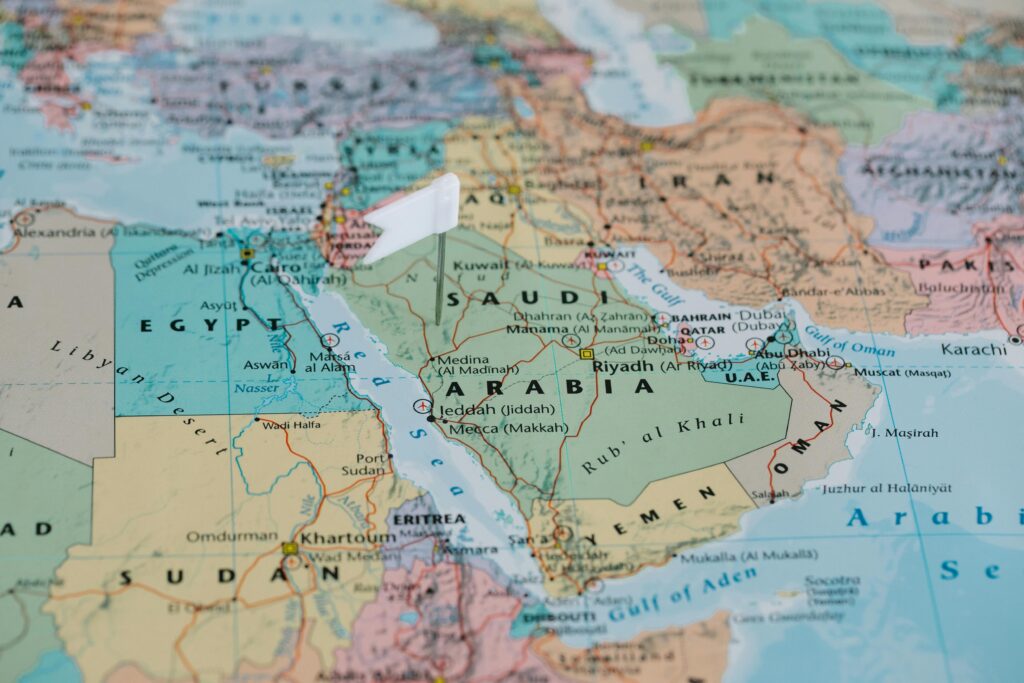
The explanation begins with a simple but important truth: the present does not always reveal the past. The Middle East we see today is the result of a long sequence of environmental and geological changes that transformed the region over immense periods of time. Long before deserts dominated the landscape, large areas were influenced by marine environments that created favorable conditions for the accumulation of organic material.
Nature’s role, however, did not end there. In many parts of the world, organic matter may have existed, but the chain of events required to create large petroleum reserves remained incomplete. In the Middle East, several favorable factors came together on an exceptional scale. Suitable sedimentary environments, geological structures capable of storing hydrocarbons, and long-term preservation conditions combined to create one of the most resource-rich regions on Earth.
The region also benefited from a geological history that was unusually supportive of petroleum accumulation. As the Earth’s crust shifted and landscapes evolved, conditions emerged that allowed vast quantities of hydrocarbons to remain trapped underground rather than escaping or being destroyed. With the passage of time, these reserves accumulated into deposits far larger than those found in many other parts of the world.
Perhaps the most striking lesson is that the Middle East’s oil wealth was never created by modern societies. It was inherited. The foundations of this energy abundance were established long before cities, kingdoms, national borders, or global markets existed. What appears today as economic and strategic power is often rooted in natural processes that unfolded long before human history began.
This is why the Middle East occupies such a central place in the global energy landscape. Its significance is not merely a result of current production levels or market influence. It stems from a rare geographical legacy that concentrated extraordinary petroleum reserves beneath a relatively small part of the Earth’s surface.
Where Are the World’s Largest Crude Oil Reserves Located Today?
If crude oil were distributed evenly across the planet, the global energy landscape would look very different. In reality, some countries sit atop enormous petroleum reserves, while others possess little or none despite having large populations, advanced industries, or rapidly growing economies. This imbalance has shaped patterns of trade, investment, and international influence for decades.
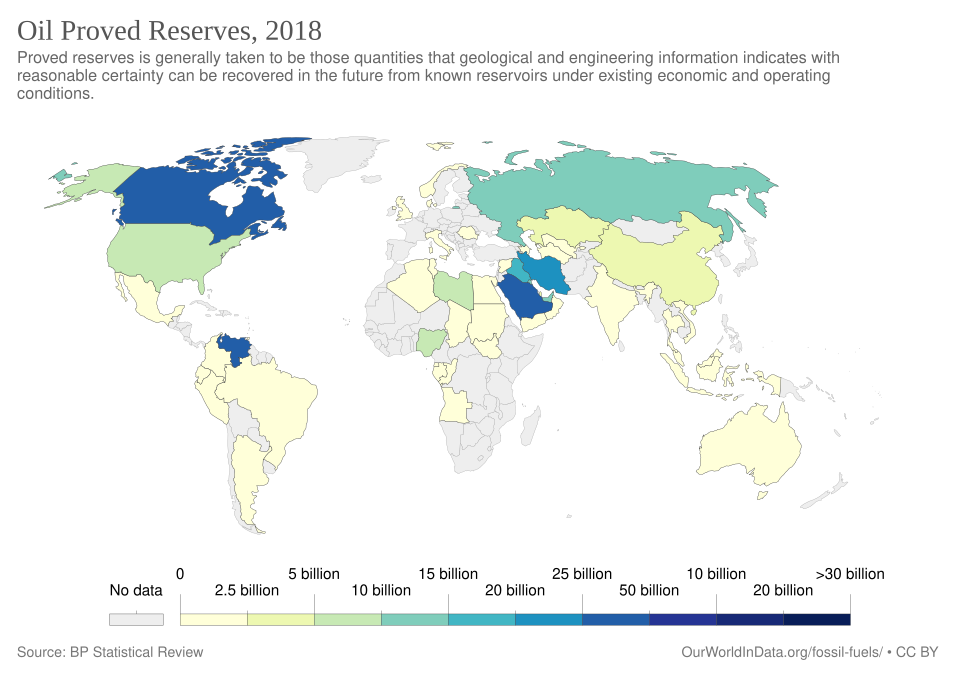
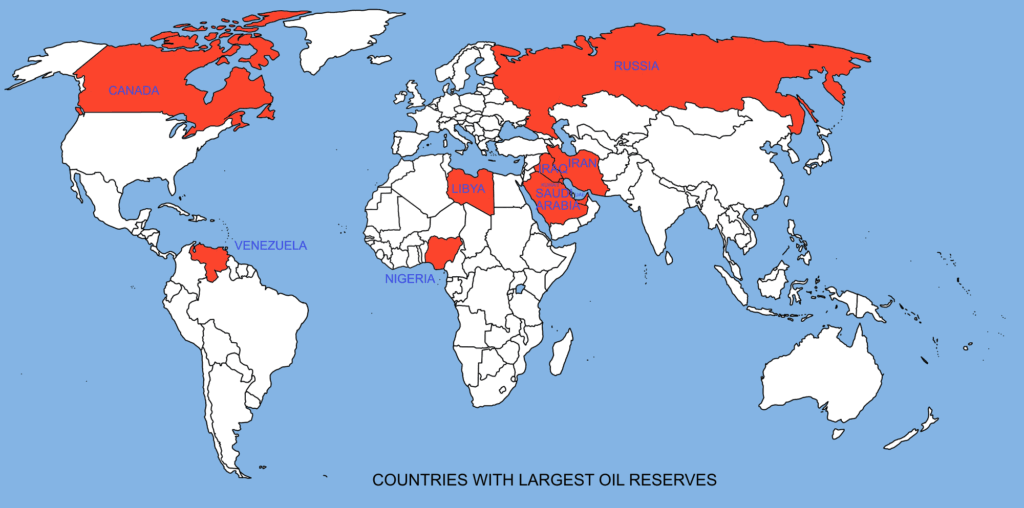
One of the most striking features of the global oil map is the concentration of reserves within a relatively small number of countries. The Middle East remains at the center of this picture, with nations such as Saudi Arabia, Iran, Iraq, Kuwait, and the United Arab Emirates holding vast reserves beneath their territory. Yet the story does not belong to one region alone. Venezuela and Canada also rank among the world’s leading reserve holders, demonstrating that significant petroleum resources can be found in very different geographical settings.
Looking at a map of global reserves reveals an important pattern: oil wealth is clustered rather than scattered. Large portions of the Earth’s surface contain little petroleum, while a limited number of regions possess resources capable of influencing energy markets far beyond their borders. As a result, certain countries occupy a position in the global economy that extends well beyond their size, population, or military strength.
This uneven distribution reminds us that geography continues to matter in a highly interconnected world. Technology may allow energy to be transported across oceans and continents, but it cannot change where nature placed these resources in the first place. The locations of today’s major oil reserves were determined long before modern states emerged, nevertheless their influence remains visible in global affairs even now.
How Oil Distribution Shapes Global Power and International Relations
Why Oil Means More Than Energy
Many things appear ordinary until we examine them more deeply. Crude oil is one of them. For most people, it is simply the fuel that powers cars, motorcycles, trucks, and airplanes. Yet reducing oil to fuel alone overlooks its much wider role in the modern world. In fact, it has become one of the most influential resources of the last century, affecting economies, industries, trade networks, and even the relationships between nations.
The significance of oil becomes clearer when we consider how deeply it is woven into modern life. Beyond transportation, petroleum supports manufacturing, petrochemicals, fertilizers, packaging materials, and countless industrial processes. This means that disruptions in oil supply rarely remain confined to the energy sector. Their effects can spread through production chains, influence prices, and eventually reach ordinary households in ways many people never notice.
This interconnectedness explains why developments in major oil-producing regions are followed closely across the world. A conflict, sanction, or supply disruption in one part of the globe can influence fuel costs, transportation expenses, and economic activity far beyond the countries directly involved. Nations that import large quantities of oil often feel these effects most strongly, as changes in global energy markets can quickly translate into higher costs for businesses and consumers alike.
Oil also challenges a common assumption about power. Many people view population, technology, military strength, or economic size as the primary sources of national influence. While these factors are undoubtedly important, natural resources can also shape a country’s position in the world. The strategic importance of several oil-rich nations demonstrates that geography can sometimes elevate the global significance of regions that might otherwise occupy a more limited place in world affairs.
At the same time, the presence of resources alone does not guarantee prosperity. History offers many examples of countries blessed with abundant natural wealth but still struggling to convert that advantage into broad-based development. On the contrary, nations with limited natural resources have often achieved remarkable progress through education, innovation, institutions, and effective governance. Resources may create opportunities, but how those opportunities are used ultimately matters just as much.
Perhaps the deeper lesson is that geography continues to influence human affairs in ways that are easy to overlook. Natural resources are not distributed equally across the Earth, and this unevenness has encouraged trade, cooperation, negotiation, and interdependence between societies. In a world where no country possesses everything it needs, nations remain connected through the exchange of resources, goods, technology, and expertise. The story of oil is therefore not only about energy; it is also a reminder of how geography continues to shape the modern world.
When Nations Depend on One Another for Energy
One of the defining features of the modern energy system is that no country possesses everything it needs. Some nations are rich in petroleum reserves but depend on others for investment, technology, or access to large consumer markets. Others have strong industries, growing economies, and advanced infrastructure, yet rely heavily on imported energy to keep those systems functioning efficiently. The global oil trade reflects this reality. Crude oil extracted in one region is often transported, refined, financed, and consumed elsewhere. As a result, energy does not merely move across borders; it creates lasting economic relationships between countries that may differ greatly in geography, culture, and development.
What is often overlooked is that energy dependence works both ways. Oil-exporting countries benefit from stable demand and reliable buyers, while importing nations depend on secure and uninterrupted supplies. Both sides have interests that are closely connected. Exporters need markets just as importers need energy.
This interconnectedness reveals another important aspect of geography. Because valuable resources are unevenly distributed, countries are encouraged to exchange what they have for what they lack. Trade, cooperation, and long-term partnerships usually emerge from these differences. In many cases, what appears to be a geographical imbalance becomes a reason for greater interaction between societies. Similar global patterns can also be seen in how education systems vary across countries.
At its core, the global energy system reflects a broader reality of human civilization. No nation is entirely self-sufficient, and few can meet all their needs alone. The movement of oil across the world serves as a reminder that cooperation is often not merely beneficial, it is necessary.
The Routes That Keep the World Moving
Fuel appears at stations, factories keep running, and goods continue moving across regions without interruption. These things are rarely noticed because they have become part of normal life.
Yet that reliability depends on an enormous flow of resources taking place beyond public attention. Every day, crude oil travels across seas, passes through narrow waterways, and moves through transportation networks that connect producing regions with distant markets. For most people, this movement remains invisible until something interrupts it.
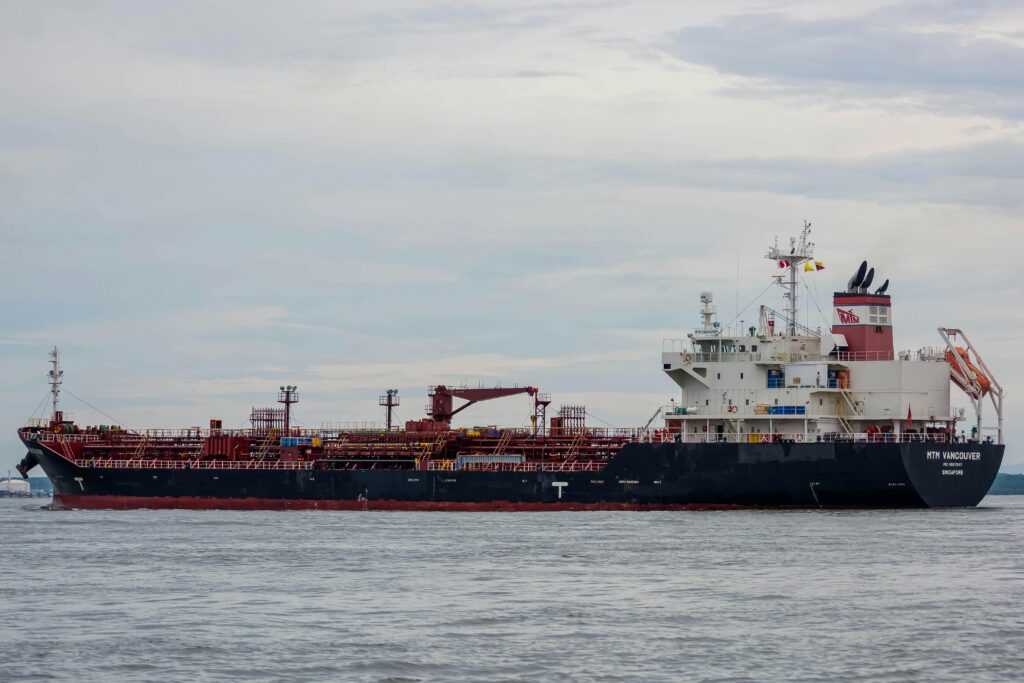
What makes certain routes important is not their size or appearance. Some are little more than narrow passages on a map. Their importance comes from what passes through them. A disruption in one location can influence activities taking place thousands of kilometers away because modern economies have become deeply connected through trade and energy flows.
There is an interesting contrast here. Oil is formed beneath the Earth’s surface over millions of years, still its value depends on movement. A resource that remains isolated has limited practical use. It becomes truly significant only when it can reach the places where people live, work, manufacture, and consume.
For this reason, transportation networks occupy a quiet but essential place in the functioning of the modern world. They rarely attract attention when everything operates smoothly, but their importance becomes immediately apparent whenever that continuity is challenged.
Can the World Remain Dependent on Unevenly Distributed Resources?
No system in nature or human society functions in complete isolation. Whether it is individuals, industries, or nations, interdependence is an underlying condition of existence. In that sense, dependency is not an exception in the modern world; it is the structure on which everyday life operates.
Uneven distribution of natural resources, including crude oil, is often viewed as inequality. Yet this unevenness is also what makes global connection necessary. If every region possessed the same resources, there would be little need for trade, exchange, or cooperation at a global scale. The absence of uniformity, in a way, sustains interaction between different parts of the world.
At the same time, this does not mean resources can be relocated or redistributed to remove imbalance. Geological realities cannot be altered by human preference. Oil exists where ancient conditions allowed its formation, not where modern demand is highest. This physical limitation ensures that no single country can become fully self-sufficient in every essential resource.
What emerges from this is not a system built on independence, but on managed dependence. Countries, companies, and communities remain connected because each one possesses something the other requires. Even within a single organization, no outcome is achieved in isolation—coordination between roles, skills, and resources is what makes any system functionable.
The challenge, therefore, is not dependency itself, but how it is handled. When managed effectively, it enables trade, cooperation, innovation, and cultural exchange. When disrupted or imbalanced, it exposes vulnerabilities that are otherwise hidden in times of stability.
Uneven distribution of natural resources is not only a limitation of nature. It is also a force that has shaped global interaction, quietly linking societies together through necessity rather than choice.
The Hidden Geography Behind Global Energy
Crude oil is not only a physical resource hidden beneath the Earth’s surface; it comes from ancient geological processes that still influence the modern world in unexpected ways. Its distribution is uneven, not by human design, but by the conditions under which it was formed millions of years ago.
This uneven geography quietly influences global connections. It affects where industries develop, how trade flows, and why nations remain linked through systems of exchange and dependence. What we see today as an economic system is closely tied to a much older natural history.
In the end, crude oil is not only about energy. It is a reminder that geography continues to shape human civilization in ways that are often invisible, yet deeply influential.