

Kindness costs nothing, yet it can feel surprisingly rare in everyday life. We rush through our days, compete to get ahead, and become so occupied with our own lives that we sometimes pass by the struggles of others without pausing.
But kindness was never meant to be performed or proved. It is not part of success or competition. It is something natural, like soil that gives life without asking for anything in return.
In the pace of modern life, this simplicity feels less visible. A small act, a simple gesture, can soften something within us without explanation.
And yet, we are not without kindness. Perhaps we have simply grown a little distant from it.
Kindness in Today’s World: Why It Feels Different Today
Kindness still exists in many forms, but the way it is expressed has changed. Today, acts of kindness are more visible in some settings, often shared, acknowledged, or expressed openly.
People help one another in daily life, support strangers, and respond with care when someone needs help. Sometimes, these acts are shared publicly, not necessarily to show off, but because sharing experiences has become part of modern life.
At the same time, kindness remains deeply personal for many. Countless people help others without telling anyone, without seeking recognition, and without expecting attention in return.
Earlier, kindness often remained unseen and unspoken. Today, it can be both visible and invisible. The difference is not necessarily in the presence of kindness, but in how people express and understand it across different times.
Kindness has not lost its value. Its expression has taken different forms as people’s lives and interactions have changed.
But a question still lingers in my mind: Is this how kindness is meant to exist in the modern world?
Why Are People Less Kind Today?
People are not necessarily less kind by nature, but the environment, pace of life, and pressures around them can influence how they think and respond.
- A fast and competitive lifestyle leaves less room for emotional pauses and natural human connection.
- Material success can take priority over inner values such as empathy, peace, and understanding.
- Constant comparison creates pressure, gradually affecting patience and emotional sensitivity.
- Many people become increasingly focused on their own goals and survival in a demanding world.
- Kindness still exists, but it can become less noticeable in everyday life.
- It is not that people have stopped caring; sometimes, life leaves them with less time and space to express that care naturally.
Insight: Kindness is not bound to any particular time, place, or religion. It does not seek recognition or demand anything in return. Its value cannot be measured in numbers because genuine kindness goes beyond what can be counted.
It is not only about what we understand, but also about what we feel and express through our actions.
When Something Free Becomes Rare
Kindness was never meant to feel uncommon. It has always been a simple and natural part of being human. Yet today, something that once seemed ordinary can stand out precisely because it is less visible in our everyday interactions.
Not because kindness has disappeared, but because we may no longer practise it as naturally as we once did. In a life shaped by urgency and constant movement, even simple acts of care can be overlooked.
Sometimes, what becomes rare is not kindness itself, but our willingness to pause long enough to express it.
Why Kindness Still Holds Value
Kindness matters because its influence extends beyond a single moment or individual.
- It keeps a person grounded and reduces arrogance and selfishness
- It brings calmness and supports a healthy state of mind
- It helps in reducing anger, anxiety, and inner stress
- Kindness builds respect, brotherhood, tolerance, and a sense of fairness
- Where kindness exists, harmony naturally follows
- It shapes a more responsible and civilized society
- It improves focus and clarity in personal life
- A single kind of act can influence others and create meaningful change
- It allows us to be useful and responsible as human beings
Kindness is what moves us from simply being human to truly being humane, from having value to becoming invaluable, from constant movement to a moment of pause.
What Changed in Us
We Became Too Fast to Feel
We have started living at an increasingly hurried pace. In this constant rush, we react quickly but rarely pause to feel, reflect, or understand.
When we stop making time for reflection, our sensitivity can gradually fade. This can affect not only our relationships but also our personal growth and emotional well-being.
It is not necessarily that we no longer care. Rather, we may have stopped giving ourselves enough time to notice what others are going through.
Sometimes, understanding another person requires nothing more than slowing down, listening, and allowing ourselves to see beyond our own immediate concerns.
We Became Too Focused on Ourselves
We have become increasingly occupied with our own goals, pressures, and survival. In trying to manage responsibilities and make everything work, our attention can gradually turn inward rather than outward.
Understandably, people must care for their own needs and work towards their goals. The problem arises when our personal concerns leave us with little attention for anyone else’s struggles.
It is not that we have stopped caring about others, but that our own responsibilities can begin to occupy more space in our lives.
In this subtle shift, “we” slowly turns into “me,” and kindness becomes less natural in everyday moments.
Tired Minds, Empty Patience
Modern life can be mentally exhausting. Continuous pressure, responsibilities, and constant thinking can leave the mind with little room to rest.
When the mind is tired, patience becomes harder to maintain. Small things begin to feel heavy, and reactions can come more quickly than understanding.
A person who is mentally overwhelmed may struggle to respond calmly, even when they do not intend to hurt anyone.
It is not always a lack of kindness. Sometimes, a lack of inner calm makes it harder to respond with awareness and consideration.
Recognising this does not mean excusing hurtful behaviour. It means understanding that emotional exhaustion can affect how people treat one another, and that patience begins with greater awareness of ourselves.
Screens Replaced Presence
Many young people and adults spend considerable time on social media, scrolling through feeds, watching reels, and moving from one screen to another. Gradually, these habits can take up time and attention that might otherwise be spent on conversations, relationships, and the people around us.
Even when we are physically present with others, our minds may be elsewhere. We hear words without fully listening, sit together without meaningful interaction, and miss opportunities to notice when someone needs our attention.
As a result, our connections may have increased, but our presence can feel diminished.
The World Health Organization’s explanation of social connection and well-being highlights why meaningful human connections matter to our health and well-being.
Kindness often grows through small, ordinary interactions: listening patiently, noticing someone’s discomfort, offering help, or giving another person our undivided attention.
When our attention is constantly occupied elsewhere, these opportunities can pass unnoticed.
Why Kindness Feels Risky Today
At times, even a simple act of kindness can feel uncomfortable because we become concerned about how others might judge us.
Imagine you are eating something on the roadside when a person in need approaches and asks for help. Before responding, a thought may arise: What will people think if I share my food or invite this person to sit with me?
In that moment, hesitation can quietly replace intention. Our concern about public opinion begins to compete with our instinct to help.
I still remember an experience that made me reflect on this. Once, I went to a cobbler to have my shoes polished. After he finished the work, I paid him and tried to give him some extra money. He refused and accepted only the amount he was owed.
That small interaction stayed with me. It reminded me that human interactions do not always unfold as we expect. An act offered with kindness may not be accepted, and the other person has every right to make that choice.
Kindness does not require us to control how someone responds. It asks us to act with sincerity while respecting the other person’s dignity and freedom.
Sometimes, the uncertainty lies not in whether we want to help, but in how our actions might be perceived. We worry about being judged, misunderstood, or suspected of having an ulterior motive.
Sometimes, kindness is present in our hearts, but the fear of being judged makes it difficult to express.
When Kindness Is Misunderstood
Today, some people mistake kindness for weakness. If someone speaks harshly and we choose not to respond with equal aggression, our silence may be interpreted as fear or an inability to defend ourselves.
In reality, choosing not to escalate a conflict can reflect maturity, patience, and self-control. Not every argument deserves a response, and not every provocation deserves our attention.
True strength is not always about winning an argument; sometimes, it is about refusing to let anger decide how we behave.
Similarly, when someone visits a slum or helps people in need, others may look at the act with suspicion, assuming it is motivated by publicity or personal gain. What may be a sincere expression of humanity can become the subject of doubt and criticism.
Of course, intentions can differ from one person to another. Some people do seek recognition for their actions. But that does not mean every public act of kindness is performed for attention, nor should we automatically question someone’s motives without reason.
People also tend to limit kindness to visible acts, such as giving money, distributing food, or helping large numbers of people. These acts can make a genuine difference, but kindness is not confined to what we do publicly.
Our intentions, concern for others, and willingness to understand their circumstances also matter. Even when we cannot offer material help, we can choose not to humiliate someone, dismiss their pain, or treat them without dignity.
Kindness does not mean agreeing with everyone or accepting every form of behaviour. We can treat people with dignity while disagreeing with them, setting boundaries, and standing against what is wrong. Genuine kindness is not the absence of strength; it is the ability to use that strength without losing our humanity.
When kindness is misunderstood, explanations can begin to replace the very feeling that should guide our actions.
The Small Things We Stopped Noticing

Small acts of kindness often speak louder than words.
As busy human beings, we have become accustomed to moving past things without always noticing what is happening around us. While walking along a road, we might see a stone or a banana peel lying in someone’s path. It could cause another person to slip, fall, or get hurt. We notice it, but sometimes continue walking without doing anything.
Such a moment may seem insignificant, but it presents a simple choice: should we leave the problem for someone else, or take a few seconds to prevent possible harm?
Our attention, awareness, and emotional state influence how we respond to the world around us. When our minds are occupied with our own concerns, we may overlook opportunities to make someone’s day a little safer or easier.
At times, an animal is thirsty, someone has fallen, or an accident has just happened. These are simple moments where a small response could make a difference, but we pass by without pausing. We do care, but our attention often remains occupied within, leaving little sense of presence or awareness.
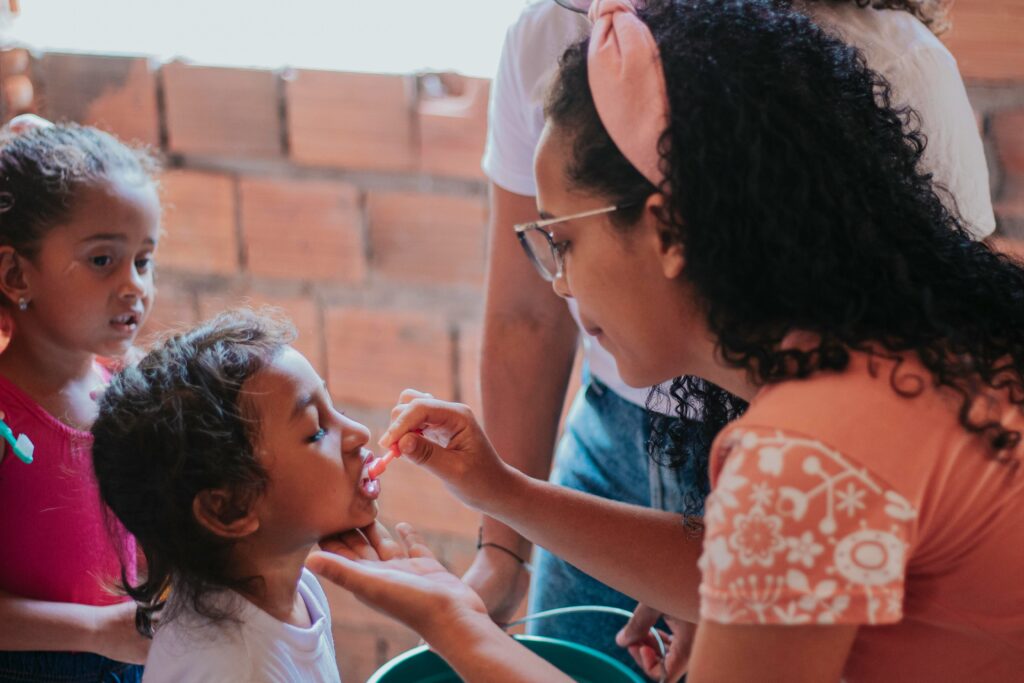
Kindness still exists everywhere. It has not disappeared; it is our ability to discern and pause that has quietly weakened.
A Simple Act That Stayed with Me
One day at school, something happened that stayed with me.
A dead jackal was lying near the roadside, just outside the school campus. Some teachers were discussing how to get it removed. There was even a suggestion that students could be asked to do it. Everyone had something to say, but nothing was happening.
I stood there for a moment, listening. Then a simple thought came to me: Why wait?
I went to my class and took attendance. After that, I asked the students a simple question: Who among them would be willing to do something people usually avoided, something not for personal benefit but for the sake of others?
To my surprise, many hands went up.
We took a rope, and I personally tied it carefully around the animal. Together, we moved it away from the school area so that its smell would not disturb anyone and it would no longer pose a problem for people nearby.
It was not a grand act or anything extraordinary. It was simply something that needed to be done.
But at that moment, it felt different.
There was no recognition, no announcement, and no reward. There was only a quiet sense of relief, a feeling that we had done something that needed doing. I felt lighter and calmer, as though something within me had settled.
What stayed with me was not the size of the act, but the realisation that we do not always need to wait for someone else to take responsibility.
Sometimes, we see a problem, discuss it, and wait for another person to act. We may convince ourselves that it is not our responsibility, that someone else will take care of it, or that the task is too unpleasant to undertake.
But there are moments when the simplest response is to step forward and do what we reasonably can.
Maybe kindness is not always about doing something great. Sometimes, it is about not ignoring what needs to be done.
And in those simple, unnoticed moments, we do not just help others. We also change something within ourselves.
Final Reflection
Kindness has not disappeared from our lives. It continues to exist in small acts, unspoken words, and the feelings we express through our interactions with others. What we may have lost, in the chaos of modern life, is the habit of noticing it consciously and allowing it to guide our actions.
We do not need to perform grand gestures or wait for the perfect opportunity to become kinder. We can begin with the people around us, with the stranger who needs help, with the person who deserves to be heard, and with the small responsibilities we encounter every day.
Kindness is not measured only by what we give, but also by the respect we show, the patience we practise, and the suffering we choose not to ignore.
The world does not always need grand gestures. Sometimes, it needs us to notice, pause, and do the small thing that another person needs.
Perhaps the real question is not whether kindness is rare, but whether we are willing to make room for it in our everyday lives.