
In South Sudan, oil brings money into the economy, but that wealth has not secured even the most basic necessities for millions of people. The country has valuable natural resources and land with agricultural potential, yet poverty, hunger, and inadequate public services remain widespread. This is not a contradiction that can be explained by a lack of resources alone. It raises a more difficult question: why has so little of the country’s wealth translated into a better life for its people?
South Sudan gained independence on 9 July 2011, after decades of war and a long struggle for self-determination. For a population that had endured so much, independence meant more than the creation of a new state. It offered the chance to live with greater security, develop the country’s resources and build institutions that served its people. There was reason to hope that oil revenues could help fund schools, hospitals, roads, and opportunities for future generations.
The years that followed exposed how difficult that task would be. Civil war erupted in 2013, and repeated violence and political instability damaged the country’s development. Its dependence on oil made the economy especially vulnerable when production and exports were disrupted. Weak public finances, limited infrastructure and inadequate essential services have made it harder for households to recover from one crisis before the next arrives. The World Bank’s 2026 assessment continues to identify extreme poverty, economic instability and weak governance as major barriers to progress.
But the problem cannot be understood through conflict or oil alone. A resource-rich country still needs accountable institutions, sound economic decisions, investment in people and a stable environment in which farmers can grow crops, businesses can operate, and children can attend school. Without these foundations, natural wealth may generate revenue without creating broad-based prosperity.
South Sudan’s challenge is not only to generate wealth, but to turn that wealth into security, opportunity and dignity for its people. To understand why this has proved so difficult, we must look at the country’s history, the way its economy works and the choices that have shaped its development.
South Sudan Poverty: Understanding the Reality
The scale of poverty in South Sudan is difficult to grasp without looking at the numbers. The World Bank’s 2024 poverty assessment, based on a household survey conducted in 2022, found that 76% of the population lived below the national poverty line. More than two-thirds were also living in extreme poverty, according to the international poverty measure used in that assessment. These are dated survey findings, not a fresh count of the population, but they show how deeply poverty had taken hold. It was not limited to a small, disadvantaged section of society. It affected most of the country.
The economic picture has remained bleak. The World Bank estimated that extreme poverty rose from 84% in 2024 to 87% in 2025. High inflation, currency depreciation, and disruptions to oil production have placed further pressure on households. When the cost of food rises sharply while wages and incomes fail to keep pace, families lose purchasing power. Money that once covered several basic needs may no longer be enough for food alone.
Moreover, hunger makes the consequences especially visible. A joint UN assessment published in April 2026 estimated that 7.8 million people would face acute food insecurity between April and July 2026. This is a measure of difficulty accessing enough food, not another estimate of the number living in poverty. The same assessment identified around 73,000 people facing the most severe conditions, classified as Catastrophe. Conflict, displacement, high food prices, and disrupted livelihoods were among the factors driving the crisis.
Behind these figures are decisions families should never have to make: whether to buy enough food or pay another essential expense, whether a child can continue attending school, or whether medical care is affordable. The circumstances differ from one household to another, but insecurity leaves little room to recover when illness, violence or a failed harvest strikes.
Poverty becomes especially difficult to escape when each new crisis takes away the means of surviving the previous one. To understand how South Sudan reached this point, we must look back at the wars, political struggles, and fragile foundations on which the independent nation was built.
How History and Conflict Shaped the Nation
South Sudan’s poverty cannot be understood without looking at the history that preceded its independence. The country emerged from decades of war with damaged infrastructure, disrupted livelihoods, and limited experience of running the institutions required to provide public services across a new state. Independence gave South Sudan control over its own future, but it did not erase the consequences of the conflict that had brought it there.
The first Sudanese civil war began in 1955, before Sudan gained independence in 1956. A second, much longer war began in 1983 and continued until the 2005 Comprehensive Peace Agreement. The agreement paved the way for a referendum in which southern Sudanese voted overwhelmingly for independence. On 9 July 2011, South Sudan became an independent country. For people who had lived through generations of conflict, this was a historic achievement. The challenge was now to turn that achievement into peace, functioning public institutions, and better living conditions.
But the new country soon faced another war, this time within its own political leadership. In December 2013, a power struggle between President Salva Kiir and his former vice-president, Riek Machar, escalated into armed conflict. Fighting spread, civilians were killed and millions were displaced over the course of the conflict. Violence intensified again in 2016. A peace agreement signed in September 2018 led to the formation of a transitional unity government in February 2020, but implementation has remained incomplete and elections have been repeatedly delayed.
The economic consequences reach well beyond the places where fighting occurs. When families flee their homes, they may lose access to their land, livestock, tools and local markets. Farmers cannot reliably plant or harvest when insecurity makes working their fields dangerous. Trade becomes more difficult, investment is discouraged, and children may lose valuable years of education. These losses weaken household incomes today while making it harder for communities to recover tomorrow.
In addition, conflict also makes governing a country more difficult. Building schools and clinics requires more than announcing plans; it requires public revenue, trained staff, roads, reliable administration, and the ability to maintain services over time. When political instability repeatedly interrupts these efforts, progress becomes fragile. South Sudan’s experience shows how the costs of war can persist long after a peace agreement has been signed.
History, however, is not the whole explanation. Many countries have emerged from conflict and gradually rebuilt their economies. South Sudan’s future also depends on the choices its leaders make about public money, political power, accountability and the delivery of essential services. The question is not only how the country suffered, but why has peace proved so difficult to turn into lasting development.
Independence created the opportunity to build a different future; lasting peace and effective governance are essential to making that future possible.
The Resource Paradox: Why Oil Wealth Has Not Reduced Poverty
South Sudan possesses a resource that could help finance its development, but natural wealth does not automatically improve people’s lives. Oil generates income, yet the benefits a country receives depend on how its economy is structured and how effectively that income supports productive activity. South Sudan’s experience reveals a difficult paradox: a country can earn substantial revenue from its natural resources while much of its population remains poor.
Dependence on Oil and Vulnerability to Economic Shocks
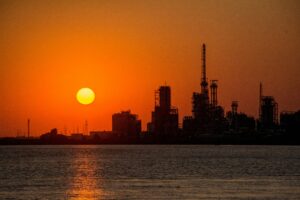
Oil dominates South Sudan’s economy. According to the African Development Bank’s 2026 Country Focus Report, it accounts for more than 80% of GDP, approximately 95% of exports, and between 70% and 80% of government budget revenue. This concentration leaves the country heavily dependent on a single source of income.
The risks become clear when oil production or exports are disrupted. In February 2024, damage to an export pipeline running through neighbouring Sudan sharply reduced South Sudan’s ability to export oil. The disruption affected government revenue and placed additional pressure on an economy already facing serious difficulties. Oil exports resumed in April 2025, but the episode exposed a fundamental weakness: when a country’s main source of income is interrupted, the consequences can spread well beyond the industry itself.
Moreover, oil earnings also matter because South Sudan depends on imports for many essential goods. These purchases require foreign exchange, meaning foreign currency is used to pay for goods and services from abroad. When oil exports decline, the supply of foreign currency can come under pressure. If the national currency loses value, imported products may become more expensive, making food, fuel, medicines and equipment harder to afford.
The effects can reach people who have never worked in the oil industry. Businesses may face higher costs, public finances may come under pressure, and households may find that their incomes no longer cover the same expenses. A disruption in oil exports can therefore become a wider economic problem, affecting livelihoods far removed from the oil fields.
Reducing this vulnerability requires a broader economic base. Agriculture, manufacturing and local businesses can create additional sources of income and employment, making the country less dependent on a single export. South Sudan has considerable agricultural potential, but turning that potential into productive activity requires investment, access to markets, transport and opportunities for farmers to sell their produce.
The problem is not that South Sudan has oil. It is that so much of its economic stability depends on oil continuing to flow.
Where Resource Wealth Fails to Become Public Prosperity
Even when oil generates revenue, another question remains: what does that income deliver for the people whose future depends on the country’s development?
Natural resources can provide governments with money to invest in public services and economic infrastructure. But revenue is only a starting point. Its wider value depends on whether it helps create the conditions in which people can learn, work, build businesses, and improve their living standards.
South Sudan’s public finances remain closely tied to oil, while revenue from other sources is limited. This leaves the country with little protection when oil income falls and restricts the resources available for sustained development. It also highlights the importance of managing public revenue transparently and directing spending towards genuine public needs.
However, the difference between spending money and achieving progress is particularly important. A road can connect farmers to markets and reduce the cost of transporting goods, but only if it is completed and maintained. A school needs qualified teachers and learning materials, not just classrooms. A health facility requires staff, equipment, and medical supplies before it can provide effective care. The value of public spending lies not in the amount allocated alone, but in what people can use and benefit from.
Oil extraction also does not automatically provide employment for a large share of the population. Even when exports generate substantial income, the benefits may not create enough opportunities for people working outside the oil sector. If agriculture remains underdeveloped and other industries struggle to grow, many households can remain dependent on low-productivity farming or informal work.

This is why resource wealth must be judged by more than export earnings or government revenue. It must also be judged by whether the economy creates productive opportunities beyond the industry that generates that wealth. Oil can help finance development, but lasting prosperity requires an economy in which more people can contribute and benefit from growth.
Natural resources give a country something valuable to build with. They do not determine what that country builds, or who ultimately benefits.
Weak Institutions and the Barriers to Development
A country can have natural resources, development plans and people determined to improve their lives. But progress remains difficult when the institutions responsible for delivering it cannot function effectively. In South Sudan, the challenge is not only deciding what needs to change. It is making those changes work in people’s lives.
One problem is the way government responsibilities are divided. The World Bank’s 2026 public finance review identifies overlapping functions across ministries and agencies, with responsibilities that are not always clearly defined. When several departments perform similar tasks, coordination suffers. Decisions can stall, public money becomes harder to track, and responsibility for failure becomes less clear.
The consequences reach beyond government offices. A development project needs careful planning, clear responsibilities and continued work after its launch. Building a school is one step. Keeping it open, supplying learning materials and ensuring that teachers are available are different challenges. When administrative systems are weak, even worthwhile plans can fail to deliver the results people were promised.
Accountability connects public authority with public responsibility. Officials must be able to explain their decisions, and public spending must be open to scrutiny. When money is allocated to a project, people should be able to see what was delivered and whether it served its purpose. Without effective oversight, failures can go uncorrected and public trust becomes harder to earn.
Continuity matters, too. Institutions take time to build. They need experienced staff, reliable procedures and systems that can function beyond the tenure of individual officials. Political instability and frequent changes in senior positions can disrupt that work. When public servants face prolonged salary delays or lack the resources to do their jobs, the delivery of essential services can suffer.
None of this means South Sudan is incapable of progress. These are serious obstacles, but they are not a permanent verdict on the country. Clear responsibilities, professional public administration and transparent use of public money can help the state become more dependable. Such changes must be reflected in everyday practice, not left as promises on paper.
A state earns public trust when its institutions turn responsibility into results that people can see and rely on.
The Human Cost of Poverty in South Sudan
Poverty is measured in figures, but people experience it through the opportunities they lose and the choices they are forced to make. In South Sudan, its consequences reach into childhood, family life, and the hopes people hold for the future. For many households, the challenge is not planning how to get ahead. It is finding a way to meet basic needs without falling further behind.
Education, Healthcare and Unequal Opportunities
A child’s future should not depend on whether their family can afford school supplies, whether a teacher is available, or whether their community has a functioning school. But these barriers shape educational opportunities in South Sudan. UNICEF estimated that 2.81 million children, nearly 65% of school-aged children, were out of school in its 2026 humanitarian appeal.
The consequences extend beyond missed lessons. Education gives young people the knowledge and skills to pursue work, understand their rights, and make informed decisions. When children spend years without reliable access to learning, their opportunities narrow. Poverty can then pass from one generation to the next, not because families lack ambition, but because the means to change their circumstances remain out of reach.
Healthcare presents a similar difficulty. The World Health Organization estimated that 6.3 million people would require health assistance in 2026. For families with limited incomes, reaching a health facility may involve transport costs they cannot meet. Even when they arrive, essential medicines, equipment, or trained staff may not be available.
Therefore, an illness can become an economic setback as well as a health crisis. A parent may lose income while caring for a sick child. A household may have to spend its limited savings on treatment. When care is delayed, a condition that might have been manageable can become much more serious.
Education and healthcare are not luxuries to be pursued after a country becomes prosperous. They are among the foundations that allow people to build a more secure life.
When Survival Takes Priority Over the Future
For a family living under constant financial pressure, immediate needs leave little room for long-term decisions. Money spent on food cannot also cover school expenses, transport, or medical treatment. When resources run short, families must decide which need can wait, even when none is unimportant.
Displacement makes these choices harder. Leaving home can mean losing access to farmland, work, familiar markets, and the support of relatives or neighbours. Rebuilding a life requires more than finding shelter. People need a way to earn an income, obtain essential services, and regain some control over their circumstances.
Children bear a particular burden. When households lose their livelihoods, education may be interrupted so that children can help at home or contribute to family survival. Girls can face additional risks, including pressure towards early marriage. These outcomes are not inevitable, but prolonged hardship can make them more likely.
It is important to see people in these circumstances as more than victims of a crisis. Families continue to care for one another, seek livelihoods, and make difficult decisions with the resources available to them. Their efforts deserve to be recognized, but resilience should not become an excuse for leaving people without essential support.
People should not have to sacrifice their children’s future to get through the present. Reducing poverty means more than helping families get through a crisis. It means giving them a fair chance to recover, make their own choices, and build lives that are not defined by hardship.
How Climate Shocks Deepen an Existing Crisis
In South Sudan, a flood can destroy a season’s work in a matter of days. Farmland disappears under water, roads become impassable, and communities can lose access to markets and essential services. Drought brings a different danger, leaving crops, livestock, and families struggling for water.
These shocks strike a country where many people depend on farming and livestock for their livelihoods. The World Bank’s 2026 climate assessment warns that severe flooding can cover up to a quarter of South Sudan in particularly bad years. It also projects that rising temperatures could reduce sorghum yields by 8% by 2050. These are not distant concerns for a country already struggling to secure food and stable incomes.
The damage does not end when the water recedes. A farmer may lose both a harvest and the money needed to plant again. When roads are damaged, reaching markets or health facilities becomes harder. The experience of recurring floods in Bihar offers a related lesson: the water may recede long before families have recovered from their losses.
South Sudan cannot prevent every flood or dry spell. But better early-warning systems, resilient farming, improved infrastructure, and careful water management can reduce the harm. Preparation matters most when it helps people protect their livelihoods, not merely survive the immediate emergency.
For a family already struggling to get by, losing a harvest can mean losing months of hard work and the chance to move forward. Building resilience means helping people recover, protect their livelihoods, and face the next difficult season with greater security.
What Must Change for South Sudan to Build a Better Future
South Sudan’s future need not be defined by the poverty and instability it has endured. The country has natural resources, agricultural potential, and people who want a safer and more secure life. Turning that potential into progress will require more than wealth. It will require cooperation, responsible leadership, effective implementation of policies, and a shared commitment to the future.
Build unity around a shared national purpose
A country moves forward when its people can work together towards common goals, even when they differ in their views or backgrounds. Unity does not mean that everyone must think alike. It means resolving differences peacefully and placing the country’s future above divisions that fuel violence and mistrust.
Political leaders, communities, and institutions all have a role to play in building trust and cooperation. When conflict persists, it paralyses development, makes people vulnerable, and diverts energy from building a better future. No country can reach its full potential when its people are continually pulled apart by violence and mistrust.
Turn oil wealth into lasting public benefits
Oil revenue should help build the foundations of a functioning society: reliable schools and hospitals, roads, clean water, and essential public services. Transparent spending and effective accountability are crucial so that national wealth serves public needs.
But announcing a policy or allocating a budget is only the first step. Plans must be implemented properly, projects completed, and public services maintained. Responsibilities should be clear, progress monitored, and failures addressed rather than allowed to persist. A policy proves its worth not when it is announced, but when people experience its benefits in their daily lives.
Open more doors through economic diversification
Imagine a room with only one door. If that exit becomes blocked during an emergency, everyone inside is at risk. Having several doors provides alternative ways out. An economy dependent on a single major source of income faces a similar danger. When oil production or exports are disrupted, the whole country can suffer.
South Sudan needs other strong sources of livelihood. Investment in agriculture and related industries could help farmers access better equipment, irrigation, storage, transport, and markets. Food processing and livestock-related businesses could create further opportunities, while support for small businesses and other productive sectors could broaden employment. The goal is not to abandon oil, but to ensure that the country’s future does not depend on it alone.
Invest in people and prepare for future challenges
Education, healthcare, and climate-resilient infrastructure are essential to lasting progress. Children need opportunities to learn, families need access to healthcare, and farmers need practical support to withstand floods and droughts. These investments help people protect their livelihoods and contribute to the country’s development.
South Sudan’s transformation will not happen overnight. It will take patience, consistent effort, cooperation, and decisions that serve the public interest. But progress becomes more achievable when peace allows people to work, institutions fulfil their responsibilities, policies are put into practice, and economic opportunities reach more communities.
A stronger future begins when a nation brings its people together, turns its promises into action, uses its resources wisely, and creates more than one path towards prosperity.
A Nation’s Future Should Be Measured in Human Possibilities
South Sudan’s story reminds us that natural wealth alone cannot build a prosperous nation. Resources can provide the means, but lasting progress depends on peace, accountable institutions, wise decisions, and people working together towards a shared future.
A country’s strength is not measured only by the oil it produces, the wealth it earns, or the size of its population. It is also measured by whether children can attend school, families can access healthcare, farmers can earn a living, and people can look towards tomorrow with hope rather than fear.
South Sudan has endured immense hardship, but its past does not have to determine its future. With greater cooperation, responsible leadership, and opportunities that reach ordinary people, the country can move towards a more secure and dignified life.
The true promise of a nation is not the wealth beneath its soil, but the possibilities it creates for the people who call it home.