
When we hear the word culture, many of us immediately think of food, festivals, clothes, music, language, or traditions passed down through generations. These things are part of culture, but culture does not end there.
It is also present in the way we greet people, raise children, show respect, understand family, express emotions, celebrate important moments, and decide what feels normal or acceptable in everyday life.
This is where the word becomes more complicated than it first appears.
We use words such as culture, tradition, customs, ethnicity, identity, society, and heritage in everyday conversations, sometimes as though they all mean the same thing. They do not. A tradition can be part of a culture, but culture is much broader than tradition. Ethnicity can be connected to a person’s cultural identity, but ethnicity and culture are not the same. A custom may be widely practiced without being an ancient tradition.
These differences are not just matters of vocabulary. They affect how we understand people.
When we reduce a culture to a festival, food, a dress, or a single social practice, we can miss the people behind it. We may mistake one tradition for an entire culture or judge a society through a practice we do not fully understand.
So, what is culture, really?
Is it something we inherit? Something we learn? Something we choose? Can it change? Can one person belong to more than one culture? And how does culture shape the way we see ourselves and the world around us?
To understand culture, we must look beyond the things that are easiest to notice and examine the ideas, values, practices, and meanings that people learn and share.
That is where a deeper understanding of culture begins.
Culture Is More Than What We Can See
Culture is not limited to what the outside world can see. It is also present in the intentions, values, and expectations that quietly shape how people treat one another.
It can be seen in the desire for goodness, not only for oneself but for others too. It may appear in the way a person responds to someone else’s success, suffering, disagreement, or even hostility.
Imagine someone choosing to wish well for a person who is jealous of them rather than responding with jealousy in return. There may be nothing unusual to observe from the outside. No festival, clothing, food, or ceremony explains the response. What matters is the idea behind it: a belief that another person’s wrongdoing does not have to determine one’s own conduct.
This is why understanding culture requires us to look beyond behavior itself. The same action can carry different meanings in different social settings. What we see is the expression; behind it may be ideas about respect, kindness, dignity, responsibility, forgiveness, or how people ought to live with one another.
Much of culture exists like in this less visible space.
It shapes what people learn to value, what they expect from one another, how they understand right and wrong, and what they consider worthy of respect. These influences may not be visible in a photograph, a festival, or a traditional dress, but they can be deeply present in everyday life.
Therefore, culture is not only about what people do. It also has something to do with why certain ways of thinking, feeling, and behaving become meaningful to them.
So, What Exactly Is Culture?
Culture is the learned and shared way of life of a group of people. It includes the ways people communicate, understand relationships, express themselves, celebrate important occasions, organize everyday life, and make sense of what is right, meaningful, respectful, or acceptable.
But this definition becomes more useful when we look at what lies behind the words learned and shared.
Culture is learned because people are not born knowing how their community lives. A child gradually learns through family, language, education, observation, relationships, and everyday experience. They learn how to speak, how to greet others, how to behave with elders, what foods are familiar, which occasions matter, and what kinds of behavior are considered respectful or inappropriate. Much of this learning happens without anyone formally announcing that they are teaching culture.
Culture is shared because it exists beyond one person’s private preferences. It becomes recognizable within a group through patterns of behavior, ideas, values, knowledge, practices, and meanings that people have in common. But shared does not mean identical. No community is made up of people who think, behave, or practice everything exactly in the same way. People can belong to the same culture while interpreting parts of it differently, questioning certain practices, or choosing not to follow them.
Culture also has both tangible and intangible dimensions. Its tangible side can be seen in things such as clothing, food, architecture, art, crafts, objects, and other physical expressions of a way of life. Its intangible side is less visible. It includes language, values, beliefs, knowledge, expectations, social norms, and ideas about how people should live with one another.
This invisible side is important because culture is not merely a collection of things people do. It can influence how people understand what those things mean.
A greeting, a meal shared with others, a particular form of dress, or a family practice may look like an ordinary action from the outside. Within a community, however, it may carry ideas about respect, belonging, responsibility, hospitality, dignity, faith, or family. The outward practice is only one part of the picture. The meaning attached to it is another.
Culture is also closely connected with what people inherit from those who came before them. Parents, grandparents, communities, institutions, and previous generations leave behind ways of thinking and living that can continue into the present. Children see what is practiced around them and may absorb it so naturally that it begins to feel less like something they learned and more like something that has always been normal.
This can be one of culture’s greatest strengths. It allows knowledge, values, memories, skills, and meaningful practices to survive across generations. But inheritance does not make every practice permanently right or beyond question. People can examine what they have received, preserve what remains meaningful, change what no longer fits their circumstances, and reject practices they believe should not continue.
This is why culture should not be understood as a rigid set of rules. It gives people a connection with their past, but it also lives in the present and can change as societies change.
In the end, culture is neither only what we can see nor everything that one person happens to believe. It is a shared human framework, learned through social life, expressed through everyday practices, and filled with meanings that help people understand themselves, one another, and the world around them.
Culture, Tradition and Customs Are Not the Same
Culture, tradition, and customs are closely related, which is why they are so easily confused. But they do not mean the same thing.
Culture is the wider idea. It includes the way people live, communicate, build relationships, raise children, treat others, express values, and understand what feels normal or meaningful in their everyday lives.
A tradition is something that has been carried forward from ec,arlier generations. Think of a family preparing a particular dish because a grandmother taught the recipe to her children, and they later taught it to theirs. The dish may not be unusual in itself. What makes it a tradition is the connection it carries with the family’s past.
A custom is an established way of behaving in a particular community or social setting. Bowing when greeting someone in Japan, for instance, is a familiar way of showing respect. People do not need to think about its history every time they do it. It is part of how social interaction works in that setting.
Sometimes, the same practice can be both a custom and a tradition, while also expressing a wider culture.
Hospitality offers a good example. In parts of the Arab world, serving Arabic coffee to guests is associated with generosity and hospitality. UNESCO documents specific etiquette surrounding the practice, including serving guests and elders first, as well as the passing of knowledge about the practice from one generation to another.
The coffee itself is only the visible part. The ideas of hospitality, respect, and generosity give the practice its deeper meaning. The way it is served is a social custom, while its transmission across generations gives it a traditional dimension. Together, these become part of a wider cultural way of life.
This is why it is difficult to draw completely separate lines between culture, tradition, and customs because they can overlap.
At the same time, we should be careful about calling every familiar practice “culture.” A family may have a habit that has been followed for decades but is not shared by the wider community. Likewise, one custom may exist within a culture without representing everything that culture stands for.
And culture does not remain untouched by time.
The way people marry, raise children, communicate, work, dress, or divide responsibilities at home has changed in many societies. Some older practices remain. Some have been modified. Others have gradually disappeared.
A tradition can change without losing its connection to the past. An annual celebration, for example, may continue for generations even as its music, clothing, food, or the way younger people participate in it changes.
Customs can change more quietly. A particular way of greeting elders, visiting relatives, or behaving at social gatherings may slowly become less common as people’s lives change. Something that was once expected may eventually become optional.
None of this means that the whole culture has disappeared.
There is another question worth asking about inherited practices: Does something become right just because it has been followed for generations?
Not necessarily.
Some inherited practices preserve knowledge, memory, identity, craftsmanship, or values that people have good reason to cherish. Others may continue mainly because they are familiar or because questioning them is difficult. Age alone does not make a practice either right or wrong.
This matters because respecting the past and examining the past are not opposites. A culture can preserve what is valuable while allowing people to question, adapt, or leave behind what no longer makes sense to them.
In the same way, something new does not automatically become culture just because many people start doing it. A trend can spread quickly and disappear just as quickly. Cultural significance usually develops through deeper patterns of shared life and meaning.
The distinction, then, is fairly simple: culture is the broader way of life; tradition carries something forward from earlier generations; and a custom is an established way of behaving in a social setting. They may overlap, but one should not be used as a substitute for the others.
Once we see that difference, culture becomes easier to understand. We stop looking at a single practice and calling it an entire culture. We begin to ask where it came from, what it means to the people who practice it, how widely it is shared, and whether it has changed over time.
That is a much more honest way of looking at culture.
Culture, Ethnicity and Identity: Where the Confusion Begins
Culture is sometimes confused with ethnicity or identity because the three can be closely connected. But they describe different things.
Ethnicity is connected to a person’s sense of belonging to a group that may share a history, ancestry, language, cultural background, or common origins. Identity is broader. It is the way people understand who they are and where they belong. Culture can be an important part of that identity, but it is not the whole of it.
Consider people from a Punjabi background who have grown up in different parts of the world. They may share elements of language, history, food, family traditions, or cultural memory. But a Punjabi person raised in India, another raised in Pakistan, and another raised in Canada may have very different everyday experiences. Their backgrounds may connect with them, but their lives have also been shaped by the societies in which they grew up.
A shared background does not produce identical lives.
Identity can also have a visible side. Clothing, language, hairstyles, beards, religious symbols, or other forms of appearance may express something about how a person identifies or the community they feel connected to. But what we see is only part of the story. The same form of dress may have religious meaning for one person, cultural meaning for another, and simply be a personal choice for someone else.
This is why appearance can give us a clue about identity without telling us everything about a person.
The same applies to religion. People who follow the same religion can live within very different cultures. Muslims in Indonesia, Morocco, India, Nigeria, or the United Kingdom may share important religious beliefs, while their languages, cuisines, family customs, clothing, architecture, and everyday social practices can differ greatly.
Shared religion does not mean identical culture.
A person may also carry several identities at once. Someone might grow up in one country, speak another language at home, follow a religion shared across many countries, remain connected to their family’s heritage, and develop influences from the society in which they now live. These parts of identity do not necessarily compete with one another. They can exist together.
That is why it is risky to look at one label and assume we already understand the person behind it.
Ethnicity can tell us something about a person’s background. Culture can tell us something about the world of practices, meanings, and relationships that have shaped them. Identity tells us something about how they understand themselves and where they feel they belong.
But a person is always more complicated than a single label.
Understanding this difference helps us look at cultures with greater care. Instead of assuming that everyone from a particular ethnic group, religion, or region must think and live in the same way, we can recognize both the connections people share and the differences that make their experiences their own.
Why Cultures Are Different Around the World
If culture is learned and shared, an important question follows: why does it look so different from one part of the world to another?
One reason is that people do not live under the same conditions. Across the world, regions differ in their climate, landscapes, natural resources, rainfall, access to water, economic opportunities, political circumstances, and connections with other places. Over time, people develop ways of living within these conditions. Geography does not completely determine culture, but it can strongly influence the choices, practices, and possibilities available to communities.
Let’s consider food. A community living near the sea may develop a strong relationship with fishing and seafood. In contrast, people living in areas where particular crops grow well may build parts of their cuisine around those crops. In cold regions, clothing and housing have to respond to different environmental demands than they do in hot or dry regions. These differences can grow out of the relationship between people and the places they inhabit.
Geography can also affect how much contact a community has with the outside world. The Andaman and Nicobar Islands, for example, are home to several tribal communities whose histories and ways of life developed in relatively remote island environments. Some communities, such as the Jarawa, Onge, Sentinelese, and Great Andamanese, are recognized by the Government of India among the Particularly Vulnerable Tribal Groups. Their existence reminds us that physical distance and isolation can shape the degree and nature of cultural contact with other societies.
But geography is only the beginning.
People move. And when people move, culture moves with them.
Migration has carried languages, foods, beliefs, skills, traditions, music, and ways of life across borders for centuries. Trade has done something similar. The movement of people and goods across regions has also been a movement of ideas and practices. The cultural landscape of many places today is therefore the result of generations of interaction rather than the product of one isolated society.
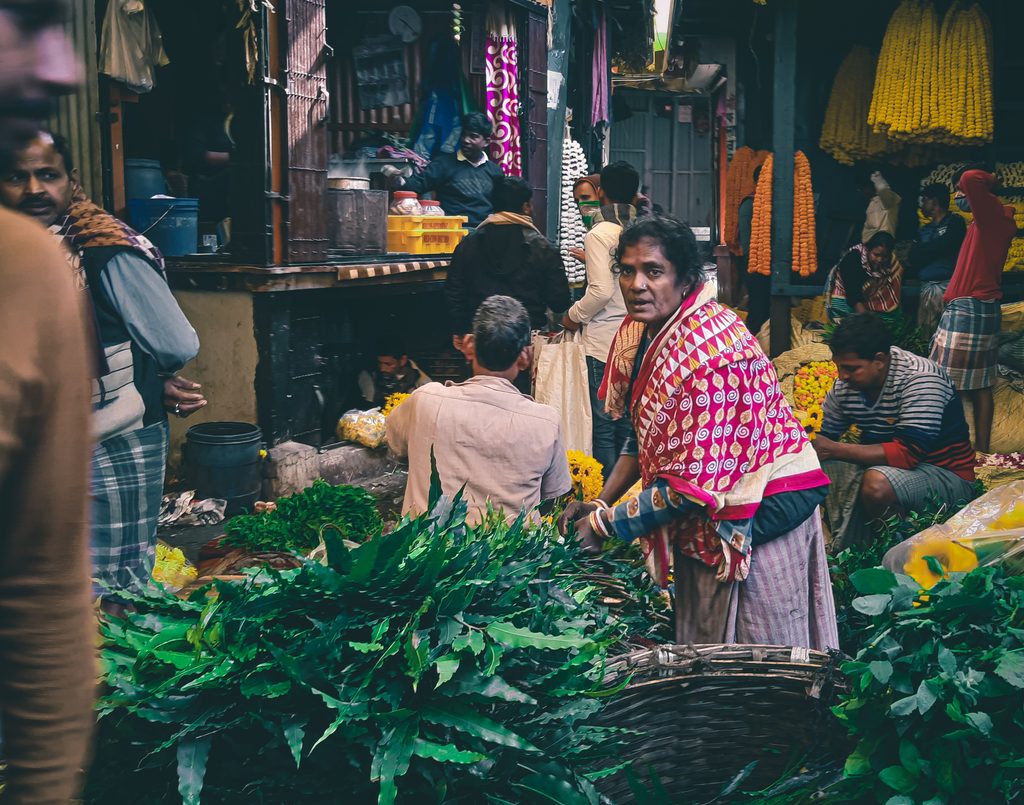
This is particularly visible in regions connected by long histories of trade and migration. For example, around the Indian Ocean, merchants and communities connected East Africa, the Arabian Peninsula, South Asia, and Southeast Asia for centuries. Goods travelled across these waters, but so did languages, beliefs, foods, artistic influences, and social practices.
Culture has never respected political borders as neatly as maps do.
History can also leave a lasting mark on culture. Conquest, colonization, displacement, political change, and contact between communities can introduce new languages, beliefs, institutions, foods, and forms of expression. Sometimes these influences are adopted willingly. Sometimes they emerge through unequal relationships of power.
This is where politics becomes important.
Culture is not always shaped only by what people freely choose to preserve or practice. Political power can influence which languages are used, which traditions are publicly expressed, what forms of worship are permitted, and which cultural expressions are encouraged, restricted, or suppressed. The experience of Uyghur and other predominantly Muslim minorities in Xinjiang, China, has raised serious concerns at the international level about restrictions affecting aspects of cultural, religious, and linguistic life. The UN Human Rights Office has specifically documented concerns that government laws and policies restricted or suppressed practices connected to the cultural and religious identity of these communities.
This shows that culture can sometimes be influenced not only by geography or social interaction, but also by power. People may preserve their cultural practices, adapt them to changing circumstances, or face restrictions on how openly they can express them.
Economic conditions matter too. The way people work, earn a living, educate their children, communicate, and organize family life can influence cultural expectations. A society shaped by agriculture may develop different rhythms of life from one shaped by industrial or service-based work. Urbanization can change relationships, occupations, housing, family structures, and everyday social interaction.
Technology has added another powerful influence.
For much of human history, cultural exchange depended heavily on physical movement. Today, an idea, song, fashion, language expression, recipe, or social practice can cross continents within seconds. A person can grow up in one country while being influenced daily by people, media, and ideas from several others.
This does not mean that technology makes all cultures the same. People do not merely copy everything they encounter. They adapt, reinterpret, combine, accept, and reject outside influences according to their own circumstances.
And that human role matters.
Two communities can live in similar environments and still develop different ways of life. Two societies can experience the same outside influence and respond to it differently. Culture is shaped by circumstances, but people also give those circumstances meaning.
The result is that culture is not produced by one factor.
Geography provides a setting. History adds layers of experience. Migration and contact bring new influences. Economic and political conditions create opportunities and limits. Technology accelerates exchange. People then interpret these circumstances and make choices within them.
Therefore, cultural differences should not be reduced to simple explanations such as climate, religion, or geography alone.
And perhaps this is one of the most interesting things about culture: it is both rooted and mobile. It can grow from a particular place, carry memories from the past, travel with people, encounter other ways of life, and develop into something new.
A culture may have a strong connection with its homeland, but that does not mean it remains confined to that place.
People carry culture with them.
And when people, places, and circumstances change, culture can change with them.
Does Culture Ever Stay the Same?
Culture carries the past, but it does not live outside the present.
Every generation lives under different circumstances. Technology develops, people migrate, cities grow, education expands, laws change, economies transform, and new ways of thinking emerge. As these conditions change, the way people live and interact can change too.
Marriage offers a simple example. In many societies, ideas about marriage have changed across generations. Who chooses a partner, the age at which people marry, the role of parents, expectations within marriage, and attitudes towards inter-community or intercultural marriage may differ today from what they were in the past. The institution may remain important, while the way people experience it changes.
The same can happen in everyday life. A family may once have maintained close relationships through regular visits or handwritten letters. Today, the same family may stay connected through messages and video calls. The relationship remains, but the way it is expressed changes.
Cultural change does not always mean abandoning the past. Some practices continue because people still find meaning in them. Others are modified to fit new circumstances, while some gradually disappear. People may also question practices they inherited when those practices no longer seem meaningful, fair, or suitable to their lives.
This is why culture is neither completely fixed nor endlessly changing. It has continuity and change at the same time.
What remains meaningful may survive in a new form. What no longer fits may be adapted or left behind.
Culture is not a museum object that must remain exactly as it was. It is part of life in human society. It carries memories from the past while responding to the realities of the present.
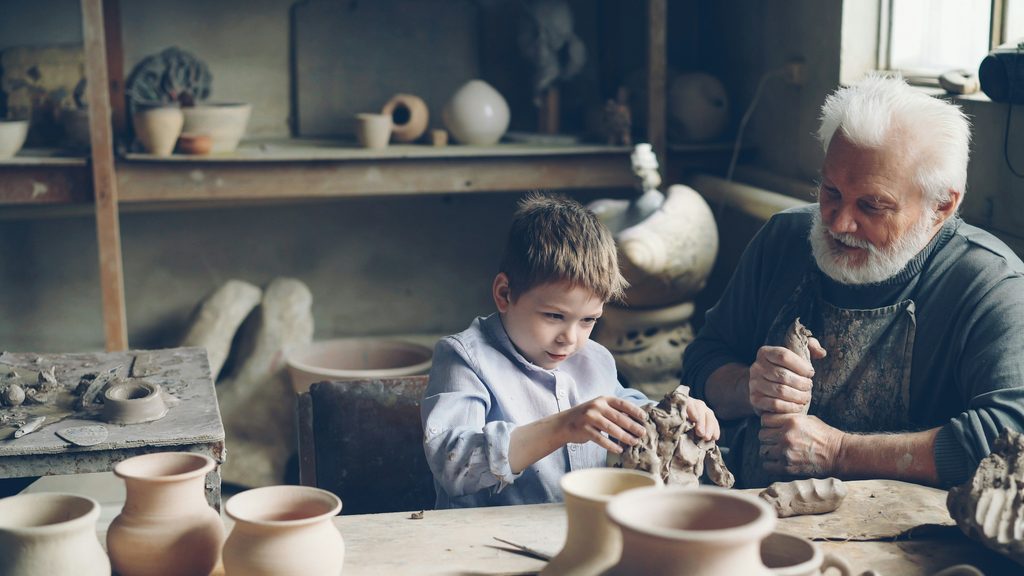
To keep a culture alive does not always mean keeping every part of it unchanged. Sometimes, it means allowing it to evolve.
When Culture Becomes a Stereotype
We sometimes try to understand a culture through the few things we can easily see. This is where understanding can turn into stereotyping.
A stereotype is a fixed and oversimplified idea about a group of people, in which one characteristic is treated as though it represents everyone. It may begin with something real, but the problem starts when a part is mistaken for the whole.
Consider La Tomatina, the famous tomato-throwing festival in Buñol, Spain. Someone seeing it for the first time might associate it with Spanish culture. But can one festival explain an entire culture?
Of course, it cannot.
A culture is always larger than its most recognizable images. Food, clothing, music, festivals, language, and customs can give us a glimpse of a culture, but none of them can tell its whole story.
The same problem arises when we describe people. We may hear that a particular society is “family-oriented,” “reserved,” “disciplined,” or “traditional” and gradually begin to treat such descriptions as rules. But people within the same culture can have different personalities, beliefs, experiences, and choices.
Shared culture does not mean identical people.
Then why do stereotypes become so powerful?
Repetition is one reason. When the same image appears repeatedly in films, social media, advertising, conversations, or even casual jokes, it can begin to feel like the whole truth. What lies outside that image is easily forgotten.
There is also a difference between recognizing a cultural pattern and assuming that everyone follows it. Saying that a particular practice is associated with a culture is reasonable. Assuming that every person from that culture must follow it is something else.
But does understanding a cultural practice mean that we have to approve of it?
Not at all.
We can learn where a practice came from, what it means to the people who follow it, and how it developed without believing that every part of it is beyond criticism. Understanding gives us context; it does not require blind acceptance.
So, how should we approach a culture that is unfamiliar to us?
Instead of judging too quickly, we can ask: Where did this practice come from? What does it mean to the people who follow it? How widely is it shared? Has it changed over time? And does everyone within that culture experience it in the same way?
These questions encourage curiosity instead of assumption.
Culture deserves neither blind admiration nor careless dismissal. It deserves context, curiosity, and the recognition that no single practice can speak for everyone who belongs to it.
A culture is larger than the image we have of it. And a person is always more than the label we place on them.
Conclusion
Culture is easy to recognise, but much harder to fully understand.
We see it in what people practise. We find it in what they believe, value, preserve, question, and pass on. It can appear in language, food, dress, celebrations, relationships, beliefs, and everyday behaviour, but none of these alone can define an entire culture.
Culture is learned and shared, but it is not fixed. It carries memories from the past while responding to the realities of the present. People inherit it, live it, reinterpret it, and sometimes choose to change it.
This is why culture cannot be confined to one tradition, one place, one practice, or one visible form. It finds expression across many dimensions of human life. It is reflected not only in what people do, but also in how they understand and give meaning to the way they live.
And therefore, understanding culture matters. The way people think, act, relate to others, and build their communities is shaped by many influences, including the cultural worlds in which they grow and live.
The culture we build shapes the way we think, the way we act, and ultimately, the kind of society we become.