
Every child walks into a classroom carrying something invisible but invaluable: hope. The hope of learning, of discovering their potential, and of building a future beyond the circumstances they were born into. When parents enroll their child in a school, college, or university, they cannot predict what the future will hold. Yet they take that first step because they believe education can open endless doors or opportunities that today remain unseen.
In many ways, nations begin with the same hope. Every country aspires to educate its people and prepare future generations for a better tomorrow. The outcomes, however, are far from the same. Some education systems continue to nurture confident, capable, and lifelong learners, while others struggle to provide even the foundations of meaningful learning.
Like a building that stands strong or gradually weakens over time, an education system is shaped by many interconnected factors rather than a single cause. Its strengths and shortcomings reflect years of choices, priorities, and circumstances that influence what happens inside classrooms every day.
Instead of asking which countries perform better or worse, perhaps the more meaningful question is this: What really weakens an education system, and what can the world learn from both the systems that continue to thrive and those still searching for a stronger path forward?
Why Do Some Education Systems Struggle?
No education system begins with the intention of failing. Every nation invests in education with the hope of preparing future generations for a better future. But still the outcomes differ remarkably because education does not exist in isolation. It grows within the society it serves, shaped by its values, priorities, leadership, economic conditions, and the collective choices made over many years.
Among these influences, the perspective of society often becomes one of the most powerful. When families value learning, encourage curiosity, and view education as a lifelong investment rather than a short-term obligation, children are more likely to remain engaged and motivated. Schools, after all, can provide opportunities, but the attitude towards education is often nurtured long before a child enters a classroom.
The environment in which children grow and learn often shapes them far more deeply than we realize. A society that respects teachers, encourages discipline, promotes fairness, and believes in equal opportunities creates conditions where education can flourish. In contrast, when education is overlooked, undervalued, or treated as a secondary priority, even well-designed policies and modern infrastructure may struggle to achieve their intended impact.
Hence, no single factor can fully explain why some education systems struggle. They are shaped by a combination of social attitudes, economic realities, political decisions, institutional quality, and cultural priorities that influence one another over time. To understand the larger picture, it is essential to look beyond the symptoms and examine the deeper forces that gradually weaken an education system.
What Weakens an Education System?
The decline of an education system is seldom sudden. It unfolds gradually, often unnoticed, as one challenge reinforces another until the effects become impossible to ignore. By the time lower learning outcomes, higher dropout rates, or unequal opportunities become visible, the underlying problems have usually existed for years.
No two countries share exactly the same circumstances. Even so, many of the forces that weaken education are remarkably similar. Examining these challenges one by one offers a deeper understanding of why some education systems continue to struggle while others steadily move forward.
When Opportunity Is Limited by Poverty
For some children, the greatest obstacle to education is not a lack of ability or ambition but a lack of opportunity. Financial hardship often forces families to make difficult choices long before a child has the chance to realize their potential. The cost of education, transportation, learning materials, digital access, and everyday living can become overwhelming, leaving many students with little option but to leave school before completing their education.
I once spoke with a young man whose dream was to become an electronics engineer. After completing Class 12, he wanted to continue his studies, but his family’s financial circumstances made higher education impossible. Instead, he entered the workforce to help support his family. His story is far from uncommon. Across many parts of the world, countless capable students abandon their educational aspirations; not because they lack determination, but because their circumstances leave them with few alternatives.
Economic hardship is only one side of the challenge. Confidence in education can also weaken when families repeatedly witness educated individuals struggling to secure stable and meaningful employment. Over time, some begin to question whether years of study will truly lead to a better future. Rather than encouraging higher education, they may ask their children to start working, learn a trade, or join a family business in the hope of earning an income sooner. As this belief gradually spreads, enrolment declines, aspirations fade, and education begins to lose its place as a trusted pathway towards a better life.
According to estimates from UNESCO, millions of children and young people around the world remain out of school, with poverty continuing to be one of the most significant barriers to education. The consequences extend far beyond missed classrooms. When financial hardship combines with declining confidence in the opportunities education can provide, an education system loses not only students, but also the confidence and aspirations that keep it alive.
When Teachers Lack Support, Not Commitment
A teacher does not walk into a classroom with books alone. They carry preparation, hope, patience, and the belief that today’s lesson might shape someone’s future. Many begin their journey with genuine passion, determined not only to complete the syllabus but also to nurture character, curiosity, and confidence in every student they teach.
That passion, however, cannot survive on dedication alone. When classrooms lack basic resources, opportunities to learn remain limited, sincere efforts go unnoticed, and appreciation becomes rare, teaching slowly begins to feel like a responsibility rather than a purpose. Even the most committed teacher can lose enthusiasm when the system stops supporting them.
Having worked in education, I have often seen teachers expected to give everything while receiving very little in return. Some institutions measure results but overlook the people striving to achieve them. Limited guidance, few training opportunities, and the absence of trust or encouragement gradually affect both teachers and the quality of education.
A strong education system is built not only by capable students but also by empowered teachers. When educators are respected, supported, and encouraged to continue learning, they inspire and implant the same spirit in their classrooms. Therefore, supporting teachers is not simply about improving their profession, it is about protecting the future of every child they teach.
Political Instability and Conflict
Learning depends on more than classrooms, books, and teachers. It also depends on stability. When uncertainty becomes part of everyday life, education is often among the first to suffer.
Schools may close, teachers may leave, and families are forced to move in search of safety. For many children, education is no longer their immediate concern because survival comes first. Even when schools reopen, interrupted learning, emotional distress, and long gaps in education often leave lasting effects that cannot be repaired overnight.
Afghanistan illustrates this reality in a particularly striking way. Years of conflict and political instability, followed by restrictions on education, have disrupted the learning of millions of children, particularly girls. The consequences reach far beyond missed lessons. They affect confidence, aspirations, and the opportunities that shape an entire generation.
A strong education system cannot flourish where uncertainty becomes a way of life. Before children can learn with confidence, they first need the security to imagine a future worth preparing for.
When Learning Becomes Memorization
Can we truly call it learning if it never shapes the way we think, choose, or live?
A student may score excellent marks, answer every question correctly, and still leave the classroom without truly understanding what they have learned. That is where real education begins to lose its purpose.
Memorization certainly has its place. It helps build knowledge and strengthens memory. The problem begins when remembering answers becomes more important than asking questions, exploring ideas, or applying knowledge beyond examinations. In such classrooms, learning gradually turns into a routine rather than a journey of discovery.
This challenge is often reinforced by examination-driven systems, rigid syllabuses, and teaching practices that leave little room for discussion, reflection, or independent thinking. As a result, students become increasingly focused on recalling information instead of connecting it with real life, making education feel more like a race for marks than a journey of personal growth.
If what we learn never shapes our thinking, choices, or character, we have not really learned. We have only remembered.
When Good Policies Fail in Practice
A good education policy can inspire hope but hope alone never transforms an education system. Real change begins only when those promises are carried into classrooms with honesty, consistency, and fairness. Otherwise, even the best ideas remain words on paper.
India illustrates this challenge in a meaningful way. Over the years, several reforms have sought to improve education and create better opportunities for students. Yet recurring concerns over examination paper leaks, postponed examinations, delayed recruitment, and uneven implementation continue to test public confidence. Behind every cancelled examination are months, and sometimes years, of hard work, financial sacrifice, emotional pressure, and dreams left waiting.
The greatest loss is not only an examination. It is the gradual loss of trust. When students begin to question whether honesty and hard work will receive a fair opportunity, the foundation of an education system starts to weaken. A system cannot expect excellence while allowing fairness and transparency to be compromised.
Policies create possibilities, but only honest implementation transforms those possibilities into reality. The true success of an education system is measured not by the number of reforms it announces, but by the confidence it gives every student that effort, merit, and integrity will always matter.
Why Education Systems Struggle: Lessons from Different Countries
Every country has its own history, culture, and circumstances. Yet some nations reveal lessons that extend far beyond their borders. Their struggles remind us that a strong education system is built not only on schools and policies but also on peace, opportunity, public trust, and long-term commitment. Rather than judging these countries, we can learn from their experiences and better understand what education truly needs to flourish.
South Sudan: Access Alone Is Not Enough
Many people believe that opening more schools is enough to strengthen education. South Sudan shows that the reality is far more complex. Although education is recognized as a fundamental right, millions of children remain outside the classroom because schools alone cannot overcome the challenges of poverty, displacement, limited infrastructure, and the shortage of qualified teachers.
According to UNICEF, more than 2.8 million children, over 70 percent of school-age children, are currently out of school, making South Sudan one of the countries with the highest rates of educational exclusion in the world. Many schools operate with limited learning materials, while a significant proportion of teachers have little or no formal training. These challenges affect not only access to education but also the quality of learning children receive.
South Sudan reminds us that education is more than constructing classrooms or increasing enrolment. Children also need qualified teachers, safe learning environments, learning materials, and consistent support if education is to transform their lives.
Lesson: Expanding access is important, but meaningful education is built through sustained investment in teachers, learning quality, and supportive environments.
Pakistan: When Opportunity Does Not Reach Every Child
Education has the power to transform lives, but only when every child has a genuine opportunity to learn. Pakistan illustrates how poverty, regional disparities, and unequal access continue to keep millions of children away from classrooms despite ongoing efforts to improve education.
According to UNICEF, an estimated 25.1 million children aged 5–16 are out of school, giving Pakistan one of the largest out-of-school child populations in the world. Girls, particularly in some rural and disadvantaged communities, continue to face greater barriers to education than boys. Limited public investment, economic hardships, and unequal educational opportunities further widen the gap between policy and reality.
Pakistan’s experience reminds us that building schools is only one part of the solution. Every child also needs equal access, supportive communities, and an education system that reaches even the most disadvantaged.
Insight: A strong education system is measured not by the opportunities available to a few, but by the opportunities accessible to every child.
Haiti: When a Classroom Can No Longer Feel Safe
Imagine preparing for school without knowing whether the journey will be safe or whether the classroom will even be open. For many children in Haiti, education is often interrupted not by a lack of ambition but by circumstances beyond their control. Persistent violence, political instability, and humanitarian crises have repeatedly disrupted schooling, forcing many schools to close and leaving countless students without consistent learning opportunities.
UNICEF reports that the ongoing crisis has severely affected children’s access to education, while displacement and insecurity continue to keep many learners away from school. In such conditions, maintaining continuity in education becomes one of the greatest challenges.
Takeaway: Education flourishes where children feel safe enough to learn, teachers feel secure enough to teach, and families feel confident enough to dream about tomorrow.
Madagascar: The Cost of Quiet Neglect
Some education systems collapse suddenly because of war or political turmoil. Others weaken so gradually that the world barely notices. Madagascar reflects the second reality. Years of deep-rooted poverty, limited investment, and shortages of educational resources have quietly affected the quality of learning for innumerable children. Many schools continue to struggle with overcrowded classrooms, insufficient teaching materials, and a lack of trained teachers, making meaningful learning difficult despite children’s willingness to study.
Sometimes, the greatest threat to education is not a crisis that makes headlines, but a silence that allows generations to be left behind.
Every country’s journey reflects a different reality. Some struggle because of conflict, others because of poverty, inequality, weak institutions, or limited opportunities. Taken together, these examples remind us that judging an education system is far more complex than comparing countries on a single scale. That raises another important question: do high global rankings always reflect the true quality of education?
Why High Rankings Do Not Tell the Whole Story
If one country ranks above another in global education, does that automatically mean every student receives a better education? Not necessarily. Rankings offer valuable insights, but they can never capture the complete picture. If you’re interested in learning why countries such as Finland, Singapore, Japan, South Korea, and Canada consistently perform well, you may also enjoy reading Top 5 Countries with the Best Education Systems in the World (And Why They Rank So High).
Global rankings help us compare learning outcomes, identify successful practices, and encourage countries to improve. They are useful benchmarks, but they are not final verdicts. Education is far too complex to be measured by a single position on a table.
A ranking may reflect academic achievement, but it cannot fully measure qualities such as curiosity, compassion, integrity, resilience, creativity, or the confidence to question, innovate, and solve real-life problems. These qualities often shape an individual’s future just as much as examination scores.
Another reality is that no two countries begin from the same starting point. Some have enjoyed decades of political stability, strong economies, and sustained investment in education. Others continue to recover from conflict, poverty, natural disasters, or deep social inequalities. Comparing them without understanding their circumstances tells only part of the story.
Perhaps the better question is not, “Which country ranks first?” but “What can every country learn from one another?” Progress in education has never come from competition alone. It has always come from the willingness to observe, adapt, and continuously improve.
True educational success is not defined only by where a country stands in global rankings, but by how well it helps people grow into thoughtful, responsible, compassionate, and capable human beings.
Building Strong Education Systems: Lessons Every Country Can Apply
Every education system reflects the choices a society makes over many years. Although no country has a perfect model, the strongest systems often share a few timeless principles that go beyond classrooms, examinations, or global rankings. They remind us that meaningful education is not built overnight. It grows gradually through shared responsibility, thoughtful leadership, and an unwavering commitment to every learner.
Education Is a Shared Responsibility
Education does not begin at the school gate, nor does it end with a graduation certificate. Long before children enter a classroom, they begin learning from the people and environment around them. Parents are often called a child’s first teachers because children naturally observe, imitate, and absorb the values they see at home. In many ways, parents become the mirror, and children gradually become their reflection.
I often compare childhood to a young tree. While it is still growing, it can be gently guided in the right direction. Once its roots become deep and its trunk grows strong, changing its course becomes far more difficult. The same is true of human character. Values such as honesty, discipline, respect, patience, curiosity, compassion, and responsibility are most effectively nurtured during the early years. These qualities not only shape individual lives but also influence families, communities, and society as a whole.
At the same time, the responsibility for education cannot rest on parents alone. Teachers inspire, governments create opportunities, communities shape the learning environment, and students themselves must be willing to learn. When each of them fulfils their role with sincerity, education becomes more than a system. It becomes a shared commitment. Schools shape children for a few hours each day, but families and society continue that education for the rest of their lives.
Reflection: An education system rarely becomes stronger than the society that surrounds it. When every hand contributes, every child stands a better chance of building a meaningful life.
Teachers Should Be Empowered, Not Just Employed
Every profession shapes the present, but teachers quietly shape the future. Every doctor, engineer, scientist, entrepreneur, artist, and leader once sat in a classroom under the guidance of a teacher. When we invest in teachers, we are ultimately investing in the future of an entire society.
Unfortunately, many dedicated teachers are still viewed merely as employees expected to complete a syllabus, meet targets, and move on. They deserve far more than a contractual relationship based only on duties and deadlines. A healthy education system values teachers through trust, appreciation, fair and timely salaries, opportunities for professional growth, and the freedom to teach creatively within the values and objectives of education. Feeling respected often inspires teachers to give far more than what any job description can demand.
During my own teaching experience, I have seen how a simple gesture of trust or appreciation can completely transform a teacher’s enthusiasm, while constant neglect slowly diminishes even the most passionate educators.
Appreciation does not always require expensive rewards. Sometimes, a sincere word of gratitude, public recognition, constructive feedback, or a small gesture of encouragement can rekindle a teacher’s confidence and motivation. When teachers feel trusted rather than constantly controlled, they become more innovative, committed, and willing to invest themselves in their students’ success.
Teachers are not simply delivering lessons. They are shaping lives. When they are empowered with dignity, trust, and support, the impact reaches far beyond the classroom and continues across generations.
Learning Should Shape Lives, Not Just Report Cards
The real value of education is revealed long after students leave the examination hall. It is seen in the choices they make, the values they uphold, and the lives they build.
Academic success certainly matters, but it should never become the final measure of education. A report card may reflect how well a student performed in an examination, but it can never fully reveal their character, integrity, compassion, resilience, or ability to navigate life’s challenges. The true purpose of learning is not simply to accumulate knowledge, but to transform the way we think, act, and contribute to the world around us.
Education reaches its highest purpose when knowledge becomes wisdom, values become habits, and learning inspires positive action. Only then does education move beyond classrooms and examinations to become a lifelong guide for personal growth and responsible citizenship.
Insight: The true examination of education begins after students leave the examination hall. What remains is not merely what they remembered, but who they became.
Every Child Deserves a Fair Chance to Learn
Some children begin their educational journey with books, encouragement, and opportunity. Others begin with barriers they never chose. Nevertheless, every child carries the potential to learn, grow, and contribute meaningfully to society.
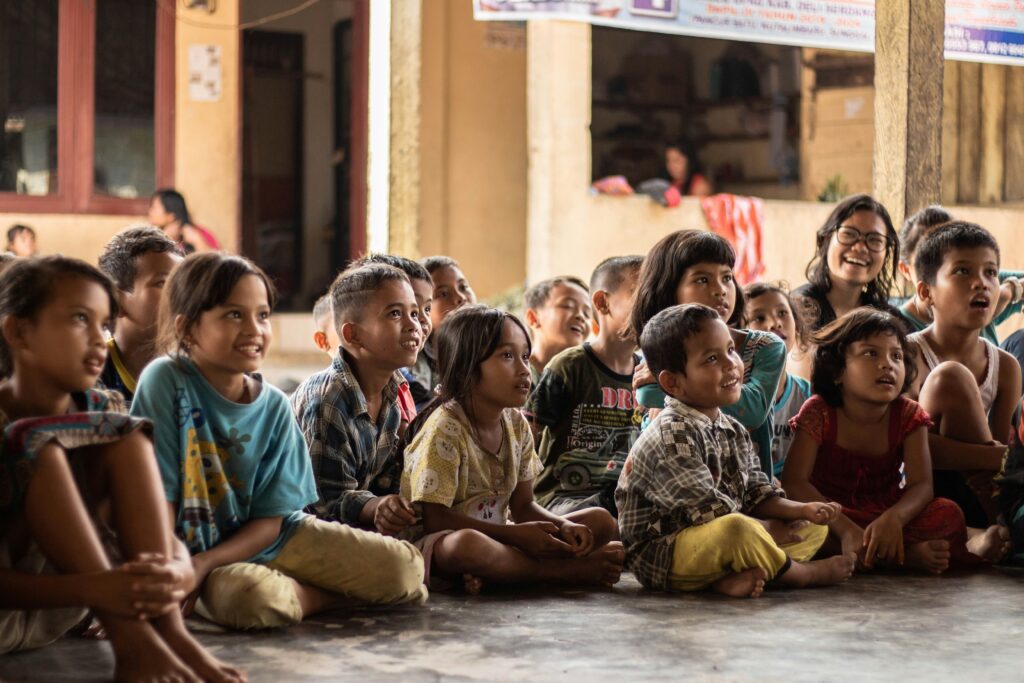
Education should never be determined by a child’s family income, birthplace, gender, disability, or circumstances. Every child deserves a fair chance to discover their abilities, pursue their dreams, and build a dignified future. When opportunity is denied, it is not only a child who loses. Society also loses future teachers, doctors, scientists, innovators, artists, and leaders whose potential may never be realized.
Reflection: Every child is a nation’s greatest treasure and a seed of limitless possibility. Whether that seed grows into a strong tree or withers too soon depends greatly on the opportunities we choose to nurture.
Strong Education Systems Never Stop Learning
No education system is ever perfect. The strongest ones are not those that never make mistakes, but those that never stop learning from them. They continue to reflect, adapt, and improve as society, knowledge, and the needs of learners evolve.
True educational progress does not come from copying another country’s model or introducing reforms for the sake of change. It comes from honestly identifying what works, acknowledging what does not, and having the courage to improve. An education system that stops learning eventually stops progressing.
Just as learning is a lifelong journey for every individual, it should also remain a lifelong commitment for every education system. The moment it believes there is nothing left to learn, it quietly begins to fall behind.
A Final Reflection
Every education system tells a story about the society behind it. Some struggle because of poverty, conflict, inequality, weak implementation, or limited opportunities. Others achieve remarkable progress by investing consistently in teachers, learners, and the values that education is meant to cultivate. Yet one lesson remains universal: a strong education system is not built through policies alone. It is built when families, educators, communities, and governments move with a shared sense of purpose.
Education should never be reduced to examinations, certificates, rankings, or employment alone. Its highest purpose is to awaken curiosity, strengthen character, deepen understanding, and prepare people not only to earn a living but also to live with wisdom, compassion, and responsibility. When learning transforms both the mind and the heart, its impact extends far beyond classrooms and lasts across generations.
An education system can never become stronger than the society that shapes it. The values we practice today will quietly become the lessons future generations inherit tomorrow. If we truly wish to build stronger education systems, we must first build a society that values learning, respects teachers, nurtures every child, and never stops growing itself.
Perhaps education should become as natural and essential to our lives as the heartbeat that keeps us alive and the breath that sustains us. For when a society learns with sincerity, thinks with wisdom, and acts with compassion, it does not merely strengthen its education system. It strengthens its future.