
Not every loss is immediate.
Some losses happen so slowly that they become part of the background. We adjust to them without even realizing it. A river that doesn’t seem as full as it once was. Winters that arrive a little later. Summers feel just a little harsher. We rarely notice the first signs because nothing appears dramatic enough to demand our attention.
Glaciers are disappearing in much the same way.
No loud sound marks their retreat. No single morning arrives when a mountain suddenly stands bare. They simply lose a little more of themselves each year. From a distance, everything still looks familiar, which is perhaps why so many of us assume nothing important is changing.
Yet the story of a melting glacier does not remain on a mountain.
It travels.
It travels with the rivers that begin in the ice and flow through farms, towns, and cities. It reaches people who have never seen a glacier, but still depend on the water it stores, the climate it helps regulate, and the natural balance it quietly supports. What begins as melting ice eventually becomes a story about food, livelihoods, ecosystems, disasters, and the choices humanity makes long before the consequences become visible.
But the real question is not, “Are glaciers melting?” Science answered that years ago.
The question worth asking today is different.
What disappears from our lives when glaciers disappear from the Earth?
Why Glaciers Matter More Than We Often Realize
There is a familiar pattern in human life. We often recognize the value of something only after we lose it. A river that once flowed throughout the year, a forest that no longer feels alive, or the clean air we barely noticed until it became difficult to breathe. What quietly supports our lives rarely receives our attention because it never demands it.
Glaciers belong to that overlooked world.
For thousands of years, they have been doing far more than resting on distant mountains. Together with ice sheets, they store nearly 69% of the world’s freshwater, releasing it gradually into rivers that sustain drinking water, agriculture, ecosystems, and hydropower across many regions. Their contribution is not measured by the size of the ice we see, but by the countless lives and landscapes that continue to thrive because of what those frozen reserves make possible.
However, the true importance of glaciers cannot be measured in freshwater alone. Every glacier is part of a much larger story. The water it releases does not stop at the foot of a mountain. It continues its journey through valleys, forests, farms, towns, and cities, becoming part of harvests, livelihoods, wildlife, and everyday life. Long before it reaches our hands, it has already connected mountains to people who may never even know from where that journey began.
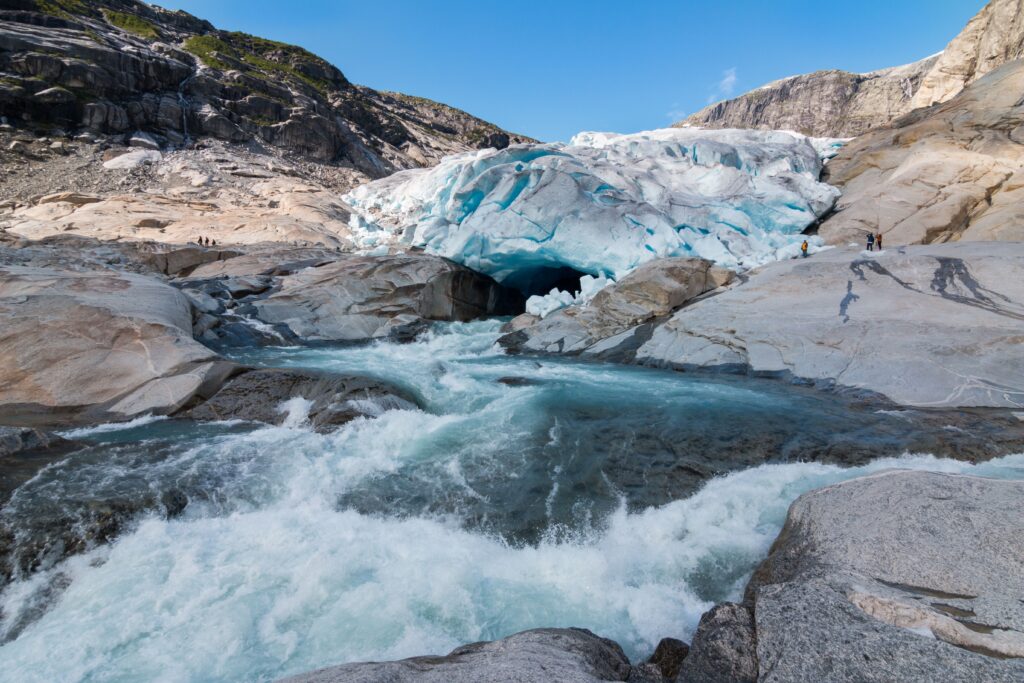
Glaciers also remind us of something nature has always understood that nothing exists in isolation. When one part of a natural system begins to weaken, the effects rarely remain at its origin. A retreating glacier can gradually influence rivers, ecosystems, coastal regions, and communities far beyond the places where the ice itself exists. Distance may separate us from glaciers, but it does not separate us from their influence.
Probably the greatest mistake is believing that glaciers matter only to those who live near them. In fact, they matter to anyone who depends on water, stable ecosystems, food, or a climate that has supported human civilization for generations. The greatest gift of a glacier is not simply the ice it holds, but the life it quietly keeps in motion.
Before asking why glaciers are melting, we should first comprehend what the world has been receiving from them all along. Only then does the scale of their loss become impossible to ignore.
Why Are Glaciers Melting?
Every glacier tells a story of balance. It is easy to assume that glaciers survive simply because they exist in cold places, but that is only part of the truth. A glacier is not preserved by cold alone. It survives because, year after year, nature maintains a delicate balance between what the glacier gains and what it loses.
For thousands of years, this balance allowed glaciers to grow, shrink, and rebuild as part of a natural cycle. Melting was never the problem. In fact, it has always been a normal part of a glacier’s life. The real concern begins when that balance is disturbed for so long that the glacier can no longer replace the ice it loses.
To grasp why glaciers are disappearing, therefore, is not about looking at the ice alone. It is about understanding the changing relationship between Earth’s climate, natural processes, and human activities. Before exploring the consequences of melting glaciers, we must first understand the fragile balance that has sustained them for centuries.
Glaciers Thrive on Balance, Not Constant Cold
If there is one lesson nature repeats again and again, it is this: survival is rarely about strength alone; it is about balance. A river flows because rain continues to replenish it. Forests renew themselves through endless cycles of growth and decay. Even our own bodies depend on countless invisible processes working in harmony. Glaciers are no exception. Their existence has never relied on remaining frozen forever. It has relied on nature’s ability to keep a delicate balance between gain and loss.
That is why the common belief that glaciers simply “melt because it gets hotter” tells only part of the story. Glaciers have always melted. Every summer, a portion of their ice naturally turns into water, feeding rivers that travel far beyond the mountains. This seasonal melting is not a sign that a glacier is dying. On the contrary, it has long been one of the ways glaciers quietly sustain life beyond the places where they stand.
The real miracle has always happened long before summer arrives. Snowfall during colder months gradually rebuilds what warmer seasons take away. Year after year, century after century, this quiet exchange allowed glaciers to endure. Scientists refer to this relationship as a glacier’s mass balance, but the idea itself is beautifully simple: a glacier can survive only when nature gives back at least as much as it takes away.
Look at it another way. Imagine reading only the final page of a book. You would see the ending but never understand the story that led there. In the same way, seeing a glacier melt without understanding the balance that once sustained it tells only half the truth. The melting we witness today is the visible ending of a process that has been changing for decades.
That is what makes today’s glaciers different. Across many mountain regions, snowfall is no longer keeping pace with the ice being lost. Warmer temperatures are extending during melting seasons, while the time available for glaciers to rebuild continues to shrink. Little by little, the balance that protected them for thousands of years is giving way to a growing deficit.
Perhaps that is the most important idea to remember before exploring anything else. The crisis is not that glaciers melt. The crisis is that they are no longer able to recover as they once did. Everything that follows in this story begins with that single change.
A Warming Planet Is Disrupting Nature’s Balance
Earth has never been a silent or motionless planet. Ice ages have come and gone, coastlines have shifted, rivers have changed their paths, and climates have evolved over millions of years. Change is part of nature’s design. What deserves our attention today is not that the climate is changing, but the extraordinary speed at which it is changing. Many natural systems that once had centuries to adapt are now being forced to respond within a single human lifetime.
The concern is not built on assumptions; it is grounded in decades of scientific observation. Since the Industrial Revolution, Earth’s average temperature has risen by more than 1°C, while atmospheric carbon dioxide has increased from about 280 ppm to well over 420 ppm. These are not merely numbers; they reflect a gradual shift in the atmosphere’s ability to retain heat, altering the conditions on which glaciers have long depended. According to NASA, these long-term changes are supported by decades of scientific observations and multiple independent sources of evidence.
The atmosphere works much like a carefully balanced and systematic way. Sunlight reaches the Earth, the surface absorbs part of that energy, and much of the heat escapes back into space. Naturally occurring greenhouse gases retain just enough warmth to make life possible. Without them, our planet would be frozen. The problem begins when that natural blanket becomes thicker than it should be. Where burning fossil fuels, clearing forests, expanding industries, and changing the way land is used have steadily increased the concentration of greenhouse gases, allowing more heat to remain trapped in the atmosphere than nature had long been accustomed to.
However, nature responds quietly before it responds dramatically. Winters become a little shorter. Snow arrives later or melts earlier. Seasons begin to lose the rhythm that glaciers have depended on for centuries. None of these changes may seem alarming in isolation, but together they gradually reshape the conditions that allow glaciers to grow, renew, and survive. A glacier does not disappear because of one unusually warm summer; it retreats after years of living in a climate that no longer restores what it has lost.
The most important distinction to remember is that. Global warming is not simply about a hotter planet. It is about a planet whose natural balance is being altered faster than many of its systems can adapt. Glaciers are not the cause of that imbalance; they are among their clearest witnesses.
Why Some Glaciers Are Disappearing Faster Than Others
If global warming is affecting the entire planet, a natural question follows: Shouldn’t every glacier melt at the same pace? At first glance, it seems logical. But the world’s glaciers tell a very different story. Some are shrinking rapidly, while others have remained comparatively stable for decades. The difference lies not in a single cause, but in the geography each glacier calls home.
Think of glaciers as living under different conditions rather than following the same climate. Their elevation, surrounding mountains, snowfall, exposure to sunlight, ocean influence, local winds, and even the layer of dust or rock covering their surface all shape how they respond to a warming world. Global warming may be the common driver, but geography decides how each glacier reacts.
The contrast is striking. Many glaciers in the European Alps, the Himalayas, and the Tropical Andes have been retreating rapidly as warmer temperatures combine with shorter winters and, in many places, reduced snowfall. While smaller mountain glaciers are often the first to respond because they hold less ice and recover more slowly after warm seasons.
One region has surprised scientists for decades. In parts of the Karakoram Range, some glaciers have remained comparatively stable, and a few even gained ice for a period. This unusual behavior is known as the Karakoram Anomaly. It does not mean these glaciers have escaped climate change. Instead, their higher elevations, heavier winter snowfall, and distinctive regional climate have, for a time, helped compensate for some of the ice they lost. Recent observations suggest that this rare stability is gradually weakening as temperatures continue to rise.
A similar misunderstanding surrounds Antarctica. Many people imagine that the entire continent is either melting rapidly or remaining completely frozen. Reality is more complex. West Antarctica has experienced substantial ice loss, largely influenced by warmer ocean waters, whereas much of East Antarctica has remained comparatively more stable because of its extreme cold and high elevation, although some areas there are also showing signs of change.
As a result, the most important lesson is that: there is no such thing as the world’s “fastest” or “slowest” melting glacier. Scientists compare regions, trends, and long-term mass balance because every glacier responds to its own combination of climate and geography. Looking at glaciers through a single global lens can therefore be misleading.
Understanding these regional differences answers one question, but it raises another. If some glaciers still receive snowfall every winter, why are so many unable to rebuild the ice they continue to lose? That is where the story becomes even more revealing.
Why Can Glaciers No Longer Recover as They Once Did
Every winter, many mountains are still covered with fresh snow. At first glance, it seems as though glaciers should recover naturally. So why are they continuing to shrink? The answer lies not in whether snow still falls, but in whether that snowfall is enough to replace what has already been lost.
Imagine filling a bucket with water while a hole at the bottom lets it leak away. As long as more water enters than escapes, the bucket gradually fills. But once the leak becomes larger, pouring in more water changes very little. Many glaciers now face the same reality. Snow continues to arrive each winter, yet in many regions the ice disappearing during warmer months exceeds what fresh snowfall can restore.
This growing imbalance has many causes. Longer and hotter summers melt more ice. In some mountain regions, winters are becoming shorter, and snowfall is increasingly replaced by rain, especially at lower elevations. Fresh snow, which naturally reflects much of the Sun’s energy, vanishes earlier, exposing darker ice that absorbs more heat and melts even faster. A glacier rarely disappears because of one unusually warm year. It disappears when one year of loss quietly follows another.
Glaciers do not need a perfect climate to survive. They need enough cold, enough snowfall, and above all, enough time to rebuild what they lose. Today, that time is becoming increasingly scarce. When that balance is lost for long enough, the effects no longer remain confined to the mountains. They gradually reach rivers, forests, coastlines, farms, cities, and ultimately, the lives of millions of people.
How Melting Glaciers Are Reshaping Our World
When a glacier begins to shrink, what really changes? Is it only the ice that disappears? The answer is far bigger than it first appears. Glaciers have never been silent masses of frozen water. For thousands of years, they have shaped valleys, guided rivers, influenced local climates, and subtly determined how both nature and people adapted around them.
Once that balance begins to shift, the effects rarely remain where the ice once existed.
Every landscape carries the memory of the forces that created it. Many U-shaped valleys, mountain lakes, fertile plains, and river systems owe much of their character to glaciers that moved across them over thousands of years.
As the ice continues to recede, the landscape keeps evolving. Where new ground appears, streams adjust their seasonal flow, and habitats gradually reorganize themselves. The mountain may still stand in the same place, but the story written across its slopes is slowly being rewritten.
Though nature often notices these changes long before we do. Cold-adapted species such as the pika have been observed moving towards higher elevations to search for suitable conditions, while alpine plants gradually follow cooler environments uphill. It is an extraordinary example of nature’s resilience; but at the same time, it also reveals its limits. A mountain has a summit. Beyond that point, there is nowhere higher to climb. What begins as an adaptation can eventually become a struggle for survival.
People have always followed geography, even when they did not describe it that way. Civilizations flourished beside dependable rivers, villages grew on fertile land, and shepherds chose grazing grounds where climate and terrain worked in their favor. These decisions were never accidental; they reflected the opportunities the landscape offered.
As glaciers reshape those physical conditions, communities also begin to adapt. Some change farming practices, others search for more reliable sources of water, and some in the end move in search of places that can better support their lives. Geography has long shaped human settlements. A changing geography is now beginning to reshape it once again, quietly influencing patterns of movement and, over time, even the character of local populations.
The deeper lesson is that nothing in nature changes alone. A glacier may seem distant on a map. Nevertheless, its influence can travel through rivers, ecosystems, agriculture, livelihoods, and communities hundreds or even thousands of kilometers away. What starts high in the mountains gradually becomes part of someone else’s everyday life.
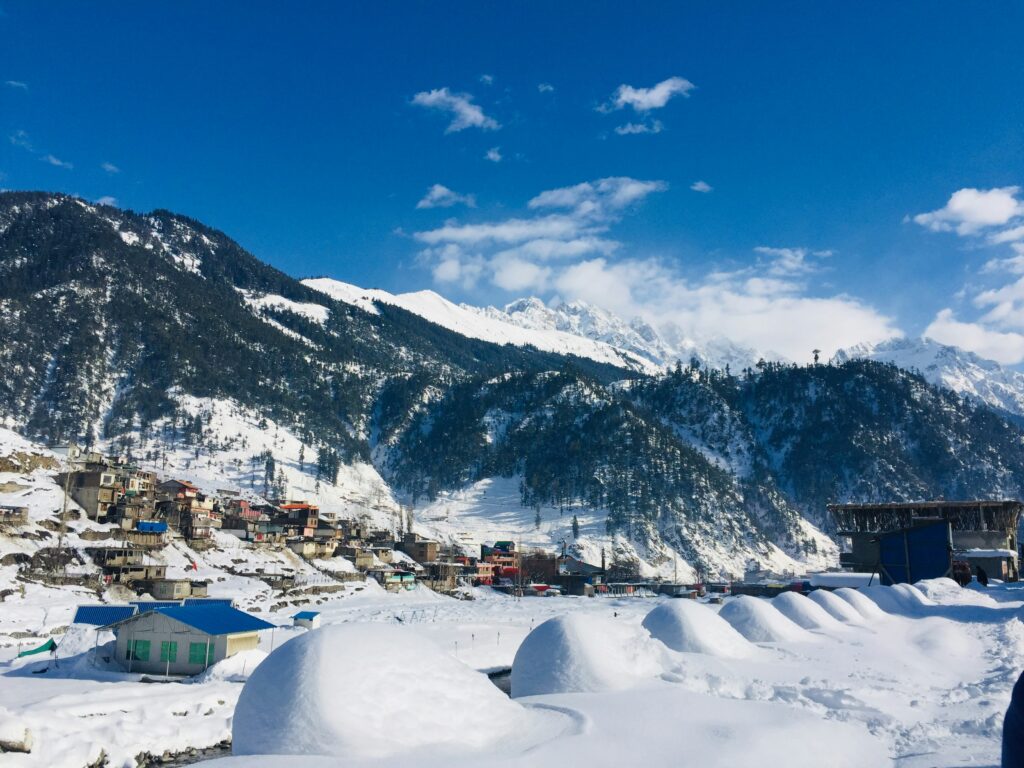
Therefore, the disappearance of glaciers is not simply an environmental concern. It is a reminder that the world’s natural systems are far more connected than they first appear, a relationship explored further in Environmental Cost of Ignoring Nature: Impacts, Crises, and Sustainable Solutions. And if everything is connected, the next question becomes impossible to ignore: can we still protect what remains?
Can We Still Protect the World’s Glaciers?
Yes, we can, but the answer depends on how we choose to understand the question. From a practical perspective, there is still hope. From a scientific perspective, there are clear limits. We can reduce the speed at which glaciers continue to lose ice but expecting them to return to the size they once had thousands or even millions of years ago is neither realistic nor supported by current scientific understanding. Our greatest opportunity is not to recover every glacier, but to prevent far greater losses in the years ahead.
There is another reality we cannot ignore. The world itself is no longer the same. The glaciers we see today developed under climatic and societal conditions that were very different from those of the present. The global population has expanded enormously, cities have grown, industries have multiplied, and the demand for energy, transport, housing, and natural resources has increased beyond anything earlier generations experienced. Even if glacier loss slows considerably, expecting the world’s ice to return to its former extent while these pressures continue would be unrealistic. The wiser goal is to slow the loss, protect what remains, and give future generations a better chance than they would otherwise have.
That is why even ordinary choices deserve more attention than they often receive. Turning off lights and fans when they are not needed, planting trees where forests have been cleared, reducing unnecessary waste, using resources more thoughtfully, and supporting cleaner technologies may appear too small to matter. Many of these everyday behaviors are so familiar that we rarely stop to question them. 7 Sneaky Habits That Are Quietly Wrecking the Planet (And How to Fix Them) takes a closer look at how these small habits quietly affect our planet. Individually they cannot preserve a glacier but multiplied across millions of people and sustained over time, they become part of a much larger solution.
The conversation, however, cannot end with individual responsibility alone. Humanity will continue to develop, and it should. Better healthcare, education, infrastructure, science, and technology have transformed countless lives for the better. The real question is not whether we should continue to progress, but what kind of progress we choose to pursue. Development that respects ecological limits strengthens our future. Development that ignores them gradually weakens the natural systems on which every society ultimately depends.
Not every country carries the same level of responsibility. Those that have already reached higher levels of development are in a stronger position, and therefore have a greater responsibility, to lead by reducing unnecessary consumption, improving resource efficiency, investing in cleaner technologies, and supporting a more sustainable path for developing nations. If progress continues to be measured mainly by endless consumption and expansion, the pressure on Earth’s resources will only grow, making it increasingly difficult to protect glaciers in any meaningful way.
I have always believed that scientific advancement and technological innovation are among humanity’s greatest achievements. They have expanded knowledge, improved living standards, and created opportunities that earlier generations could scarcely imagine. Yet if, in the pursuit of progress, the planet gradually loses the natural systems that sustain life, then progress itself begins to lose part of its meaning. Protecting glaciers is therefore not about choosing between development and nature. It is about learning how to ensure that both can endure together.
Beyond the Ice: Protecting Glaciers Means Protecting Our Future
Glaciers are far more than frozen landscapes resting quietly on distant mountains. They are part of an intricate system that supports rivers, ecosystems, livelihoods, and countless lives across the world. Their gradual disappearance reminds us that nature is deeply interconnected, and that even changes unfolding in remote places eventually find their way into our everyday lives. Protecting glaciers, therefore, is not simply about preserving ice. It is about safeguarding the balance that allows both humanity and the natural world to thrive together.
Before we can change the way we use Earth’s resources, we must first change the way we think about them.