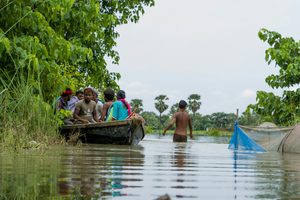

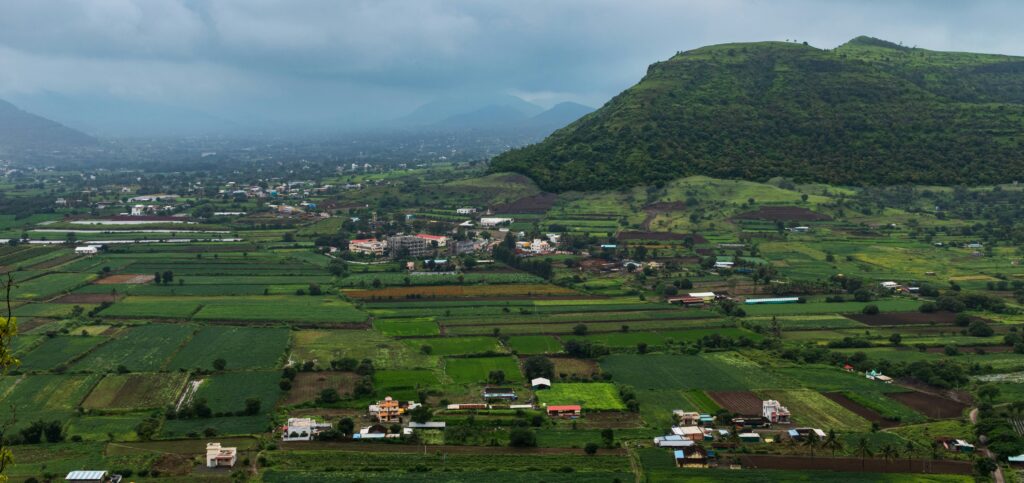
What comes to your mind when you hear the word, India?
Is it the snow-capped Himalayas, centuries-old monuments, colorful festivals, bustling markets, diverse cultures, or the warmth of people who make strangers feel at home? Or is it the farmer waiting for rain, the sanitation worker who cleans the streets before dawn, the student anxious about an uncertain future, the family in a remote village still waiting for basic facilities, or the countless hands that quietly keep this nation moving ahead every single day?
The truth is, both are India.
One is celebrated, photographed, and proudly shared with the world. The other exists in plain sight yet often remains beyond our attention. One fills us with pride. The other subtly asks for our compassion. Together, they tell the story of a nation that is as inspiring as it is unfinished.
So, which India do we really love? The one that inspires us, or the one that needs us?
Perhaps the greatest test of our love for a country is not only how proudly we celebrate its achievements, but how sincerely we care for the people, places, and realities that are easy to overlook. After all, a nation is not defined only by its success stories. It is equally shaped by the lives we choose to see, the struggles we choose to understand, and the responsibilities we choose to embrace.
Which India Do We Really See?
We often speak about India with great certainty. Some call it a rising global power. Others see it as a nation still struggling with inequality and countless challenges. But before deciding which description is true, perhaps we should ask ourselves a simpler question. Which India have we really seen?
The India we know is often shaped by the life we have lived. A child growing up in a modern city, a farmer in a remote village, a tourist visiting historic monuments, a student chasing opportunity, or a worker earning a daily wage will each describe a different India. None of them is wrong. They are simply describing the India what they have experienced.
India is not divided into different realities. Our perspectives divide one shared reality into different experiences.
The problem begins when we mistake our experience for the whole truth. We start believing that the India around us is the only India that exists. Yet a nation as vast and diverse as ours cannot be understood from a single neighborhood, profession, language, or way of life. Every region, every community, and every ordinary citizen carries a piece of its story.
Sometimes, seeing is not the same as understanding. We pass people every day without knowing the journeys they carry. We do the same with our country. We admire its achievements, notice its difficulties, or celebrate its diversity, but rarely pause to see how all these realities exist together. India is not a collection of separate worlds. It is one nation where enormous lives, hopes, struggles, and dreams are woven into the same fabric.
So, I think the real question is not, “Which India is the true India?” The better question is, “Are we willing to see India completely?” The moment we begin to look beyond our own experiences, we stop seeing India in the fragments and start appreciating it as a shared home that belongs to us all.
The India That Inspires Our Pride
India is not a country that can be understood in a single journey, a single language, or a single story. The farther you travel, the more you realize that every few hundred kilometers, something changes. The language sounds different, the food tastes different, the festivals feel different, and even the rhythm of life changes. Even with these differences, one feeling quietly remains the same. The feeling of belonging to one nation.
Perhaps that is India’s greatest strength. Diversity is not something we display. It is something we live every day. Hundreds of languages and countless local dialects continue to carry the memories, traditions, and wisdom of their people. Different faiths offer different paths, still they share the same sky. In many neighborhoods, it is common to hear temple’s bells, the call to prayer from a mosque, the hymns of a church, or the prayers from a gurudwara, all becoming part of the same everyday life. During festivals, neighbors often exchange greetings, sweets, and kindness long before they exchange opinions. Sometimes, humanity speaks more loudly than identity.
India also tells its legacy through its landscapes. A child in Ladakh wakes up to snow-covered mountains, while another in Rajasthan grows up beside endless sand dunes. Some begin their mornings listening to the waves along the coast, while others watch rivers nourish fertile plains or clouds settle over green hills. Across the country lie forests, deserts, wetlands, islands, lakes, plateaus, and some of the world’s richest biodiversity. These landscapes have shaped far more than geography. They have shaped the food people eat, the homes they build, the clothes they wear, the occupations they follow, and the traditions they pass from one generation to the next.
This remarkable diversity is only one part of India’s story. If you would like to explore its landscapes, heritage, and cultural richness in greater depth, you may also enjoy reading Beauty of India: A Journey Through Heritage, Nature, and Culture.
However, the soul of India is rarely found only in its famous places. It is found in ordinary people living ordinary lives with extraordinary resilience. It lives in the farmer who trusts the soil before sunrise, the teacher who lights hope in a classroom, the artisan who keeps centuries-old craftsmanship alive, the fisherman who reads the sea like a book, the sanitation worker who cleans the streets before the city awakens, and the enormous hands that quietly keep the nation moving. They may never appear on the front page of a newspaper, but they are the reason that India keeps shaping every single day.
Maybe this is why India leaves such a lasting impression on those who truly experience it. Many visitors arrive expecting to remember its monuments or famous destinations, at the same time many people leave remembering the conversations they had, the unexpected kindness they received, and the humanity they encountered in ordinary moments. India’s greatest beauty does not lie only in the places we visit. It lives in the people who give those places a soul.
That is what the India that inspires our pride. Not because it is flawless, but because it continues to hold together countless identities, landscapes, traditions, dreams, and generations within one shared home. Its greatest achievement is not that everyone lives the same life. It is that millions of different lives continue to shape the spirit of one nation together.
The India We Often Overlook
The Faces We Pass Without Seeing
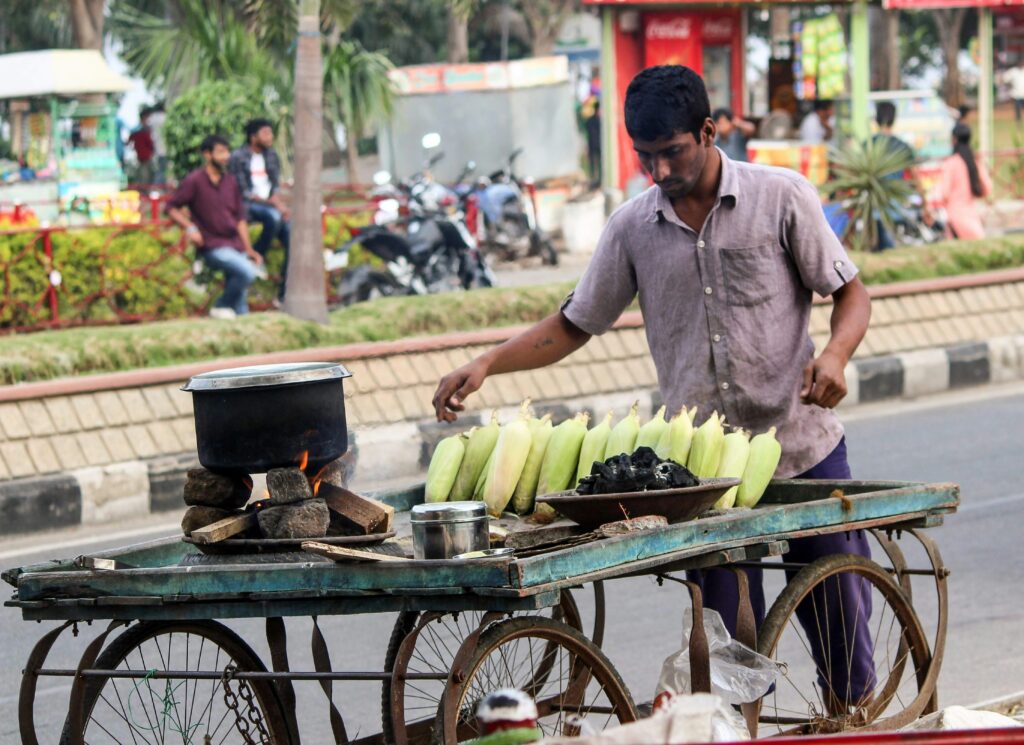
Every day, we see hundreds of faces, yet very few truly stay with us. Street vendors calling out through narrow lanes, sanitation workers cleaning our surroundings before the day begins, ragpickers searching through waste, construction workers building brick by brick, and daily-wage laborers carrying the weight of our cities on their shoulders. We notice their presence but rarely pause to notice their lives.
A visit to a brick kiln changed the way I looked at these unnoticed faces. I watched the workers labor tirelessly, their faces covered with dust and soot, their hands shaped by hard work, yet their expressions carried a quiet sense of responsibility rather than complaint. Being curious to learn, I spoke with them about their work. They welcomed me with warmth and respect, despite our different backgrounds and appearances. They never let me feel like a stranger or inconvenience. That brief conversation reminded me that humanity is never measured by where we come from, but by how we treat one another.
As I stood there, one thought refused to leave my mind. Many of the people who spend their days building strong pakka houses for others return to modest kachcha homes of their own. We proudly admire the buildings, roads, and homes that shape our cities, but rarely pause to acknowledge the hands that made them possible. Their contribution becomes part of our everyday lives, even when their names never become part of our conversations. Their names may never appear in newspapers, and most of us may never know their stories, but their labor, hard work and dedication silently become the foundation of countless lives.
The true heroes of a nation are not always those who stand in the spotlight. More often, they are the ones we pass every day without truly seeing. The real question is not whether they have done enough to earn our respect, but whether we have learned to look beyond the work and see the people behind it.
Where Opportunity Still Depends on Geography
The place where we are born should shape our memories, not limit our possibilities. Yet, for many people, geography still quietly influences the opportunities available to them. Whether someone grows up in the mountains, along the coast, in a remote village, or in a crowded city, their potential is never determined by the landscape around them. What often differs is not ability, but access.
For some families, a good school, a hospital, reliable internet, or public transport is only a few minutes away. For others, accessing the same opportunities may require travelling long distances or overcoming challenges that are unrelated to talent. Reports such as the Annual Status of Education Report (ASER) continue to show that access to quality learning and educational resources varies across regions. Talent is born everywhere. Opportunity is not.
Geography, however, is only part of the story. Sometimes, the invisible boundaries are created by expectations. Some young people are encouraged to explore new paths, while others grow up believing their future can only follow in the footsteps of previous generations. There is dignity in every honest profession, whether it is farming, fishing, weaving, or craftsmanship. The real question is not whether these professions deserve respect, they certainly do. The real question is whether every individual has the freedom to choose their own path without feeling limited by birthplace, circumstance, or inherited expectations.
Our first address should never become the limit of our last ambition. A place may shape the beginning of our journey, but it should never decide its destination.
The Nature We Depend on but Often Neglect
Nature is far more than scenery or the beauty of a landscape. It is the quiet protector that has sustained life long before modern civilization existed. The Himalayas do more than stand along India’s northern frontier; they influence climate, give birth to glaciers, and feed countless rivers that sustain life across the country. Those rivers nourish fertile plains, support agriculture, provide water for millions of people, and become home to rich flora and fauna. Forests, rainfall, fertile soil, coastlines, and every living species together remind us that nature is not a collection of separate elements but one interconnected system on which our survival quietly depends.
Despite covering only about 2.4% of the world’s land area, India is home to nearly 8% of the world’s recorded species. This extraordinary natural wealth is more than a source of pride; it is a reminder of the responsibility we carry. Nature has quietly sustained generations without ever asking to be noticed or rewarded.
We often realize the value of nature only after it begins to fade. We notice water when taps run dry, rivers begin to shrink, forests after they disappear, and clean air only when breathing becomes difficult. Unpredictable rainfall, devastating floods, prolonged heatwaves, polluted air, and retreating glaciers are not merely environmental concerns; they are reminders that the balance of nature is closely tied to the well-being of humanity.
Humanity and nature are not two separate stories; they are chapters of the same life. When forests disappear, biodiversity declines and many communities lose their livelihoods. When fertile soil is exhausted, food security weakens. When rivers suffer, people suffer. Every wound we inflict upon nature eventually finds its way back to us because the well-being of one can never remain separated from the other.
Protecting nature is not merely about saving the environment; it is about protecting ourselves. Just as a thread begins to weaken from one end before the entire fabric starts to tear, every act of neglect towards nature eventually reaches our own lives. The India we often overlook is not only found in forgotten people or distant places, but also in the rivers that sustain us, the forests that shelter us, the soil that feeds us, and the countless forms of life that quietly make our own lives possible.
Why Do We Ignore This Side of India?
When Familiarity Makes Us Stop Noticing
It is not always because something has become less important that we begin to overlook it. More often, it is because the human mind naturally pays greater attention to what is new or unfamiliar. As we repeatedly see the same people, places, and surroundings, our attention gradually fades even though their value remains exactly as it is.
Think about hearing a joke for the first time. We often laugh wholeheartedly because it is fresh and unexpected. Yet, when we hear the same joke again and again, it rarely brings the same response. The joke has not changed; our mind has. Similarly, repeated exposure slowly reduces the attention we give to what has become familiar.
The same tendency shapes the way we see our country. When we repeatedly witness people struggling, children asking for help, or difficult realities around us, our minds gradually become accustomed to them. It is not always a lack of compassion that makes us look away; often, it is simply the way human attention works.
Therefore, the problem is not that these realities have become less important; it is that our minds have quietly stopped noticing them with the same awareness. Real understanding begins the moment we pause, observe, and choose to see what familiarity has hidden in plain sight.
When Our Own World Becomes the Whole World
We often understand India from the place we have known. Someone who grows up close to forests may develop a deeper familiarity with nature, from the food available around them to the way their community lives with the land. In a desert, where water can determine the rhythm of an entire day, scarcity is not an abstract idea; it is something people learn to respect. In the plains, fertile fields may seem ordinary because they have always been there, while someone from the mountains may know what rugged slopes, difficult roads, and distance can demand from everyday life. The land around us quietly teaches us what to notice.
That is why two people can look at the same country and carry completely different pictures of it. One may see abundant rivers; another may know what it means to wait for water. One may see mountains as beautiful scenery; another may see them as home, livelihood, distance, and sometimes isolation. Neither view is false. The limitation begins when we make a mistake with the part we know for the whole, we do not.
I have come to realize that India’s diversity is not only about different languages, food, clothes, or festivals. It is also about the different realities people grow up understanding without ever having to explain them. A person does not need to travel far to know their own world, but sometimes travelling, listening, or simply paying attention can reveal how much exists beyond it. The experience of IAS officer Apurva Pandey, who travelled across 13 states and Union Territories during her training, similarly showed her how much wider and more layered India’s realities were than her earlier understanding. The Better India – Apurva Pandey’s Bharat Darshan experience
We may therefore know our neighborhood, our language, our landscape, and our way of life deeply, yet still know only one small part of India. Our experience gives us a place from which to see India, but it should never become the boundary of what we are willing to understand.
Seeing Begins Where Assumptions End
The human mind can form judgments in an instant. We see someone’s appearance, clothes, occupation, language, or surroundings and sometimes form an opinion before knowing anything beyond what is visible. In the rush of everyday life, we rarely pause to question that first impression. We look at what is obvious, make a quick judgement, and move on without asking what lies beneath it.
Maybe part of the problem is that we have become too accustomed to living in a hurry. To stop, observe, and think deeply demands our attention. It asks us to look beyond our first response instead of simply accepting what seems easiest or most obvious. However, sometimes, that brief pause is enough to change what we see.
Therefore, learning to govern our own minds matters. Be the master of your mind, not its servant. When we pause before judging, question our assumptions, and allow ourselves to look a little deeper, we may discover that the person or reality we thought, and we understood was far more complex than our first impression suggested.
Sometimes, we do not need new eyes to see India differently. We simply need to look again.
Loving India Means Caring for Every Indian
Loving India cannot be reduced to emotion, pride, or the excitement we feel when the country achieves something. We may celebrate its growing influence, its cities, its achievements, or Indians making their mark around the world. There is nothing wrong with that. But if we truly love India, we must be willing to look at the whole of it, not only the parts that make us proud.
What does that love to mean in everyday life? It means caring about the people who share this country with us. We breathe the same air, depend on the same land and water, and draw our lives from the same resources. Yet when someone is struggling, we can sometimes laugh at them, look down on them, or turn away. We allow religion, caste, community, or other differences to create distance between people who are, in the simplest sense, fellow human beings and fellow Indians. Love that cannot make room for another person’s dignity is difficult to call love.
Giving money to someone in need may help for a moment, but caring cannot end with charity. A mother does not love her child only when the child is in trouble; she cares, protects, corrects, sacrifices, and thinks about the child’s tomorrow. Our love for India needs something of that kind of responsibility. It should make us care not only about what India gives us, but about what our actions leave behind for other Indians.
If we waste water, pollute the air, exhaust resources, or damage the land for our own convenience, the consequences do not disappear. Someone else eventually bears them. The same is true when we humiliate instead of helping, divide instead of understanding, or remain indifferent when another person is struggling. To love India is to make the lives of Indians a concern of our own.
That is what the kind of love worth carrying: not loud enough merely to be displayed, but deep enough to be lived. A love that does not ask who deserves our care but reminds us that every Indian deserves to live with dignity, safety, and the feeling that they belong.
Building the India, We Want Future Generations to Inherit
Every generation receives an India shaped by those who came before it, and every generation leaves behind an India shaped by its own choices. The question is not whether we will leave a legacy, but what kind of legacy we choose to leave.
We enjoy countless things that we did not create ourselves. We travel on roads we never built, study in schools we never established, speak languages we did not invent, and find shade beneath trees planted by people whose names we will never know. Their quiet sense of responsibility has become part of our everyday lives. If someone we have never met cared enough to leave these gifts for us, what are we leaving for those we will never meet?
The truth is that the future is not built in a single day. It grows through the choices we make every day. Every tree we protect or cut down, every river we keep clean or pollute, every child we educate or neglect, every act of honesty or injustice silently shapes the India that someone else will one day call home. Years from now, when people look back at our generation, what will they remember us for?
A farmer never expects to harvest wheat after sowing paddy. The harvest always reflects the seed. Our society is no different. If we sow compassion, justice, responsibility, and respect, those are the values that will continue to grow. If we sow hatred, indifference, exploitation, and intolerance, we should not expect a different harvest. The future is often nothing more than today’s values, fully grown.
History reminds us that an everlasting legacy is rarely measured by the wealth alone. A. P. J. Abdul Kalam inspired generations not only through scientific achievements but also through his unwavering faith in education, integrity, and the dreams of young people. Yet history is shaped not only by remarkable individuals. Countless ordinary people quietly build a better tomorrow every day: a teacher who inspires a student, a farmer who protects the soil, a worker who performs an honest day’s labor, a parent who raises a compassionate child, or a neighbor who chooses kindness over indifference. A nation is not built only by the people who make history, but also by those who quietly make everyday life better for someone else.
Therefore, development shouldn’t be measured only by what we build, but also by what we preserve, what we improve, and whom we include. A nation may become wealthier, taller, or more advanced, but if dignity is lost, nature is exhausted, or people are left behind, its progress remains incomplete. Every Indian has inherited this country, but no one has inherited the responsibility alone.
The India we leave behind will one day become a child’s first home, first school, first dream, and first understanding of the world. Let us leave behind an India where opportunity is greater than circumstance, where justice protects every person’s dignity, where development walks alongside compassion, and where every generation receives a little more hope, responsibility, and humanity than the one before.
The India We Love Deserves the India We Ignore
The India we admire and the India we overlook have never been two different countries. They have always existed together. The difference has never been India itself, but what we choose to notice, understand, and value.
Loving India is not simply a feeling we express in moments of pride. It is a responsibility we carry in the way we treat one another, the way we protect what sustains us, and the choices we make every day. A nation becomes stronger not only through its achievements, but through the character of its people.
When our hearts are sincere, our intentions are honest, and our actions reflect both, India no longer feels divided by wealth, language, geography, or circumstance. It begins to feel like one shared home, where every person matters, every life carries dignity, and every part of the country deserves to be seen with equal care. That is the India worth loving, and the India worth leaving behind.