

What a River Can Teach Us About Life
A river never knows what the next turn will bring. Rocks may obstruct its path, the ground may change beneath it, and storms may disturb its flow. Still, it finds a way forward. It bends without surrendering its journey, changes its course when necessary, and continues through landscapes that are never entirely within its control.
Human life carries the same uncertainty. We make plans, work towards our dreams and imagine how things will unfold. Then life takes an unexpected turn. A failure shakes our confidence, a relationship leaves a wound, or years of effort bring fewer results than we hoped for. We begin to question our decisions, compare our progress with others, and wonder whether we are moving in the right direction.
In such moments, we need more than words telling us to stay strong. We need to understand when to persevere, when to change, and when to stop carrying the weight of what we cannot undo.
The river offers a quiet way to reflect on these questions. Its journey reminds us that strength does not always mean resistance, change does not always mean defeat, and progress does not always follow a straight line.
A life well lived is not one without obstacles or losses. It is one in which we learn to move through them without losing our character, our capacity to love, or our ability to bring something good into the lives of others.
The Wisdom of the River: Finding a Way Through Difficulties
Difficulty is woven into life from its very beginning. A mother endures the pain of childbirth to bring a child into the world, and the child begins a journey of learning from the earliest moments of life. Sitting, standing, walking, speaking and understanding the world all require time, patience and effort. A child falls while learning to walk, tries again and gradually learns to stand with confidence. What seems natural later in life once required struggle.
This tells us something important: difficulty is not always a sign that something is going wrong. Sometimes, it is part of the process through which we learn, grow and become capable of doing what we could not do before.
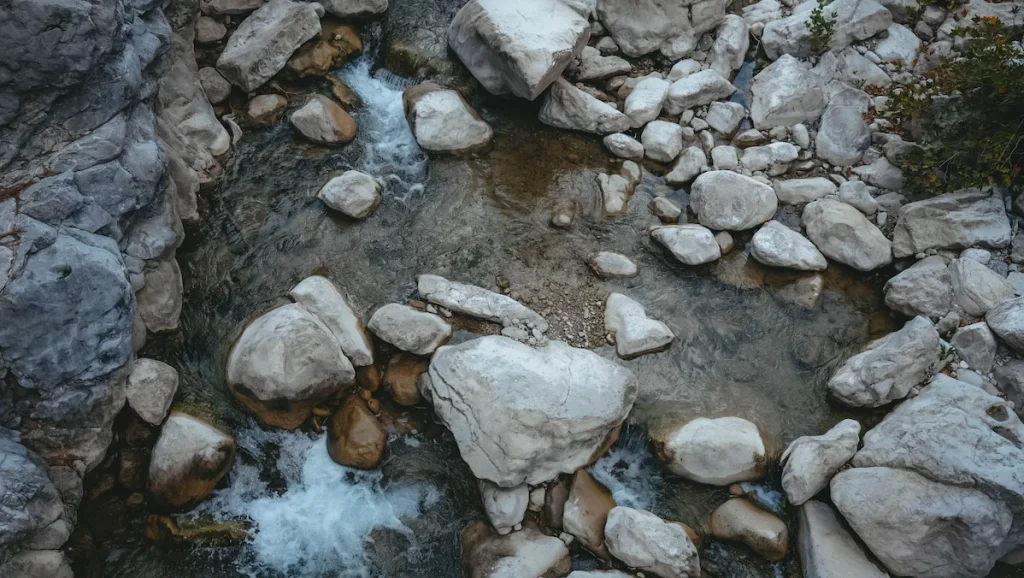
Consider a river moving through the landscape. Its journey may begin with a smooth flow, but the way ahead is not always clear. A large rock may obstruct its course, uneven ground may disturb its movement, and the river may be forced to find another way forward. Sometimes, the water gradually wears down the rock; sometimes, it flows around the obstacle and follows a different route. The river’s journey is shaped by the challenges it encounters, but an obstruction does not necessarily bring its movement to an end.
Human lives are no different in this respect. A student may work hard for an examination and still fail. Someone may spend years pursuing a career, only to find that circumstances have changed. A person may invest trust and affection in a relationship that eventually brings disappointment. At such moments, the future can seem uncertain, and the effort already invested may feel wasted.
But a difficult experience does not have to become the final judgement on our abilities or our future. We need to understand what the situation demands of us.
Imagine a student who repeatedly struggles with mathematics despite studying for hours. If the student keeps following the same method without identifying the underlying problem, the results may remain unchanged. The difficulty could lie in weak fundamentals, a misunderstood concept or a habit of memorising solutions instead of learning how to solve problems independently. Progress begins when the student recognises the weakness, works on the basics and adjusts the method of preparation.
The lesson is not to keep pushing in the same direction regardless of the outcome. It is to distinguish between a goal worth pursuing and an approach that needs to change. Sometimes we must work harder; sometimes we must learn a different method; and sometimes circumstances require us to reconsider our plans altogether.
Perseverance keeps us moving, but understanding helps us find the right way forward.
There is another lesson in the river’s movement. When water rushes through a narrow passage among rocks, its flow can become turbulent and noisy. In other stretches, it moves more quietly. The noise of its movement alone does not tell us everything about its journey.
People, too, can become so occupied with announcing their plans and ambitions that they give less attention to the work itself. A student preparing for a competitive examination may repeatedly talk about their future success while neglecting revision and practice. Another student may speak little about their ambitions but spend their time strengthening weak areas, learning from mistakes and preparing with discipline. Their efforts may attract less attention, but the quality of their preparation is what matters.
This does not mean that every plan must be hidden. Sharing an ambition with someone trustworthy can bring valuable guidance, encouragement and accountability. The point is to avoid becoming so concerned with others’ opinions that we lose focus on the purpose we set out to achieve.
Let your work receive more attention than your announcements. You do not need to prove the worth of every ambition before you have given it the effort it deserves.
We must also remember that every river follows its own course, shaped by the land through which it flows. Human beings differ in their abilities, strengths, weaknesses, circumstances and ways of understanding. One student may grasp a concept quickly but struggle with consistency. Another may need more time to understand the same concept but show patience and determination in practice.
If the second student constantly compares their speed with the first, they may overlook their own progress. If the first relies only on quick understanding, they may underestimate the importance of revision. Each person needs to recognise what they do well and where they need to improve.
The same principle applies beyond examinations. We cannot all progress at the same pace, begin from the same position or follow identical paths. Comparing our lives without understanding these differences can leave us frustrated and distract us from the work that is genuinely ours to do.
Knowing ourselves therefore is essential. We must recognize our strengths without becoming proud of them, acknowledge our weaknesses without feeling ashamed of them, and understand our circumstances without using them as an excuse to stop growing. Self-awareness helps us choose a path that responds to who we are and what we need to develop.
And before choosing that path, there are moments when we must learn to pause.
When a student receives disappointing marks, the immediate reaction may be to lose confidence or give up. When someone feels hurt, anger may lead them to say something that damages a relationship. When a plan fails, fear may push a person into making another decision before they have understood the first failure.
Acting immediately does not always mean acting wisely. A pause allows us to look at the situation more clearly, consider our options and decide what deserves to be done. We may need to seek advice, accept a difficult truth, correct a mistake or wait until our emotions no longer control our judgement.
The river’s changing movement offers a useful reminder here: the way forward depends on the conditions it encounters. Human beings, too, need to understand their circumstances rather than respond to every difficulty in the same way. Some situations call for courage, others for patience, and some for a willingness to reconsider what we had assumed was the only possible route.
We cannot remove every obstacle from our lives, guarantee the outcome of every effort or decide how every circumstance will unfold. What we can do is learn from experience, understand ourselves more honestly and respond to difficulties with greater wisdom.
When a rock stands in your path, do not assume that your journey has ended. Examine the obstacle. If it can be overcome, gather the patience and strength to face it. If your approach is not working, look for another way. And if the moment calls for reflection, allow yourself the time to think before moving forward.
A difficult path does not always ask you to become stronger in the same way. Sometimes it asks you to persist, sometimes to change, and sometimes to understand yourself more deeply. The wisdom lies in recognising what the moment requires, without losing sight of where you hope to go.
Not Every Journey Follows a Straight Line
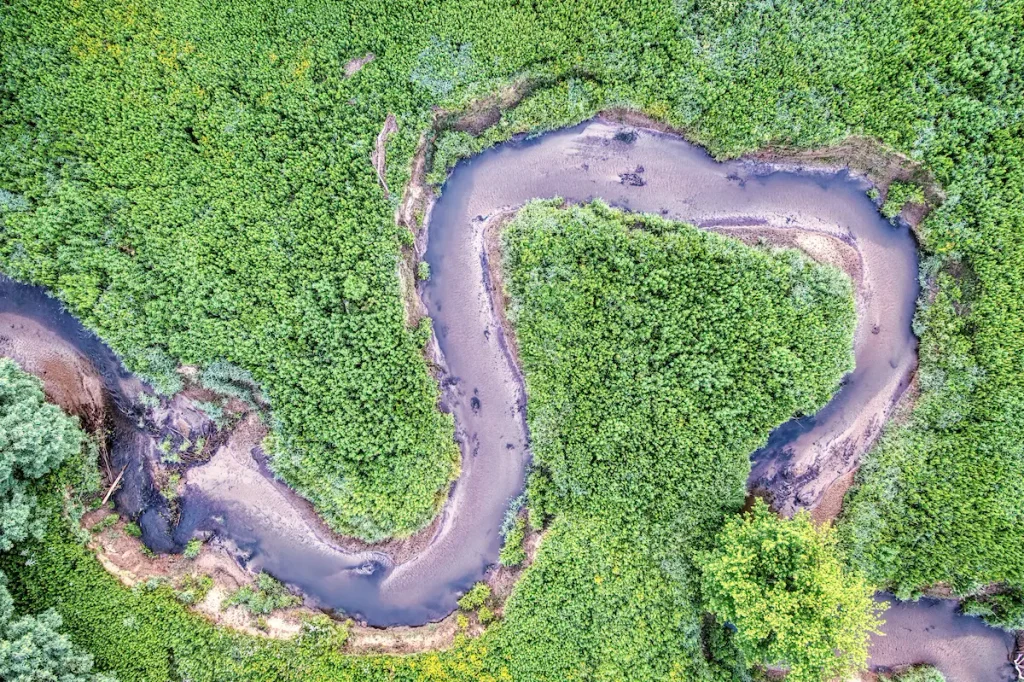
A river does not always follow a straight course. Some stretch across the landscape in relatively straight channels, while others bend, curve, and meander through the land. Their paths are influenced by several factors, including the volume of water, the slope of the land, and the nature of the rocks and soil beneath them. The landscape through which a river flows helps shape the journey it takes.
Human lives are shaped by different conditions, too. Every person has a different background, family environment, financial situation, set of opportunities, and personal responsibilities. Some carry challenges that others may never have to face. For one person, the path towards education or a career may be relatively direct. For another, the same journey may involve financial pressure, family responsibilities, limited resources, or repeated interruptions.
Consider two students with the same ambition of pursuing higher education. One may have access to good schools, private coaching, a peaceful place to study, and financial support from family. The other may have to manage studies alongside household responsibilities, travel long distances for classes, or prepare without many learning resources. Both may possess equal curiosity and determination, but their circumstances are not equal. It would be unfair to judge their progress by the same timeline without recognising the different conditions under which they are working.
The same difference can be seen in professional life. A person with financial security may have the freedom to explore opportunities, take risks, or spend time developing a skill. Someone from a financially weaker or middle-income background may need to earn alongside learning, support family members, or choose a more practical route because there is little room for uncertainty. Their journey may involve more turns and take longer, not because they lack ambition, but because the ground beneath their feet is different.
This does not mean that a comfortable background guarantees an easy life or that a difficult beginning determines how someone’s life will end. Every person faces struggles of their own, and circumstances can change. But recognizing unequal starting points helps us understand why people’s journeys cannot always be compared by their speed or visible achievements.
What matters is that we do not allow someone else’s pace to become the measure of our own worth. A student who takes longer to complete a degree, a young person who begins earning before pursuing further education, or someone who changes direction because of family circumstances is not necessarily falling behind. Their route may be different because their responsibilities and opportunities are different.
The river does not choose the landscape through which it must flow. In the same way, we do not choose every circumstance into which we are born. But our circumstances do not have to define the limits of what we can become.
Some journeys take a straighter course; others wind through unexpected turns. The important thing is to recognise the ground we are travelling through, make wise use of the opportunities available to us, and keep our curiosity and willingness to grow alive, even when progress is slow.
A different path does not make a life less meaningful. Sometimes, the journey that takes longer asks us to discover strengths we might never have needed on an easier road.
Learn to Let Go Without Losing Yourself
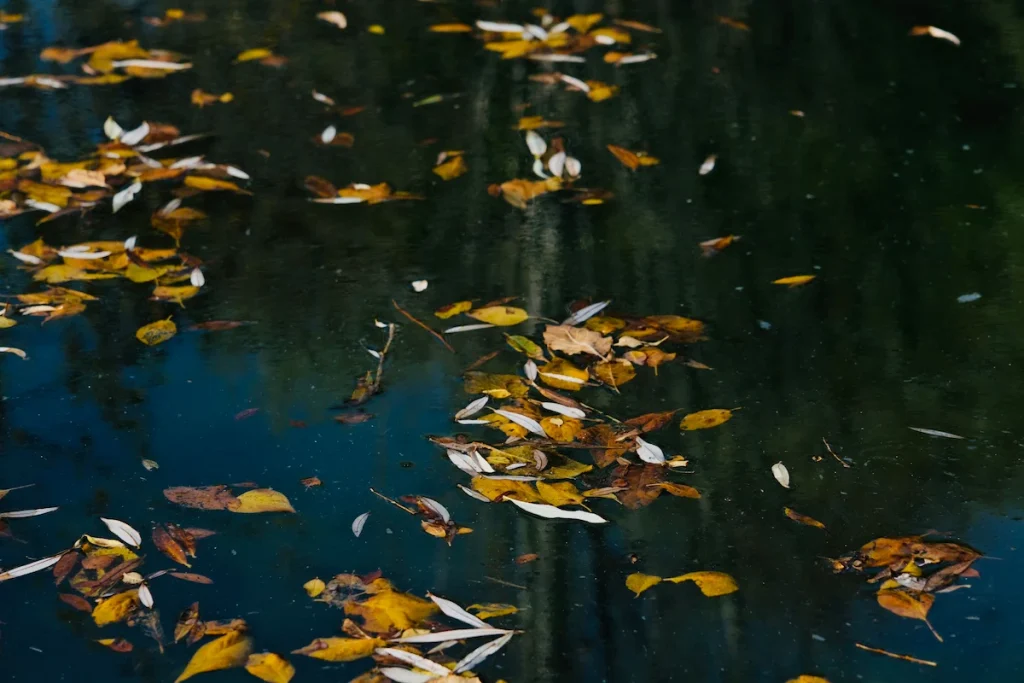
Observe a river as it flows. Leaves, plastic, garbage, and other unwanted materials may enter its water, but the river does not stop to complain about them. It does not abandon its journey because something unpleasant has come into its path. It keeps moving, carrying its water forward. Its flow may help disperse some impurities, although excessive pollution can also damage it.
There is a lesson here for human life. As we move towards our goals, people may criticise us, discourage us, or create difficulties along our path. Not every word deserves a response, and not every negative experience deserves to occupy our minds. When we keep focusing on what others say about us, we can lose sight of the very purpose we are working towards. Think of your potential as an ocean. Do not allow a few drops of negativity to make you forget its depth. Learn to ignore what does not deserve your attention and keep moving towards what matters.
However, sometimes, continuing the journey requires changing direction. When a river encounters an obstacle, it may gradually wear it down or find another route. Human life can demand the same flexibility. Some relationships change; friends or relatives who once walked beside us may grow distant or choose a different path. Think of the smaller streams that join a river, contribute to its flow, and eventually separate or follow different courses. Their paths may change, but the larger river does not cease to flow. In the same way, we can appreciate the support people once gave us without making their continued presence a condition for our own progress. Some people may leave our journey, but their departure does not have to become the end of ours.
Still, moving forward should never mean losing our values or becoming indifferent to others. A river is recognised by its flow. When water becomes stagnant, it no longer performs the same role in the landscape. Likewise, if disappointment makes us withdraw completely from society, avoid every relationship, or stop caring about others, we may protect ourselves from some difficulties, but we may also close ourselves off from important parts of life. We have to live among people, face challenges, learn from difficult experiences, and protect our self-worth without abandoning our kindness.
Think about the life a river sustains. Fish, aquatic plants, and other living things depend on its water. Its significance lies not only in the fact that it keeps moving, but also in the life it supports along the way. Human beings, too, find meaning in how they live with others, what they contribute, and how they respond to hardship. We cannot avoid every difficult person or every painful experience. Nor should every disappointment make us bitter. Sometimes, living among people and facing adversity teaches us patience, understanding, courage, and the wisdom to recognise what deserves our attention and what we must learn to release.
The art of life is to keep moving without carrying every hurt, to change direction without abandoning your purpose, and to protect your self-worth without losing your kindness. We must learn to let go of what holds us back while remaining open to the people and experiences that help us grow.
The Greatest Journey Gives Something Back
Think of a seed when it is first planted. It has no branches to spread, no fruits to offer, and no shade beneath which anyone can rest. But with time, it grows into a tree. Its branches extend, its leaves provide shelter, and its fruits nourish many living beings. Even a tree that bears no fruit can offer shade to a tired traveler, shelter to birds, and a place for other forms of life to thrive. A tree does not exist only for its own growth; its presence also makes life better for those around it.
Human life carries a similar lesson. We spend years acquiring knowledge, developing abilities, building careers, and pursuing success. These are important, but our purpose should not end with personal achievements. What we learn, earn, and become should also enable us to contribute to the lives of others. That contribution need not always be financial or material. If we cannot offer money or physical resources, we can still share knowledge, guide someone through a difficult decision, offer encouraging words, or make another person feel safe and supported in our presence. Not everyone can give material things, but everyone can find a way to give something meaningful.
A river offers another example. As it flows through different landscapes, it nourishes the land, supports agriculture, provides water for people and animals, and sustains countless aquatic species. From the smallest organisms to larger forms of life, many depend on the environment a river helps sustain. It also adds to the beauty of the landscape through which it passes. Its significance is not limited to its own course; it is reflected in the life that flourishes around it.
Nature, in this sense, teaches us something important: life is interconnected. Just as a river contributes to an ecosystem, human beings are part of a larger society in which our actions can affect others. A person who thinks only about personal comfort, possessions, and achievements may accumulate many things, but a life centred entirely on oneself misses an important dimension of being human. A helping hand, an honest piece of advice, a kind word at the right moment, or knowledge shared with someone who needs it may seem like small acts of kindness, but their impact can remain with another person for years.
Perhaps the real measure of success lies not only in what we accomplish during our lifetime, but also in what we leave behind for those who come after us. Someone who helps others learn, creates opportunities, shares valuable knowledge, or makes life a little easier for the next generation contributes something that may outlast their own achievements. We may not always witness the full impact of our efforts, but what we pass on can continue to shape lives long after we are gone.
Consider how a river begins as a small stream, sometimes originating in the mountains. It does not become a great river overnight. As it gathers water and receives smaller streams along its course, it gradually develops into something capable of nourishing vast stretches of land and sustaining countless forms of life. What begins as a small flow can eventually become an essential part of an entire landscape.
Our journeys, too, begin with small steps. We may start with limited knowledge, resources, or opportunities, but what we learn and become can eventually benefit many others. The beginning of a journey does not determine the extent of its contribution.
The greatest journey is not measured only by how far we travel or how much we achieve, but by the lives we touch, the good we pass on, and what continues to grow because we were here.
Keep Moving, Keep Growing
A river teaches us that life is not about having a perfect path. It is about finding the strength to continue when the way becomes difficult, the wisdom to change direction when necessary, and the courage to leave behind what no longer serves us. But above all, it reminds us that a meaningful journey is not lived for ourselves alone.
We may not control every circumstance, choose every turn, or know where the journey will lead. What we can shape is how we respond, what we learn, and what we contribute along the way.
In the end, a life is not remembered only for the distance travelled, but for the difference it made along the way. Keep moving, keep growing, and leave something good wherever your journey takes you.