
A person can have enough food to eat, a roof over their head, electricity at home, and a way to earn a living. From the outside, it may seem that the essentials are taken care of. But does having enough to get through life mean that we are living well?
Consider what happens when one illness uses up a family’s savings, when losing a job puts the next month’s expenses at risk, or when a child goes to school but still has few real opportunities ahead. At that point, the question is no longer just about having something or having nothing. It is about how secure, healthy, free and hopeful life feels.
The gap between these two realities is the distance between surviving and living well. It looks different in different parts of the world. Some people are still struggling for food, safe housing, clean water or basic healthcare. Others have these essentials but live with financial pressure, poor health, rising costs, exhausting work or limited choices.
So, what does it really take to live well? And if development is supposed to improve human lives, should its success be judged only by what people have, or also by the kind of life they are able to build?
Surviving Is Not the Same as Living
Sometimes a simple scene can make you think about life differently.
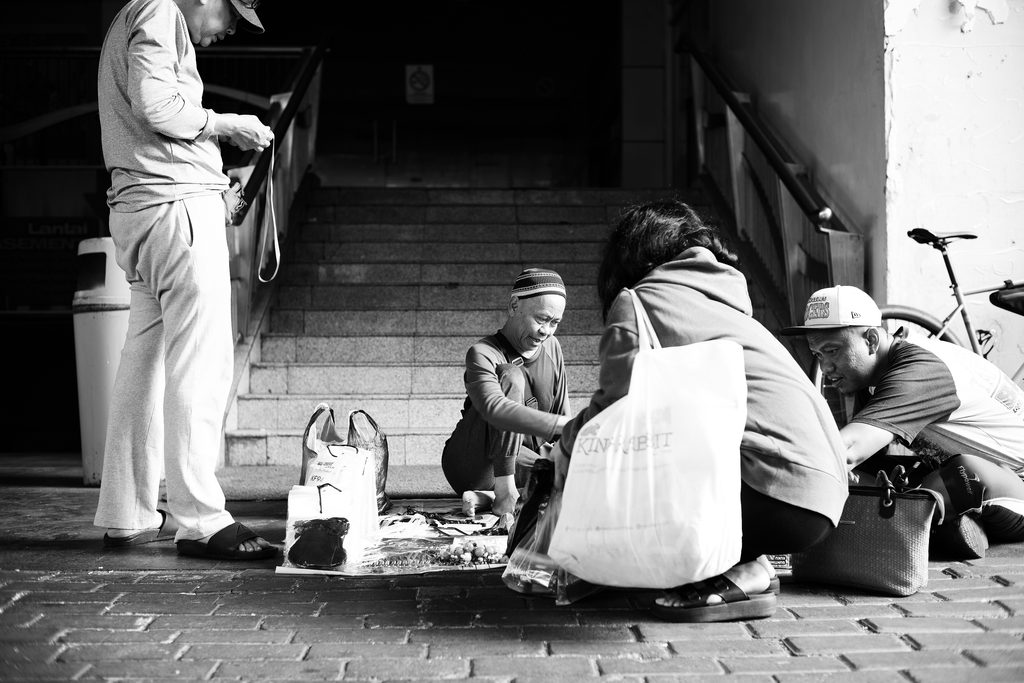
Once, while going to the market, I noticed an old woman sitting on the ground and selling vegetables. She looked very old and tired, but she was still there, trying to earn something from the few vegetables in front of her.
I did not know her story. Maybe she had a family. Maybe she had no one to depend on. Maybe life had simply left her with no better choice. I could not know.
But one question stayed with me: at that age, what makes a person keep working like this?
For some people, life is not about choosing how they want to live. It is first about finding a way to keep going.
That is survival.
Survival means being able to meet the basic needs of life: food, water, shelter, safety, healthcare and some means of earning a living. When even these things are uncertain, tomorrow can become a worry in itself.
And when survival takes up most of a person’s attention, there may be little space left for anything else. There may be little time to think about learning, health, family, personal dreams or the future. Life becomes focused on getting through today.
But is getting through today the same as living well?
I do not think it is.
Living well begins when a person has some room beyond immediate struggle. Room to plan for tomorrow. Room to recover when something goes wrong. Room to learn, care for oneself, spend time with people who matter and make some choices about the direction of life.
This does not mean that everyone needs wealth or a comfortable life by the standards of someone else. It means something more basic: a person should have a fair chance to live, not merely a constant need to survive.
That is where the distance between surviving and living well begins.
When the Basics Are Not Enough
We tend to speak about basic needs as though their meaning is obvious. Food, water, shelter, safety, and healthcare come to mind first. But the idea becomes harder to define when we look at real lives.
How much shelter is enough? Is internet access still a luxury when education, employment and essential services increasingly depend on it? Does someone living in a remote area need the same things as someone living in a city with good public transport and nearby services?
There is no honest answer that can put every person into one fixed list.
Needs have a human foundation, but their form can change with circumstances. What one person can manage without may be essential to another. A vehicle may be unnecessary for someone with reliable transport nearby, while for another person it may be closely tied to work, education, or access to healthcare. A computer may be an expensive convenience in one home and an important means of earning a living in another.
This does not mean that everything we want should be called a need.
Human wants can keep growing long after the essentials have been secured. Better housing can create the desire for an even better one. More income can bring new expectations. Possessions can multiply without bringing the feeling of having enough any closer.
So where should we draw the line?
The answer may not lie in setting a fixed list of possessions or a particular level of consumption. A better starting point is what a person needs to live with health, safety, dignity and a reasonable opportunity to take part in life.
That distinction matters because having something does not always mean receiving its real benefit.
A child may have access to a school but still receive poor education. Someone may live near a hospital but be unable to afford the treatment they need. A worker may have a job and still remain unable to build any security because almost everything earned is consumed by necessary expenses.
The facility exists. The service exists. The job exists. But the life that is supposed to improve may not improve enough.
However, another side deserves equal care as well. We should not romanticize deprivation by telling people that wanting less is always better. Gratitude can help a person value what they have, but gratitude cannot replace food, treatment, safety or opportunity. Contentment has its place, but it should never become an excuse for accepting conditions that deny someone a decent life.
At the same time, living well cannot mean satisfying every desire. If the standard keeps moving every time, we acquire something new, “enough” will always remain out of our reach.
So, the question is not, “How much should every person have?”
It is closer to this: Do people have the conditions they reasonably need to live with dignity, develop their abilities, take part in society, and face ordinary difficulties without their whole life becoming fragile?
The answer will not look the same for everyone. Circumstances differ. Expectations differ. Even the meaning of comfort changes from one life to another.
But that does not make the idea of living well meaningless.
It means we need to look beyond possessions and ask what those possessions, services, and opportunities truly allow people to do with their lives.
The Distance Looks Different Around the World
A family struggling to find clean water is facing a very different reality from one worried about rent, job security, or the cost of healthcare. Both may be under pressure, but the distance between getting through life and living with some security is not the same.
Where basic services are scarce, the struggle may begin with things many people rarely have to think about: safe water, adequate food, sanitation, electricity, secure housing, or access to healthcare. When these foundations are uncertain, much of a household’s energy can go into securing what others may take for granted.
The Sahel offers a stark example. Niger is a large, landlocked country in the Sahel where poverty is closely connected with climate shocks, food insecurity, limited human capital, and vulnerability to economic disruption. The World Bank reports that 45.3% of Niger’s population was living in extreme poverty in 2024.
But the more revealing point comes from looking beyond income.
The latest publicly available survey used for Niger’s 2024 Multidimensional Poverty Index dates from 2012. Based on that survey, 91% of the population was classified as multidimensionally poor, compared with 50.6% below the monetary poverty line used in that analysis. The report therefore demonstrates how much deprivation can be missed when poverty is viewed only through income.
That difference deserves attention.
A household’s difficulties do not disappear because one number crosses a particular threshold. A child may still face poor access to education. A family may still lack adequate housing, sanitation, or electricity. A drought or economic shock may also turn a difficult year into a crisis.
The Sahel clearly manifests why the same resources can lead to very different realities depending on where a person lives. The World Bank notes that households in the region can face recurring seasonal stress as well as climate and economic shocks, with consequences for food security, education and health spending.
The picture changes in places where those basic foundations are more firmly established. There, the struggle may take another form. A family can have a home, electricity and regular employment while remaining vulnerable to high housing costs, illness, debt or the loss of one income.
So, what does a similar income really mean in two different places?
It depends on what surrounds it.
A person’s resources matter, but the services, opportunities, protections and risks around them also matter.
This is why international poverty figures are useful, but they should not be mistaken for a complete description of human life. The World Bank’s current international extreme-poverty line is $3.00 per person per day in 2021 purchasing-power-parity terms. It is designed to make monetary poverty comparable across countries, not to suggest that every person below it earns exactly three dollars a day.
A number can help us see a problem. It cannot tell the whole story.
The deeper question is what a person’s resources allow them to do. Could a family withstand an ordinary setback? Can children study without basic deprivation holding them back? Can illness be treated without destroying the household’s finances? Can work provide some security beyond today’s necessities?
The answers change from one place to another.
Where the foundations are missing, progress may begin with making life safer and more secure. Where those foundations are stronger, the next challenge may be turning them into greater opportunity, stability, health, time, and freedom.
The distance is not a fixed number. It changes with the circumstances surrounding a person’s life.
And that is why looking only at what people earn can leave out something important: what kind of life that income allows them to live.
India offers a particularly revealing example because very different realities exist within the same country. The next question, then, is how this distance between surviving and living well appears across India itself.
India: A Different Stage of the Same Question
India makes the question of living well harder to answer because the life available to a person can change dramatically with the place they call home.
Take Bihar. In parts of the state, a flood is not just a natural event that appears in the news and disappears a few days later. More than 70% of Bihar’s land is flood-prone, and 28 of its 38 districts have faced floods or droughts, sometimes both. When crops, roads, homes and local livelihoods are repeatedly exposed to such shocks, recovery itself becomes part of everyday life.
Yet Bihar’s story is not simply one of hardship. The state’s multidimensional poverty rate fell from 51.89% in 2015–16 to 33.76% in 2019–21, the largest percentage-point reduction recorded among Indian states during that period. The same place can carry deep problems and real progress at the same time.
That is what makes India’s geography so important to this discussion.
A young person in a village may leave home not because they have stopped caring about it, but because the work available there cannot support the life they hope to build. They may travel hundreds of kilometers for construction work, a factory job, driving, domestic work, or another livelihood. The World Bank notes that migration remains an important livelihood strategy in India, while many migrant workers still face informal employment, weak social protection and difficult living conditions.
Then look at the other end of the journey. A large city may offer jobs, hospitals, universities and markets that are difficult to reach in a remote village. But the city has its own pressures: expensive housing, long commutes, insecure work, extreme heat and flooding. India’s growing cities are not automatically places of comfortable living.
For a broader look at these contrasts, The India We Love and the India We Ignore explores the different realities that can exist within the same country.
So, the question is not only how much a person earns. It is also what that income has to overcome.
A modest income in one place may support a relatively secure life because housing is affordable, family support is close, and basic services are accessible. The same income somewhere else may disappear into rent, transport, healthcare, and other unavoidable costs.
India has changed enormously, and millions of people have moved out of multidimensional poverty. But progress does not erase differences. One India is moving forward while another is still trying to find enough ground to stand on.
Hence, the distance between surviving and living well cannot be understood from income alone. It is also shaped by where a person lives, what opportunities reach them, what risks they face, and how much room they have when life goes wrong.
And that brings us to the next question: does living well really mean having a more expensive life?
Living Well Is Not Living Luxuriously
A person may live in a spacious and beautiful house yet spend most of the time there alone. Whereas another may live in a modest home with many family members, sharing food, laughter, difficulties, and moments of joy together.
Which life feels richer?
The answer is not as simple as the size of the house or the amount of money behind it.
Money certainly matters. It can provide better housing, healthcare, education, security, and comfort. But money cannot, by itself, create love, companionship, belonging, or meaningful time with the people who matter.
Therefore, a luxurious life is not necessarily a life filled with expensive things. A person may have considerable wealth and possessions but little time to enjoy them, few people with whom to share them, or little satisfaction in everyday life. Something important can still be missing.
At the same time, we should not romanticize poverty. A lack of money can bring real hardship, insecurity, and limited choices. Material security has a genuine place for living well.
But beyond a certain point, the question changes. It is no longer only about how much we have, but about what kind of life those things help us live.
Love, family, friendship, support, shared experiences, inner satisfaction, and the ability to enjoy one’s life can give ordinary things a value that money cannot simply purchase. This balance between material comfort and inner fulfilment is explored further in How to Balance Spiritual and Material Life (Without Losing Yourself).
Hence, a life does not become luxurious merely because it looks expensive from the outside.
A life becomes rich when there is something meaningful to live for, someone to share it with, and enough contentment to appreciate what we have.
What Shapes Our Quality of Life?
Quality of life is shaped by many things, but there is one factor we often overlook: the quality of the person living that life.
The way a person thinks and the qualities they nurture, such as empathy, generosity, sincerity, respect, humility, justice, discipline, and a sense of responsibility, can deeply influence how life is experienced and shared with others. In that sense, character becomes one of the foundations of a well-life lived.
I have seen people with considerable property, assets and money who still struggle to open their hands or their hearts. They may have enough to live comfortably, yet remain unwilling to spend on their own family, help relatives, share with neighbors, or make time for the people around them. Material abundance can exist alongside emotional and social emptiness.
Therefore, quality of life cannot be measured only by what a person owns. What we do with what we have also matters. Money can provide security, healthcare, education, and comfort, but character influences whether those resources are used with care, generosity, and responsibility.
The same applies beyond the individual. Health, financial stability, meaningful work, education, relationships, and the environment in which people live all have a genuine influence on quality of life. Safe surroundings, clean air and water, reliable services, and a supportive community can make everyday life more secure and dignified.
But these external conditions do not tell the whole story.
A person can have good health and financial security and still live without warmth, purpose, or meaningful relationships. Another may have fewer material advantages yet bring kindness, responsibility and human connection into the lives of others.
The deeper measure is not only what life gives us, but what kind of person we become within it.
Money, health, security, and surroundings can support a good life. Character gives those conditions direction and meaning. Without it, even material abundance can leave a person feeling that something important is missing.
What Should Development Really Achieve?
We often recognize development by what we can see: a new road, a hospital, a school, a factory, a growing city, or a stronger economy. These things matter. But they are only part of the story. The more important question is what they change in people’s actual lives.
A road can open access to work, education and healthcare. A school can give a child opportunities that were once out of reach. A growing economy can provide income and greater security. The value of these changes lies not in the structures themselves, but in what they make possible.
This is where the meaning of development becomes deeper.
A city can become more modern while some families struggle to find decent housing. A hospital can stand within a few kilometers while treatment remains unaffordable. Employment can grow without giving workers enough stability to plan beyond the next few months.
These realities do not make development meaningless. They remind us that development is a means, not the destination.
The destination is a better human life.
That means progress should give people more than things around them. It should leave them with greater security, better health, meaningful opportunities, dignity, and more room to make choices about their own future.
So perhaps the better question is not simply, how much have we built?
It is: What has all this progress made possible for people?
When development gives ordinary people a stronger foundation from which to live, grow and shape their future, it begins to serve the purpose for which progress matters in the first place.
The Real Measure of Progress
A country can become wealthier, build better infrastructure, and rise in global rankings. All of these tell us something about progress. They do not tell us everything about the lives people are really living.
There is another side that is harder to measure: whether people feel secure, safe and respected in their everyday lives. Whether they can speak about their thoughts, emotions and concerns without unnecessary fear. Whether they have enough freedom to make choices, enough stability to face difficulties, and enough hope to imagine a better future.
These experiences may not appear in GDP figures or development rankings, but they are closely connected to what it means to live well.
A society is not only an economy or a collection of statistics. It is made up of human lives.
That is why progress should be seen not only in what a country produces or achieves, but in whether people can experience a safer, freer, more dignified and more fulfilling life.
In the end, the deepest question is simple: has progress made life better for the people living it?
Conclusion
Surviving is necessary, but it is not the whole purpose of life.
Food, shelter, health, income, education and safety give people the foundation to move beyond constant struggle. But living well asks for more: dignity, meaningful relationships, freedom, character, inner contentment and the space to shape one’s own life.
That space will never look the same for everyone. A good life is not defined by having everything, but by having enough security and opportunity to grow, connect, contribute and find meaning.
The same is true of development. Its deepest purpose is not just to make economies larger or societies more modern. It is to make better lives possible.
The distance between surviving and living well is not measured by possessions alone. It is seen in the quality of life a person experiences and the meaning they find within it.
And perhaps there is something else worth remembering: what looks like emptiness from the outside may be the very space that gives a life room to grow. A life with nothing left to seek, learn or become may be complete, but it may also leave little room for the journey that gives life its meaning.